My favorite Monster Manual

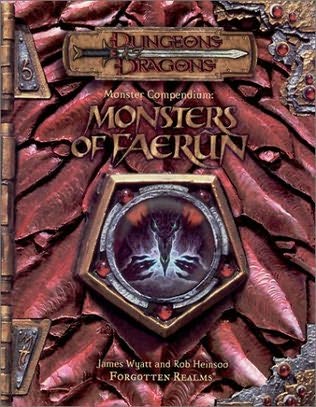
I wrote about the Monsters of Faerûn book for Dungeons & Dragons 3rd edition from 2001 before in my Fantasy Safari series. At 96 pages, it is to my knowledge the shortest and also only softcover monster book that was released by WotC. It followed the original Monster Manual for 3rd edition and would be succeeded by five more full sized books for that edition. A while back I was asking around in some places about how often GMs have actually been using creatures from the additional monster books beyond the main Monster Manual, and everything I could gather from the replies strongly pointed towards “barely”. These books are fun to read, but at the end of the day, people clearly seem to continue to strongly stick towards the established critters that have been in regular rotation for over 40 years now. But even in that light, Monsters of Faerûn seems to stand out as even more obscure than the other monster books, quite possibly because it’s much smaller and because the title indicates that it’s a setting specific book for the Forgotten Realms. Which is not actually the case. There are a few creatures in it that are specific to factions in Faerûn, but these of course work just as well anywhere else, and the majority are simply somewhat popular D&D monsters that had not made it into the Monster Manual.

Since I started with D&D right when 3rd edition came out (I remember deciding to wait a few more weeks instead of getting the 2nd edition books), and as such this was my second monster book ever. That might have had some impact on how memorable it was too me. But I had also been introduced to D&D by playing Baldur’s Gate, and that game had a few creatures in it that were not in the MM, but in this book. Even though I don’t recall using much, if anything from this book back when I ran 3rd edition games, but it always excited me every time I was thinking about it again, or picked it up for another read. This has so many creatures that I always wanted to use some day.

When I started working on the Shattered Empire setting two months ago, I didn’t deliberately plan to do it, but I recently realized that a lot of these “I want to use them one day” monsters ended up on the monster list of the setting, even though I got their stats from 5th edition books. I admit to not actually having read those. I’m only using the stat blocks, going with my preconceptions of what these creatures are from the last 20 years.

Aaracockra are a quick and dirty reskin job to get harpies without the enchanting song ability, that really belongs to sirens.

Air Genasi more or less make an appearance as the Kuri people, though they are actually using the stats for high elves as PCs.

Chitines have always fascinated me, even though their image in this book isn’t very good. Small primitive humanoids with six long spidery arms that crawl along the walls and ceilings of caves. What’s not to love about these creepy crawlies, which I think make a good alternative to the regular goblin and kobold fare.

Choldriths are the elf-faced spiders that often rule over chitines as their priests. It’s a different take on the general idea of driders, but since my setting doesn’t have any drow either, I think these make for a better alternative.

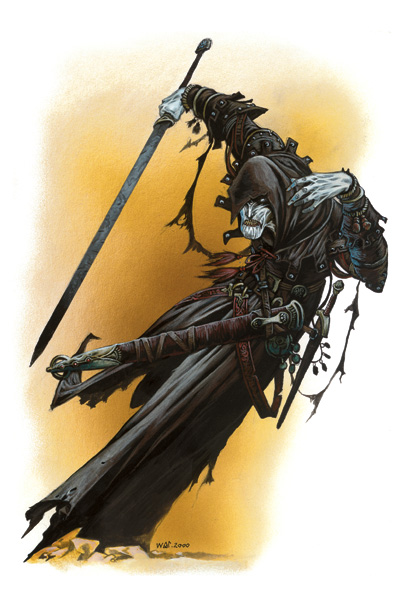
Cursts are a bit like ghouls or revenants. They are under a curse that always regenerates them into their undead form over the course of days and have gone somewhat mad from the torment of their unliving existence. The only way to actually kill them is to break the curse that is on them. But mostly I just think the picture kicks ass.
The Dark Tree is just a classic of fantasy. Never an A-list monster, but always around. The image in this book is really goofy, but I’ve always been hugely inspired by this one of a different monster that’s still the same basic idea.
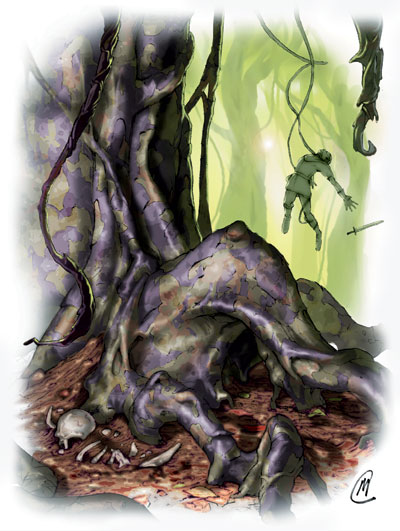
From Manual of the Planes

Dread Warriors are really just beefed up zombies kept in better shape and with some intelligence remaining to make them more useful soldiers for necromancers. Nothing that spectacular, but I like to use them as corpses animated by low-intelligence demonic spirits.

Earth Genasi, like the air genasi, appear in my my setting as one of the civilize people. Though again, I am using the goliath stats for PCs instead.

Fey’ri are a specific bloodline of high elf tieflings from the Forgotten Realms, with some cool backstory of being the last remnants of an old noble house that made pacts with demons. Again, it was really an image from another book that sold me on these guys, but they appeared in this one first. They appear in the Six Lands as the asura, with somewhat different stats, but it’s really pretty much the same guys.
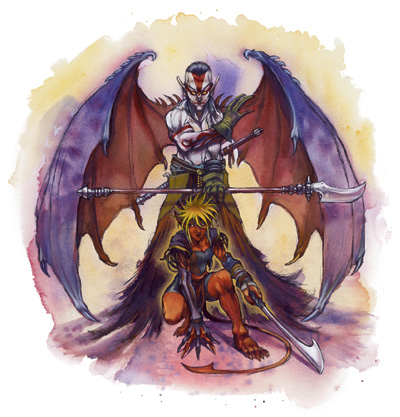
From Races of Faerûn

Gibberlings are basically the first monster you encounter in Baldur’s Gate, and there’s a lot of them in that game! Which had me a bit surprised to later learn that they pretty much don’t seem to appear anywhere else. But they are in this book, and I still love these little screetching guys as low level enemies.

Green Warders are a bit lame, actually. They are elf shaped shrubs who were used as guardians by the elves of Myth Drannor. But they have magic powers to cast alarm, confusion, and sleep in addition to attacking with their claws, and I think make a decent base to make custom spriggans. The leafy boy type, not the size changing goblins.

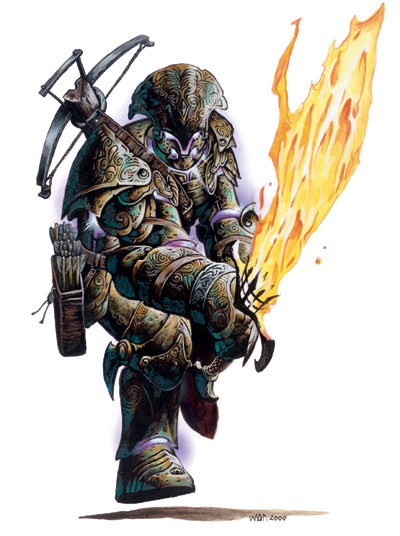
The Helmed Horror is another memorable monster from Baldur’s Gate. Basically it’s animated armor that’s been beefed up to a serious juggernaut with a big magic sword. These are clearly my favorites among the menagerie of golems. Badass image doesn’t hurt either.
Quaggoths are albino humanoid bear-apes that live underground. There really isn’t much more to them. But I think they’ve still been really underused as one of the underdark races as they add some nice variety. Why are there bear-men living deep underground among the fish-men, spider-things, and squid-thingies? No idea, but I just think they’re neat.

There’s a good more cool monsters in Monsters of Faerûn, these are just the ones that are featuring prominently in the worldbuilding for the Shattered Empire. But there’s also aballins, baneguards, beasts of Malar, darkenbeasts, deep dragons, firenewts, ghaunadans, phaerlin giants, and draegloths, which are all really cool as well, though not really fitting into the world I am creating. And I really love most of the art in this book, though that might to a good degree me being biased from my strong first impression. Though I still think it’s overall a much more memorable monster book than the actual Monster Manual that preceded it.
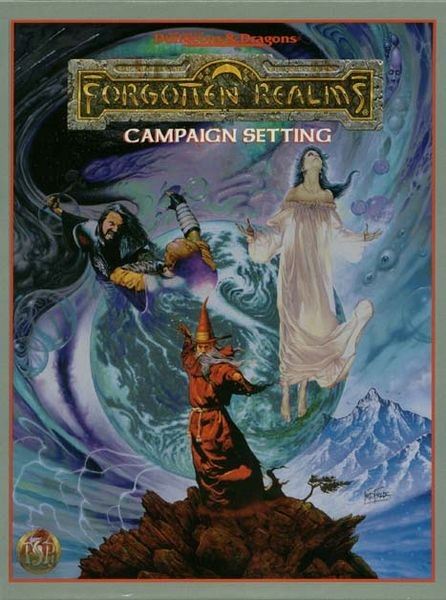
References for the Shattered Empire

This version of the Forgotten Realms Campaign Setting was the first one I got when I started learning Dungeons & Dragons when the 3rd edition came out in 2000. While I still think the 1st edition version is the better campaign setting, this one of course had a huge impact on me. It has an interesting art style that I don’t recall seeing anywhere else and that colored my first perception of what the Forgotten Realms look like outside of the videogames that were around at the time. It’s a bit quaint, but it doesn’t have quite the renfairification that is bugging me about later 2nd edition material. The books released for 3rd edition of course had a completely different style, making me soon forget about the aesthetic that is presented here. But now I am feeling like trying to recapture some of the overall feel for a fantasy world that I got from this box.

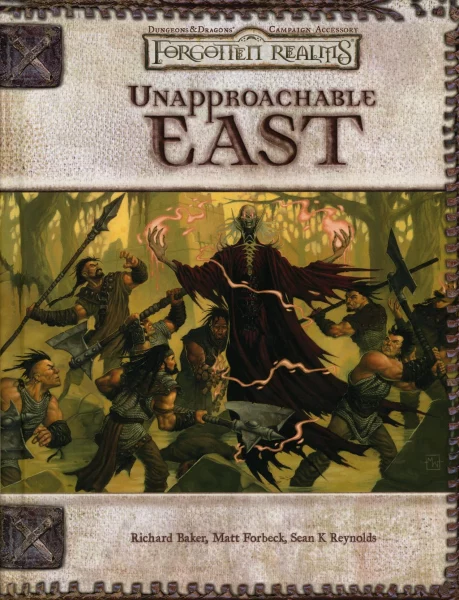
Unapproachable East might perhaps be the best of all the sourcebooks for 3rd edition that was released, and I think it comes as a pretty solid second in my own personal favorite setting sourcebooks, right after The Savage Frontier for 1st edition. In addition to a really good combination of character options, regional information, factions, and adventure hooks, this book does an excellent job with the art direction. It gives the area it covers a very distinctive feel, and I am more than happy to mercilessly butcher the sections about Rashemen, Narfell, the Great Vale, and Thesk for parts. I think this book easily ranks as the number one source for reference material for the Shattered Empire.

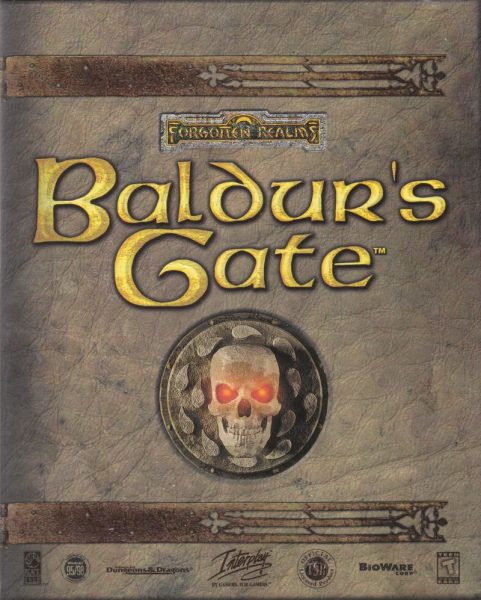
As a kid, I’ve been growing up on fairy tales and seen lots of kids’ shows that you’d clearly classify as fantasy, but I never really had high fantasy on the radar as a wider genre. I’ve read The Lord of the Rings once, thought it was nice, and never thought about looking for more of that kind. When I got into playing videogames, the games magazines I read had plenty of both fantasy games and roleplaying games, but I think I never actually read any articles covering them. I was only into sci-fi stuff and some historical RTSs and economy sims. I got Baldur’s Gate for the sole reason that I was terribly bored in the summer of 1999 and looked up the highest rated games in my old magazines to find something that might be worth getting to entertain me for a few weeks. And the ratings for Baldur’s Gate were through the roof, which made me actually read a CRPG review for the first time. It sounded interesting, mentioned how much easier it was to get into than other RPGs at the time, and so I got on my bike and here I am 23 years later.

Overall, the setting that is presented in Baldur’s Gate is quite pastoral and sub-urban in many places, with the dreaded renfairification of the Forgotten Realms in full swing by that point. But I still really love the look and feel of some of the more remote areas, particularly the Nashkel Mine and Cloakwood Mine, Firewine Bridge, and Balduran’s Isle. I’m totally gonna rip off those places without any mercy or shame.

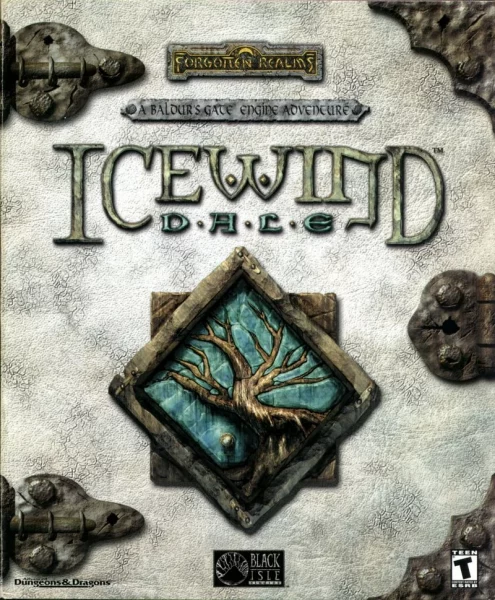
Icewind Dale is a rather different beast from Baldur’s Gate, and while the graphics and interface is essentially the same, it has a very distinctive look and completely different atmosphere. This one is probably going to have a much greater impact on the Shattered Empire as a whole. Kuldahar, Kresselack’s Tomb, the Dragon’s Eye, and the Broken Hand still remain some of my favorite sites in fantasy as a whole.

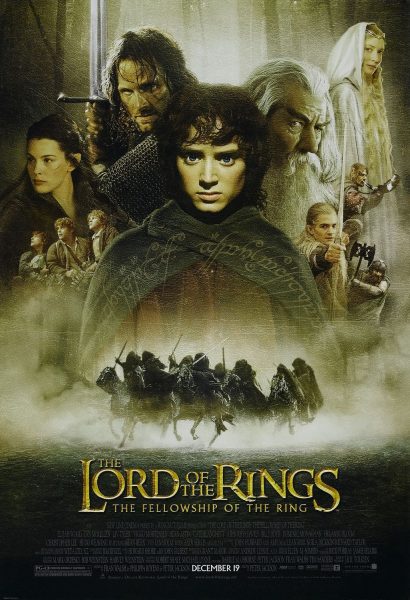
The Fellowship of the Ring came out right at the time when I had just been playing Icewind Dale and started getting into Dungeons & Dragons and the Forgotten Realms Campaign Setting, and as such had a big impact on my lasting perception of fantasy. What a glorious time to be alive. (And also 16, I’m sure that’s entirely coincidental.) In hindsight, I think the second movie is only okay, and the third one is actually kinda bad. But this one I still really like. Particularly the parts in Bree and the journey that follows, and then again the travel to and eventually through Moria, which all stand very prominent in my imagiation for what the Shattered Empire looks and feels like. The parts with the elves are a bit too fancy and dreamy for the style I want to aim at, but overall this really is one of my secondary reference sources.

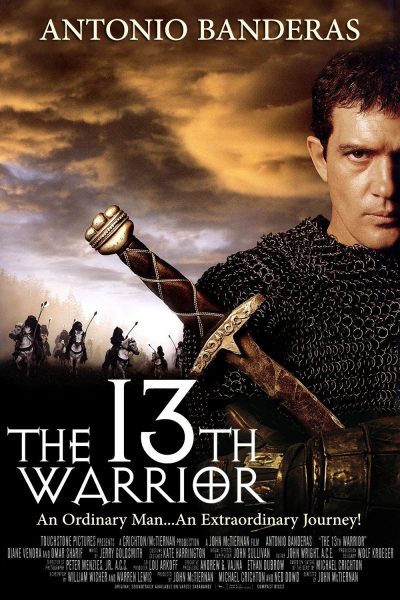
Some years ago, oldschool D&D fans seem to have come to the collective conclusion that The 13th Warrior is the most D&D movie ever made. And I am in full agreement. The investigation of the raided farms, the night attack on the king’s hall, and then of course the great assault on the cave lair of the savages is all prime high adventure material. If there is any good point to strive to make something more “cinematic” in an RPG, this movie should be the gold standard. I really don’t want to return again to “that Northern Thing” with the Shattered Empire, and I really had enough viking stuff to last me for a lifetime, but I think the great inspirations in this movie work just as fine outside of a Germanic reference frame.

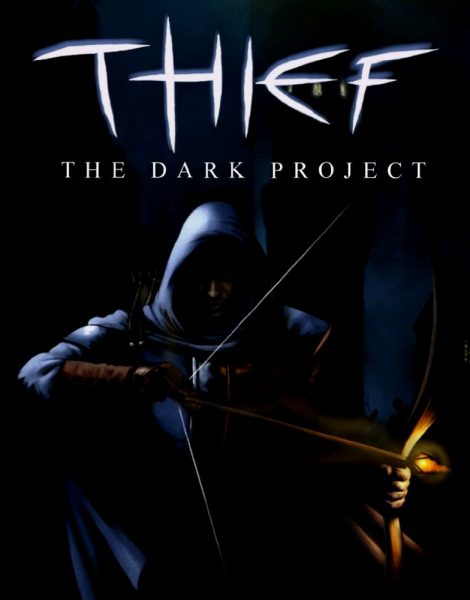
Thief Dark ProjectThief came out two weeks before Baldur’s Gate (around the same time as Half-Life and Metal Gear Solid), but while it was a game that I knew was hugely popular, I only got around to play it a few years later, I believe. Which puts it in that same timeframe when I dived into several of the other works mentioned above. This game is just amazing. The only things I can really think of that I’m just straight up ripping of are the Pagans, Victoria, and the Trickster, but the whole game is constantly popping into my mind when thinking about evoking a certain style with the Shattered Empire. It’s probably going to become more important once I start working on the coastal cities inspired by Westgate and Telflamm from the Forgotten Realms, and their supernatural thieves’ guilds.

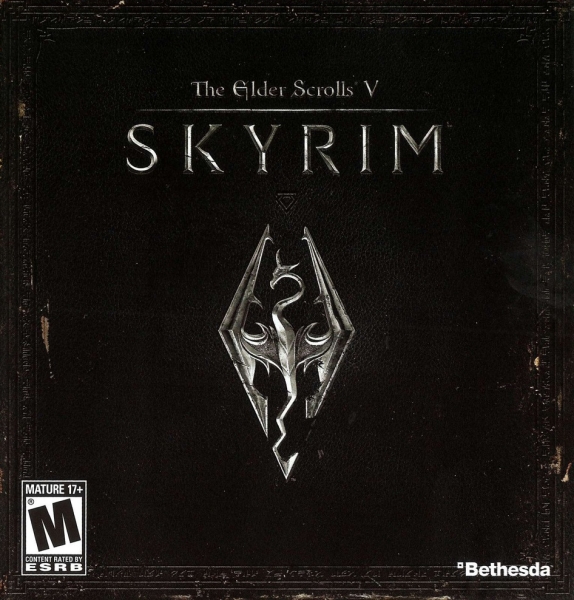
I was a bit undecided if I should include Skyrim in this list, but I think it’s probably the best representation for the influence of The Elder Scrolls as a whole on the setting. While I’ll always maintain that Morrowind is the better game as a whole, I think I actually played Skyrim a great deal more, and it influenced my mental image of various of the aspects of the world to a much greater extend. There’s plenty about Skyrim that can easily be ripped off for the Shattered Empire. The overall architecture of Nord houses and tombs fits very well with my image for the Kuri inhabiting the northern lands of Venlat (which I lifted straight out of my Kaendor setting as they are, since I never got to use them in any campaigns). The Kuri themselves have several influences from the ancient Falmer, and I’ve pretty much copy pasted both Orsimer and Khajiit to inhabit my setting. One very important thing where I’m stealing shamelessly are various of the Daedra. Azura, Hircine, Nocturnal, and Harmaeus Mora are gods in the Six Lands with only superficial changes, as is Kynareth, who is one of the references for the major deity Idain.

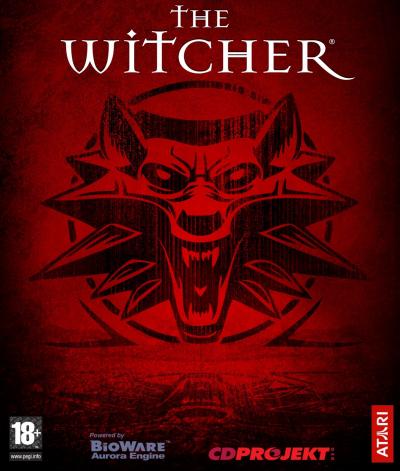
Since I first played the second game, the first Witcher game has always been for me “that weird, janky one”. The effort is appreciated and the talent clearly visible, but in dire need for a lot more experience and polish. But now that I am thinking about the style I want to evoke with the Shattered Empire, this one game in particular from all the Witcher works is the one that I think I want to draw from. This game looks very grey, with flat lighting and few environmental effects, which makes most of the world it is set in feel rather dull, and the stiff character animations don’t help. But now in the context of the setting I am envisioning, that actually feels a lot more appropriate than the more vibrant colors, stunning environments, and more cinematic presentation of later games. Kaer Moren, the Swamp, and Lake Vizima in particular stand out to me as places that are quite evocative for what I have in mind. The society and culture of the Witcher has always been deliberately anachronistic, with pretty much every character being written with a late 20th century mindest, even though the world is supposedly very medieval. That’s completely different from the kind of society and people I am aiming for, but I still think that the dispassionate calculation and resigned acceptance of bad circumstances that many characters in the series display could also be a useful aspect to draw from.

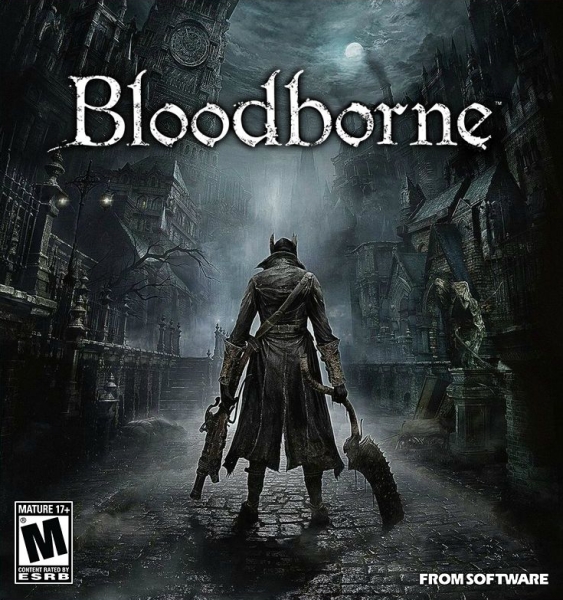
Bloodborne influences the setting only indirectly, but in very important ways. Playing this game again recently and reflecting on the similarities between its magic system and warlocks in the 5th edition of D&D was what originally gave me the idea to start working on a new setting from scratch. The strange eldritch beings and their relationships with various human characters in the backstory of the game are a major source of inspiration for the nature of the supernatural in the Six Lands. The Kin of Bloodborne and the Daedra of Skyrim are the main reference points for demons.

Fool me once…

As it turns out, I’ll be returning to work from hibernation this year in February and not in March, as I had expected. And I’ll not be moving into a new place until early March at the earliest, quite possibly in April. So the next two months aren’t going to be quite as chill as expected and I’ll won’t be settled in until we’ll be full deep into the planting season. This means my original plan to get a new campaign started and established after Christmas will have to be pushed back to probably somewhere in May, as I don’t want to start a  campaign for four weeks and then potentially disappear from the face of the Earth for a couple of months. (Once the plants arrive in the stores, our work for the year is mostly done, so off-season starts for us in May.)

This also means that I can spend the whole of this month on further elaborate campaign prep, and expand on it in whatever idle time I’ll be finding in spring. And one thing that has been on my mind recently is that despite my previous experiences in the campaign from one year ago, Dungeons & Dragons 5th edition might not be all that bad.

At the end of the Inixon campaign, I talked with the players, who mostly were GMs themselves with much more experience with the system than me, and while they mostly agreed with the issues I had spotted in the rules, their opinion was that these things are fixable without too much trouble by picking a few of the variant rules and changing the approach to handling certain things. I had similar conversations again twice last months about where I had been dissatisfied with how the game handled, and again the responses I got was generally that my observations are correct, but that the game doesn’t have to be run that way and play quite differently if you don’t.

The main issue I had with the system was that PCs have a lot of fancy toys to play with quite early on. Many of these cool powers are related to combat, and seeing how excited the players were about getting them, I wanted to give them opportunities to actually get some use out of them. Unfortunately, these fights made them advance to new levels and get new shinier toys before they really got much chance to play with their old ones in interesting and creative ways. I really didn’t want the players to sit on the cool new powers they were clearly excited about and not being able to use them, and as a result things somewhat escalated into a series of battles with little inbetween. Eventually I decided that there was a good point in the story to wrap up the campaign around the time the PCs would have reached 6th level, instead of continuing into a fully open-world exploration of the Isle of Dread.

The obvious answer to this issue is of course to just give the players fewer XP. But I think in hindsight the issue wasn’t so much the specific XP awards, but that throughout my now 20 years of running D&D, a pace of having characters gain a new level about every 4 game sessions or so had always worked very well in 3rd edition, Pathfinder, and oldschool games. And that’s just the pace that I had kept with the Inixon campaign. Not sure if that’s really the case or a change in my perception as I change my style as GM, but to me it really feels like characters in 5th edition get a lot more new powers with each new level than I was used to. And certainly as compared to B/X, of course. It also was the first time I really wanted to use the approach to not have the players wait until higher levels to get cool magic items with interesting powers, and be more generous with magic treasure that has minor and situational powers. It doesn’t increase the power level of the party that much, but it absolutely adds to the amount of cool toys that the players have at their disposal and are eager to try out. With all that in mind, aiming to let PCs level up about every 4 game sessions really seems to fast. Better seems to aim for 6, or maybe even 8 game sessions on average. I think that should be a good start to address my main dissatisfaction I had with the game.

Somewhat related to that was another issue I had with dungeons. The campaign had started with Against the Cult of the Reptile God, which really does provide a solid reference for why this dungeon exists and what the inhabitants want with it. That went really well. This was followed by a fantastic unstructured stay in a pirate town, in which the one part I wasn’t happy with was the dungeon from Escape from Meenlock Prison. It was okay, but I felt it turned into kind of a slog. Eventually we got to Dwellers of the Forbidden City, and I really had no clue what to do with it but to put some ruined mansions down and fill them with hostile monsters. The game kind of implies it wants me to do dungeons with cool encounters, but it also isn’t letting me know how to actually do that, and I just got frustrated with it and decided not to go into The Isle of Dread after that. I felt that I just don’t get the whole point about dungeons other than being series of monster fights. However, in the past year after that, I learned a huge deal about classic dungeon crawling and what that is all about. The Basic/Expert exploration system is a fantastic campaign structure with an actual solid 30-minute-gameplay-loop, that 5th edition (and really all D&D starting with 2nd edition) seriously lacks.

And there’s a couple of things about 5th edition that I really like. I’m a big warlock fanboy, especially after having two of them in the Inixon campaign, and I am seeing so much worldbuilding potential with this class as the supernatural and weird is concerned, and for all the adventures that can come out of it. I also think that the druid circles of the land are quite a nice element that I’d love to play with. I had pondered the idea of a setting in which warlock magic is the only way mortals can access supernatural powers, which seems really fun, though probably doesn’t get too much cheer from players. But considering my previous ideas for the Shattered Empire, a campaign with only warlocks, druids, and bards as spellcasters sounds like something that could be really cool for a very-early Medieval campaign drawing on central-eastern Europe as reference.

So I am willing to give the system another try, with the following adjustments:

  • Characters gain XP by milestones, with the default type of milestone being the return of a treasure back to civilization. The amount of XP depending on the value of the treasure, and the obstacles standing in the way being appropriately difficult. My aim is to provide treasures that let characters gain a level every 6 to 8 game sessions or so.
  • A short rest takes a full night of rest, and a long rest requires taking a week off in a town, castle, or similarly secured and hospitable place. In practice this means going without a long rest for each whole adventure. This means druid spells that provide food, water, and similar ways to make wilderness travel easier for each day won’t be able to cover the whole trip. Similarly healing spells have to be rationed for the whole adventure. Having friendly sanctuaries in the wilderness will be a huge benefit, which is one of the really cool concepts I’ve encountered in The One Ring.
  • Encumbrance is done by inventory slots and not by weight, which makes it trivial to track instead of a big nuisance.
  • The Encounter syste, from B/X gets imported just as it is, with wandering monster checks, reaction rolls, morale, and all of that.
  • Initiative is done by sides instead of initiative counts, which is always a huge reduction in my personal mental workload and speeds up play considerably as it cuts down greatly on players taking time to consider their next move at the start of their turn.

I am still somewhat cautious about the idea, but I think it can only turn out better then the Inixon campaign. And that one was by far the best one I’ve ever run.

Why do I never see links to All Dead Generations?

Looking back, the prime days of OSR lie now a decade behind us, and while a number of people are still around, occasionally sharing some new thought or insight every couple of months, very little of any meaningful significance is added to the discourse of B/X and AD&D that hasn’t been thoroughly examined years ago.

But one thing still does stand out that really brings something new (back) to the table that has significant value to help understanding how those old games tick and how you can make them really work without existing experience going back to the 80s. Which is Gus L’s “new” site All Dead Generations. This is an excellent resource I never really see mentioned anywhere.

When I finished my D&D 5th edition campaign a year ago, one of the realizations that I gained from it was that I just didn’t get the concept of dungeons. What a dungeon is is obvious, but I never understood how going from room to room filled with monsters and random crack-wizard puzzle-devices was supposed to be fun for anyone involved. As someone who got into D&D in the last days of 2nd edition, when the 90s Metaplot craze was still in full swing, fighting monsters in rooms never seemed like something that contributes to the plot of an adventure or a campaign. And it doesn’t. That’s one of the key things to take away from the many long pages of All Dead Generations. Thinking about a plot when going into a dungeon to explore is already the completely wrong approach. I never figured out how to make it work in 20 years, because that’s never how it was supposed to work. Dungeons & Dragons under WotC has been a cargo cult game, that emulates mechanics from the 70s and early 80s because they’ve seen these things being a major part of D&D, but with no apparent understanding of what they are for and how they work.

All Dead Generations has been a massive eye opener for me and got me super excited about an all dungeon crawl campaign just after I had given up on using dungeons in my games entirely. It’s a fantastic read for anyone who wants to understand how B/X is actually supposed to be played. And yet, nobody seems to be talking about it. I guess partly because there are few people still around who could talk about it, but to do so they’d also need to hear about it in the first place.

So here’s a big shout out to Gus. Which is a bit weird from a marginal nobody like me to one of the well known big guys of oldschool RPGs, but it is what it is. Go check out All Dead Generations.

Something always happens on a 1!

I mentioned this idea in another post last summer in regards to wandering monster checks, but I think it’s actually a rally nice principle that can be applied to all dice rolls without a defined die size and target number.

I’ve talked about accessibility of RPG rules in the past, both here and in several other places, and my personal experience as a GM with ADD has always been that my brain very easily becomes overloaded when juggling numbers at the same time as I am trying to follow a conversation. The trivial task of putting the initiative counts of six to eight participants in an encounter into a descending list has always been the single most challenging thing and greatest struggle to me about running games. (Now I always use group initiative to skip the whole issue.) But another thing that isn’t always easy for me in the heat of the action is probabilities like “2 in 6”. I rolled a 4, is that a success or not? Do we count the lowest two numbers or the highest two? This can be really easy stuff, but for my brain that’s something that takes up completely disproportional amounts of processing power. Not a good situation.

My solution is to make any such rolls a probability of “1 in 4”, “1 in 6”, “1 in 8”, and so on. If I’m using material that uses other odds, I translate them into whichever “1 in N” probability gets closest and write that in my notes. The result of this is that even when my mind is getting overloaded with input from the players and I am trying to establish what happens next, I only have to look at the die in front of me and remember “Something always happens on a 1!”

If it’s not a 1, then nothing happens. Proceed as normal. If it’s a 1, that always means the answer to “does X happen?” is always a yes. I’ve adopted this method as a solution to my specific personal problem, but I think it’s a really neat way to handle a wide range of rolls in general. It’s also helpful for new players who are still trying to figure out what’s actually going on all the time. On top of that, there’s a dozen different ways of how you can roll a die to determine the outcome of an action. Sometimes they have to roll higher than a number on their character sheet. Sometimes they have to roll lower. Sometimes they roll a die and add a number from their character sheet and the GM tells them if it’s a success or not. Sometimes they roll d6 and a 1 is a success, other times they roll a d8 and 7 is a success. Any time you can simply tell a player “just roll that die, when it’s a 1 something happens” is a moment where that player has a lot less new information to process.

I also think it helps with speeding along play and creating additional excitement by simply having a player roll a dice in the middle of the table, and since they’ve seen the same thing a dozen times before now, they already know “something always happens on a 1!”, without you having to explain to them how the odds for this specific roll are working. And by having established that something always happens on a 1, there is no ambiguity on whether that roll really mattered or you arbitrarily decided the outcome in disregard of the die. When the players see a 1, they can jeer in excitement or despair without even having to look at you. In my perception, this is a very useful tool to make players realize that the fates of their characters are entirely in the hands of themselves and random luck, and that trying to figure out what the GM wants or expects doesn’t make any difference.

You could of course switch it around and say “something always happens on the highest number of the die”. But that requires one additional mental step to get to the actual result, which is identifying what type of die has just been rolled. I think everyone who’s played with new players know that it takes them a good amount of time to look for the die in front of them that has the same amount of numbers that you just told them to roll. It may not be immediately obvious if a die sitting in the middle of the table and showing a 10 is a d10 or a d12. And in my personal situation, when I am trying to run an encounter with lots of players chattering in excitement, staring at a die in front of me and trying to remember what meaning there was behind the die I just roll can take me two or three seconds. Figuring out if that 10 on the die before me means something or nothing is an additional step I just don’t need if it doesn’t add any additional value to the game. And ADD is not an uncommon condition, anecdotally even less so among RPG players. I would hazard to guess that more groups have one than not, and wouldn’t be surprised if a good number of them is affected by similar forms of mental overload as me. Even if this seems to trivial to be pointless to you, there might very well be a player in your group who’d really benefit from it. So “something always happens on a 1!”.

In what god’s name?!

I’ve been running and playing fantasy RPGs for over 20 years, and I am pretty certain that not once have I seen any specific god being relevant at any point. I’ve had some clerics that had slightly customized their spell selection and armaments to reflect a certain theme, but faith and beliefs have never appeared in any game in any form.

There’s a couple of deities from various fantasy settings that I find really quite neat and want to blatantly rip off in the Shattered Empire, but how do you make them relevant? Here I once again find my original mission statement extremely useful: “Create content that dirrectly supports classic dungeon crawling adventures.” The question here should not be how I can make the gods so that they will be interesting to the players and make them want to make them part of their characters. The question should be what function gods can serve in the exploration of a dungeon? I want to step away from making stuff that is just interesting, and instead create content that is functional. Now one of tbe aspects I had already determined earlier is that I want to keep the goods ambiguous and distant, so that people in the world can wonder how much difference worshiping the gods and performing the rituals actually makes, if any. That doesn’t have to be set in stone and can still be changed if something better comes along, but I want to see where I can go with that.

Gods in the Dungeon

The main mode of play in classic dungeon crawling is being in the dungeon, or on the path to the dungeon, and exploring the environment ahead. Can we include the gods in this? And as it turns out, yes we can. The gods worshipped by the people now are largely the same as the ones worshiped in the Shattered Empire. The empire was ruled by sorcerers, and sorcerers are regarded as something contradicting with worshiping gods, but the empire didn’t last that long and the people had been worshiping their gods long before that. When they build all their great strongholds and secret vaults and crypts during the wars of the successors, the people would have included the gods in the decorations and protections of the new constructions. The walls and doors of dungeons can be covered in religious iconography and symbols, and these dpictions can actually contribute greatly to provide insights into the places the players are exploring. With perhaps a dozen or so common gods, players can essily learn and remember their names, symbols, andprimary aspects, if they become relevant during play with sufficient frequency. Identifying the symbols of a specific god can help understanding the original purpose of an area and the potential dangers that could be encountered inside. Possibly even provide hints on how to deal with any obstacles that might be discovered. It’s not necessary to give the players homework to learn and recite all the gods of a new setting. Simply allowing the players to ask a priest or sage the next time they are in town, and getting some useful hints in return will already be contributing to make the gods feel like an actual part of the world.

Gods outside the Dungeon

But even once we’re outside of dungeons, we still can look for ways in which gods can become relevant for the players in play. Between adventures, parties will regularly return to towns to restock on supplies, get their hands on new tools they discovered they need, and to try fixing permanent problems that resulted from events in the dungeons. Typically, the main place to see for the later is a local temple where a friendly priest can treat all the forms of long-lasting damage that characters can suffer. Typically, you’re adventure town has one temple that can deal with all issues up to a certain spell level based on the level of the temple’s cleric. But what generally makes no difference is the god of the temple. All clerics can cast the same basic spells, so temples of forging, agriculture, and smithing can all provide the same services  as long as their clerics are of the same level.

But what if not? As I mentioned earlier, my plan is to not have clerics as a character class and not have the priests in temples be actual spellcasters. But the world does have sacred shrines where certain supernatural events happen that are attributed to the direct interventions of the gods. For example, it’s not the priest tending to a healing spring that can cure wounds, but the spring itself. The Companion Set introduced relics for elves, dwarves, and halflings, to give these peoples without cleric access to some cleric spells in their towns. That’s a brilliant idea and would even work just as well to remove clerics completely from the setting. But the relics as presented all produce the same  asic effects. Cure serious woundscure blindness, cure disease, identify magic items, and turn undead. What if instead we reduce the powers of each sanctuary to only two or three spells, which are all specific to one deity? This means tnat you can’t just go to the next temple and get what you need, regardless of whose god temple it is. Instead, for specific services, players first need to identify which god’s help they require, and then go searching for a site sacred to that god where miracles are made to happen. This can easily turn into small side adventures to have certain curses lifted, or to acquire special weapons to deal with a specific threat. This should give the gods a much bigger role in the minds of players, compared to grabbing a few health potion from the temple between restocking their rations at the market and selling 10 rusts daggers at the blacksmiths’s.

How well will this work in practice? I don’t know. But I am sure featuring divine symbols as useful clues in dungeons and making the services in temples specific to the gods will make them much more meaningful than in a typical D&D campaign.