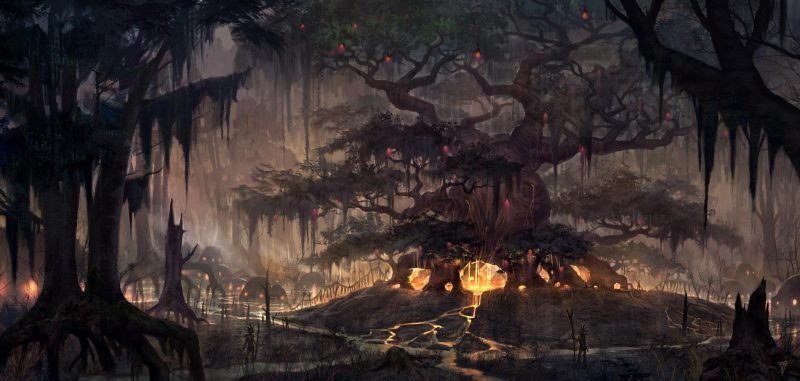
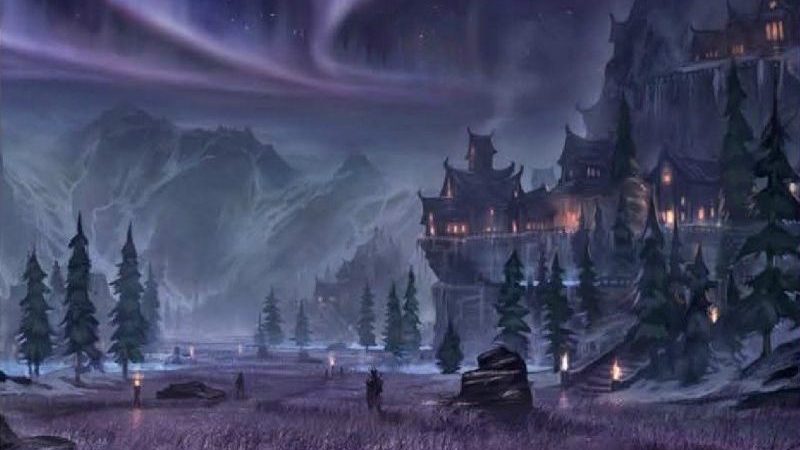
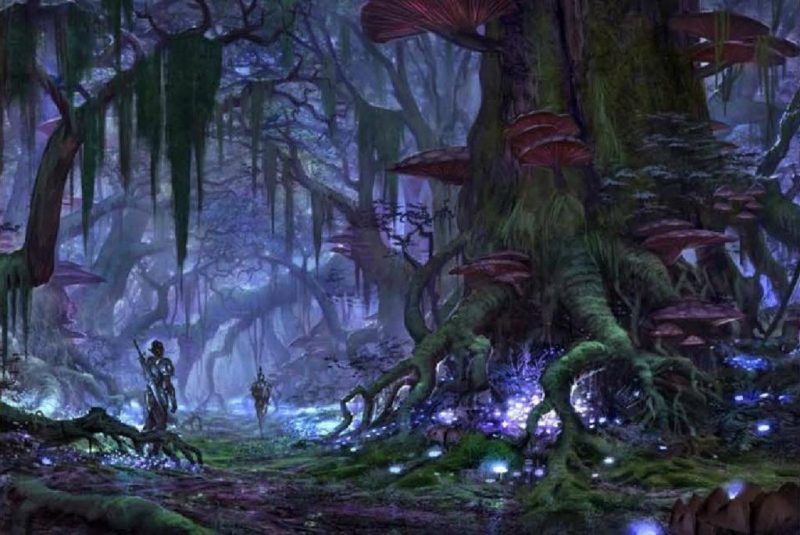
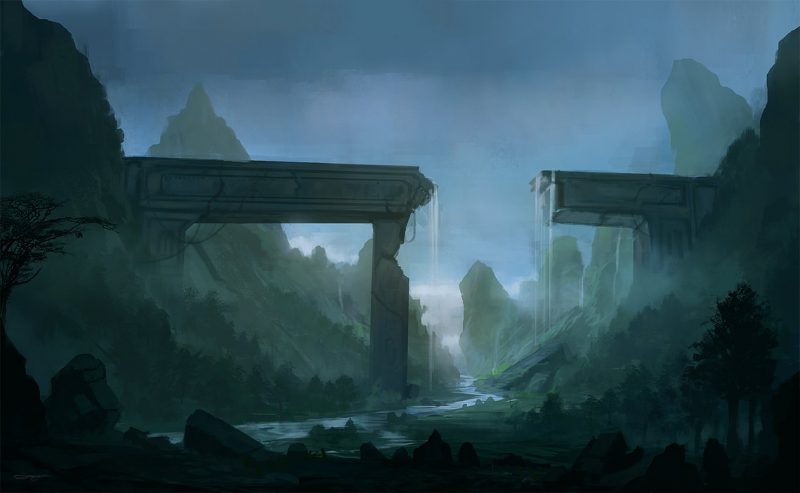
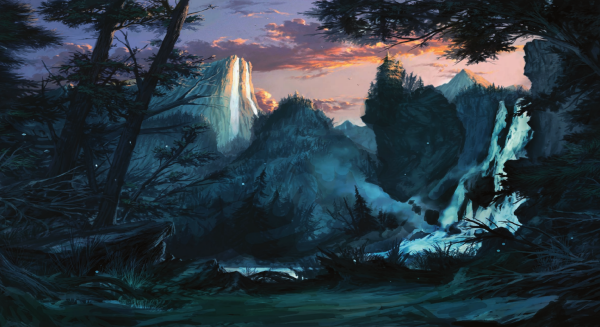
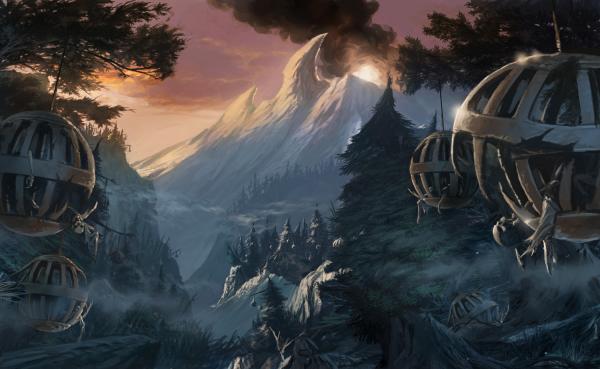
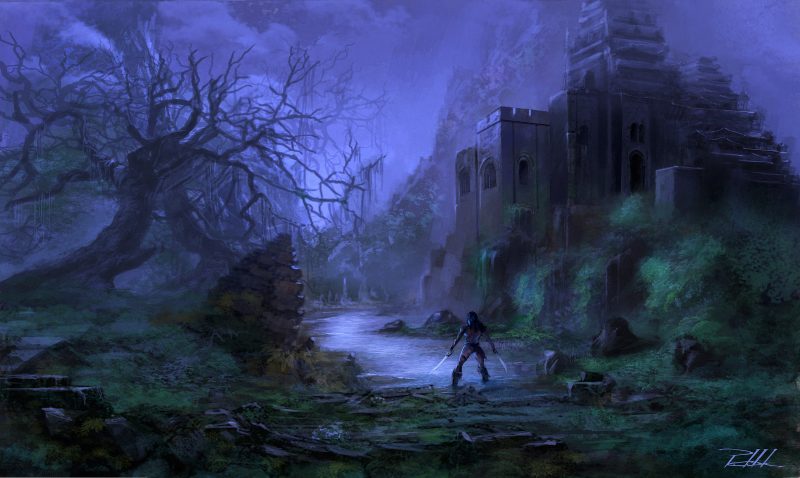
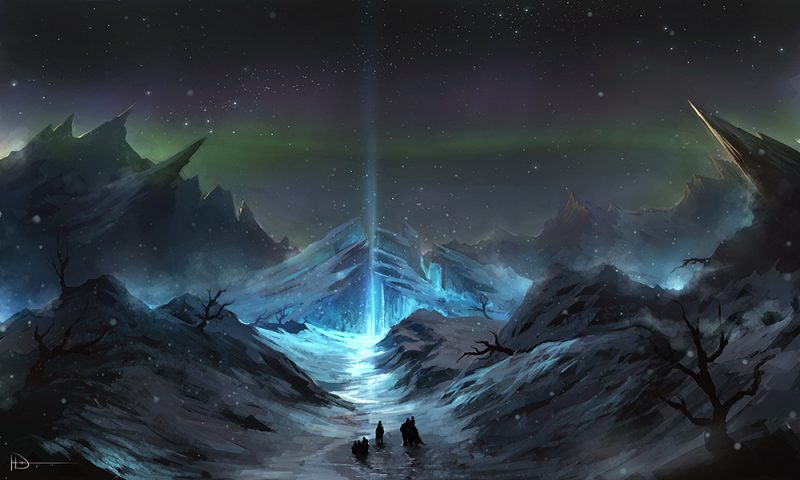
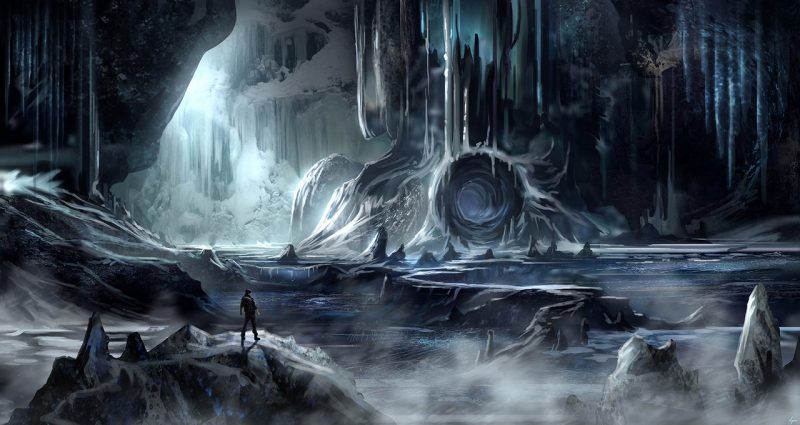
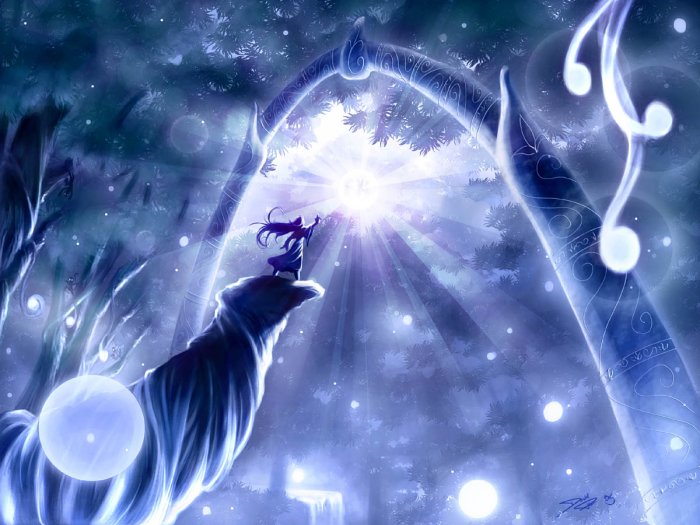
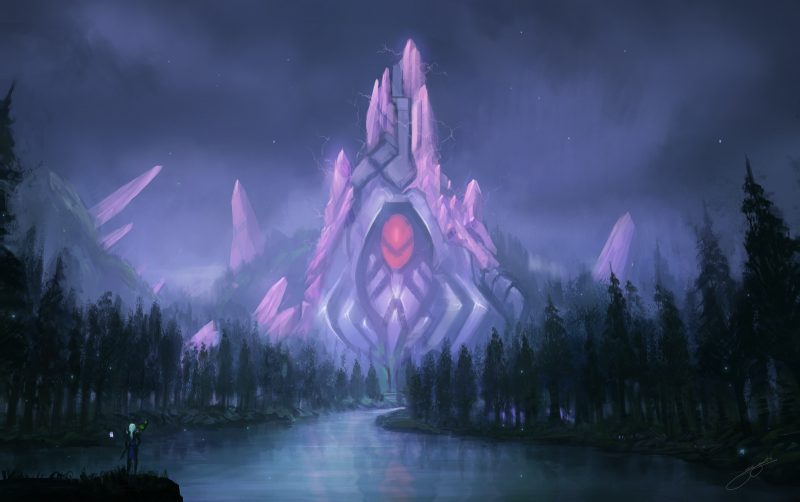
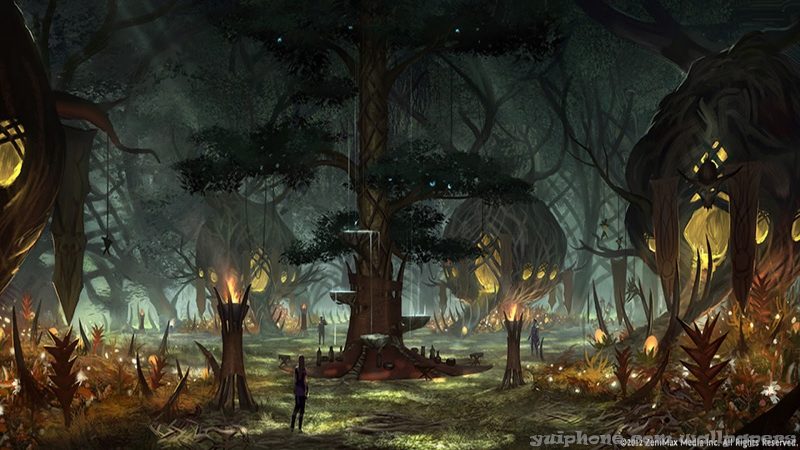
Apparently Dark World is going to be purple. Didn’t plan for it, but it’s fine with me.
Yora's site for Sword & Sorcery RPGs
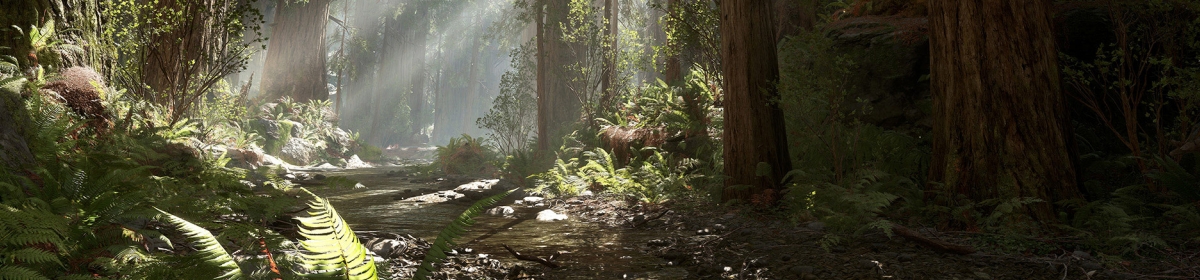
Apparently Dark World is going to be purple. Didn’t plan for it, but it’s fine with me.
Having had a week to think about my initial concept and browsing for more and alternative ideas, theDark World is slowly starting to take on a more defined shape.
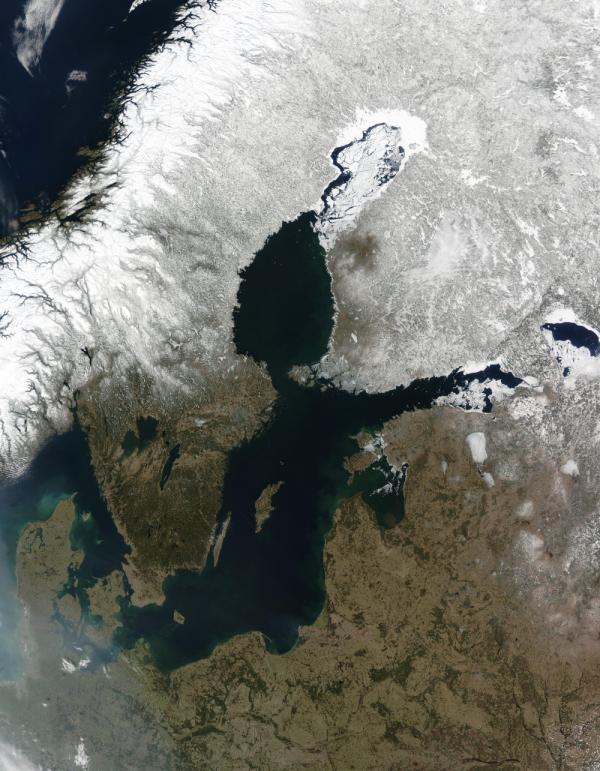
The more I have been thinking about it, the more the idea has been growing on me to make the landscape and culture of early and pre-medieval Northeast Europe the primary stylistic reference for the setting. It really isn’t the sexiest part of the world for tales of great adventure. Or for pretty much any purpose. Summers and mild and wet, and winters too. There are some places that are quite pretty during a good summer or winter, but the landscape doesn’t really have majestic wonders of nature like you can find in Asia and America. On the North Sea and Atlantic you have at least proper storms that have an invigorating energy to them, while the Batic Sea is the very definition of “meh”.
But as a native, I guess you just can’t help but have a certain affection for it.
 And if there is one thing that a cold, wet, dark, and quiet is actually really suited for, then it is dark fiction of things living in the misty forests and swamps. It’s our thing! This is the one niche where we can shine in contributing something to the greater world of fantasy. Except that dull grey and murky brown don’t shine. Ghostly lights, swamp witches, and fair maidens dragging travelers into black pools are what we have to offer.
But simply following in the footsteps of The Witcher, Symbaroum, The One Ring, and Skyrim wouldn’t satisfy my creative drive and there isn’t really much point in rehashing something that has already been done very well by others. So I want to combine this influence with my interest in Bronze Age city states and priest kings. It’s easy to see that mediterranean empires don’t really feel like a fitting addition, but I think by reducing it to the kings and their palaces within confined cities could actually make it work. Some of these kings may claim to speak for a god or be chosen by a god, or even claim to be a god. And in some cases a city might prosper under the guidance of a powerful spirit.
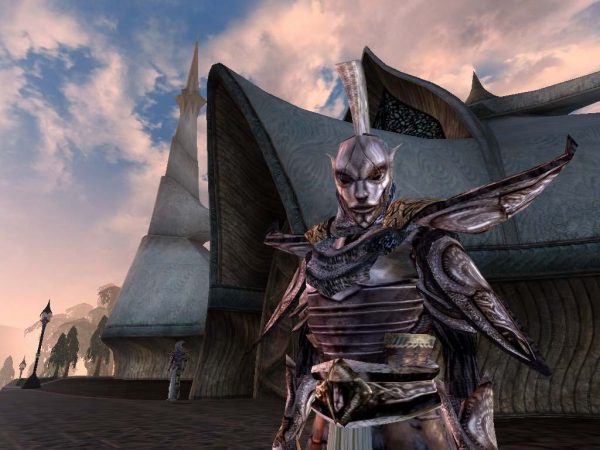 The soggy cold and rot of the wild swamps and forests should be complemented quite well by cities that have an atmosphere of lethargic decadence. The aristocracy indulges in opulence and extravagance, but it’s not ennergetic and flashy, rather leaning towards the delirious and often gloomy. They crave majestic splendor, but it really is more of a distraction than an expression of exuberance. There is a lot of bronze and gold, but it often has an air of tomb treasures to it. A display of wealth, rather than an expression of prosperity. It seems more than fitting to make wine and opium the two main exports from southern lands.
I am actually of the opinion that the most fantastic feeling fantasy worlds are the ones that don’t have a propper history and geography. Tolkien did it, so lots of people did it too, and Howard’s Hybrian Age was basically filling in the unknown period just before the beginning of recorded history. On the other hand you have worlds like the Young Kingdoms of Elric, the world of Kane, and the particularly hazy universe of Dark Souls. There are things existing in the present that seem clearly ancient, but there is no sense of past events that go back more than a few years. It brings a dreamlike quality with it that I really enjoy. You don’t know how you got here and where here really is, but you just go along with it and don’t question it too much.
As far as people in the Dark World are concerned, things aren’t really changing over time. The oldest people around tell tales of how their grandparents had already lived in the same towns and in the same way as they do and there aren’t really any accounts of how it had been before. History and mythology are both completely unordered fragments of isolated events. They don’t form any kind of coherent narrative and there is little in the way of hints in what particular order they happened, how much time passed between them, and even where they took place.
Maps are just as bad. There are pretty clear and reliable maps that show the routes between the major cities and the more prominent towns, but towards the edges of the map details become much more sparse and complete conjecture before fading out into blank space. Merchant sailors know how to reach some of the major ports in the south through which the cities trade with distant lands, but even they don’t have any real understanding where the exotic goods they bring north originally came from. Southern merchants take pelts, cod, and salt and give wine, opium, and spices in return. That’s as much as the captains need to, and care to know.
 However, there is undeniable evidence that the world does change, at least over long stretches of time. While nobody remembers a time before the cities and their ruling dynasties or immortal god-kings, ruins of past civilizations can be found in many places. It is actually quite common to find burried (or even only partly burried) ruins below the streets and palaces of most cities. Where these ruins come from is of course as much a mystery as everything else to do with the past. But they often contain ancient treasures that are of particular value to magicians. Occult knowledge may become lost, but magic doesn’t change and these ancient rediscoveries are more valuable to them than silver and gold. Or lives.
The lack of a sense of the past also brings with it a lack of sense of the future. People usually don’t care to plan ahead for the future and certainly not any further than their own lifetime. Things appear to be the same as they have for as long as anyone can remember and they probably will remain for much longer than anyone can imagine. As said in the RPG Sorcerer & Sword, “No one has a single thought on about being socially constructive in a large sense”. If you want to have any kind of change, you can only change things here, and change them now. You can destroy a gang of bandits or dispose of an unpopular despot, but you can’t end banditry or despotism. You can change your position in the game, but you can not change the game.
The true extend of the world extends well beyond what ordinary mortals can perceive. A fish thinks that the river is the entire world, but there are many more places that it can never reach by itself, and that will almost certainly be its death. Every place that exists in the mortal world also exists in the otherworld, but it is much bigger than that. There are many more places in the otherworld in addition to those in the mortal world, places that exist between places. Journeys through the otherworld are normally considerably longer than in the mortal world, but there are also some routes that end up being much shorter, though these are among the most well guarded secrets known to witches and sorcerers. In many places the otherworld very much resembles the mortal world, but it follows very different rules. The passing of time and the normally experienced chain of cause and effect have little meaning in the otherworld. Instead the otherworld is entirely govered by the thoughts and whims of spirits. The dominant spirit of a domain can change the environment of the otherworld in whatever ways it sees fit. Depending on the spirit’s power, trees and rivers can change position, castles crumble to dust within moments, and shrines be eternally on fire. Strong minds can resist the changing of reality around them which limits the power of lesser spirits, but no mortal stands any hope of resisting a true god of the wilds.
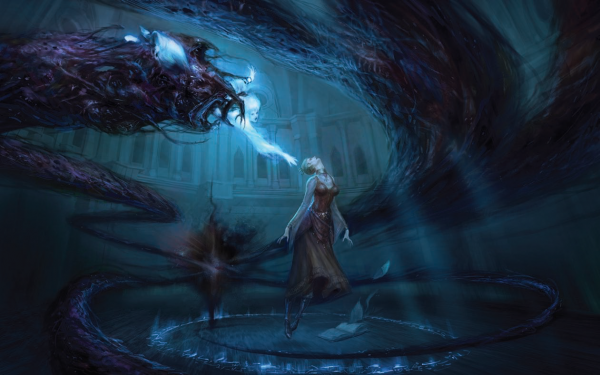 The sky of the Dark World is dominated by a huge moon shrouded in a haze of beige and blue clouds, which orbits the planet once every 16 days. During each new moon there is a chance of an eclipse, particularly during spring and fall, which tend to last for half an hour. During an eclipse the borders between the mortal world and the otherworld dissolves and spirits are freely roaming the lands. Anyone who is wandering around during an eclipse is at risk of finding themselves trapped in the otherworld when the sun returns so people lock themselves in when an eclipse approaches and don’t move from the spot until it ends. Travelers avoid making journeys shortly before the end of the month and the third day of the month tends to be a day of particularly high activity on the roads and in inns.
Magic is an art that comes naturally to spirits but can also be learned by mortals. However, delving into the occult knowledge and eldritch powers of the otherworld does profoundly change the mind and the very essence of a magician. As their power and knowledge increases, practitioners of magic become more and more like the fey. Ultimetely they can lose all of their humanity and becomes eldritch beings that wander off into the otherworld, rarely to be ever seen again. Many magicians believe that at lease some of the god-kings are former witches and sorcerers who somehow returned to the world of mortals to rule over their lesser subjects. To maintain a hold over their humanity and sanity, magicians have developed a number of traditions that incorporate philosophy, forms of meditation, the extracts of certain plants, and other means. (I’m thinking of running a Symbaroum campaign and this is an adaptation of the game’s mechanics.) The dominant traditions of theurgy, witchcraft, and sorcerey have developed in quite different ways, enabling their followers to focus on certain elements of magic with little risk of eldritch change, but still many find it tempting to delve into areas beyond those that are considered safe. Particularly among witches and sorcerers many are wondering if the changes are actually something to be avoided. Witches are often venerated for their closeness to the spirits and sorcerers frequently find the prospect of transcending their mortality highly attractive. Witches and priests more often find the discipline to practice restrained in their commitment to serving their people as spiritual leaders rather than abandining them for a quest into the unknown.
The Dark World has no real distinction between civilization and nature and spirits are not seen as beings from another age or domain. People and spirits are both just as much part of the natural world as animals, though spirits are standing on the top. People living under the rule of a city are mostly left alone by spirits, but this doesn’t have anything to do with civilization having driven them out. Spirits in civilized lands stay out of sight because the power of the priest-kings and god-kings forces them to behave. They have to obey the overlord just as the people do. Those spirits that are not bound to any specific landmark usually tend to wander off and avoid the proximity to settlements. But people know very well 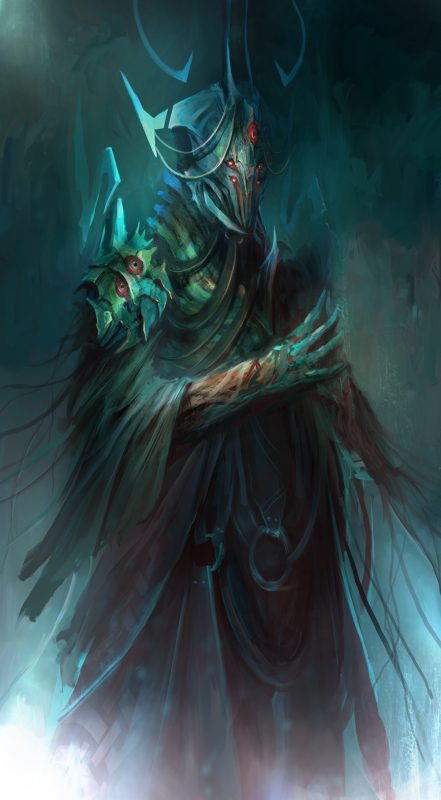 that spirits are roaming out there beyond the ends of the fields. Out in the woods encountering them face to face becomes significantly more likely. Some spirits are merely curious while others are outright hostile, but all of them can be extremely dangerous. Even though some of them can look suspiciously like mortals, they are drastically alien beings whose minds are much weirder than almost anyone can imagine. Predicting their behavior is always very risky and all of them have the power to inflict great harm, even if they don’t really intend to.
Like spirits, undead are also simply a part of the way the world is. While most religions have no concept of an afterlife, and the remaining ones never could really prove the existance of one, those who die don’t always stay truly dead. Ghouls, wights, shades, and wraiths rise under various circumstances, though I have not yet fully decided which ones these would be.
Other fictional creatures are normally nothing more than ordinary animals. The wildlife of the Dark World is in many ways very different to that of Earth, but they are natural beasts with the same limited abilities and mental capabilities as wolves or bears. The exception are spirits that come in the shape of animals, but these are fully supernatural creatures with no true overlap between the two.
While looking for good ideas for my new Dark Fantasy setting, I remembered a couple of interesting concepts that had come to me some time back but which didn’t seem like something that could be worked into the Ancient Lands. And going through my old posts, I also found a couple of ideas I did intent for the Ancient Lands, but never really implemented in the way I wanted to.
Much of my growing unhappiness with the Ancient Land seems to trace back to me having to actually quite different ideals for a fantasy world based on strange magic. Many of my ideas didn’t work in a barbarian forest setting as I wanted to, but now that I am aiming at a dark city state fantasy world they are once again looking really inviting.
Working on a new setting that draws heavily from The Witcher and considering starting a new campaign in the forseeable future, I was remembered of how Joseph and Trollsmyth defined Romantic Fantasy and it’s application in RPGs.
And all of them really lines up very well with The Witcher. It’s not actually wrong to describe Geralt’s story as him trying to save the last true heir to the throne of Cintra from being murdered in a struggle between ruthless monarchs. But it’s much better described as the story of an aging warrior who stops at nothing to rescue an orphan girl he has taken in his care from impossibly more powerful foes. And despite being the protagonist, he’s not doing it alone but is always a part of a greater circle of friends.
I think it’s actually one of the best examples around for what Joseph is talking about.
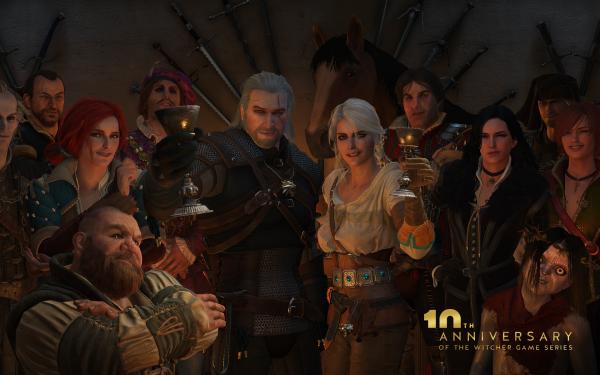
In related news, I just learned that the Witcher RPG by Talsorian Games is still being worked on, and from what scraps of information have been released recently, it appears to be very far in the development process, already dealing with the layout of the book. It was announced well over two years ago with barely anything heard since then, so I don’t know how soon we can expect it, but it’s nice to see that it hasn’t completely faded off the world.
It’s starting to take shape. It’s still all very vague but writing these things down always helps me turning wild collections of general ideas into concrete design decisions and finding the spaces where there are still elements that need to be filled in. This is as much work in progress as it gets, but I really like how things are going so far with the design of this new setting.
The world takes many inspirations from the Eastern Mediterranean Bronze Age, Ancient China, and Morrowind. It’s an age where civilization is relatively small but already highly sophisticated. There are large fortified cities with grand castles and temples, institutions of administration and learning, organized armies, and complex international networks of trade. Yet at the same time, civilized lands make up only a very small part of the huge land masses of the world. Beyond them lies a vast expanse of oceans and wilderness that stretches far beyond the edges of any maps. There are barbarians living in the wilds, but they can be thought of more similar to Iron Age Gaels and Slavs than savages wearing furs and bones.
 The geography consists of five great kingdoms, mostly located on the coasts of a large central gulf that opens into the ocean. The climate is generally temperate to sub-arctic, with stretches of sub-tropical and arctic lands on the very borders of the maps. It’s based somewhat on the Baltic Sea region, Northern China and Japan, and the American Pacific Northwest. As a native of the Baltic Sea, I can tell you that you can’t reach the highest degree of dreariness if it isn’t wet, foggy, and cold. There’s a reason that Scandinavian fiction is the way it is, and that Lovecraft and Steven King set their stories in their native Rhode Island and Maine.
When it comes to the darkness, I am leaning strongly towards the intrigue and decadence of Noir than savage wilderness. As the common people are concerned, their world isn’t really that bad. There is hardship and the occasional calamities, but overall it’s a life worth living and they are content. To find the darkness, you have to descend into the underworld of the occult and journey into the forbidden lands beyond the borders. It is no secret that monsters and arcane arts exist, but most people chose to stay away from this world whenever possible, and it is generally a wise choice.
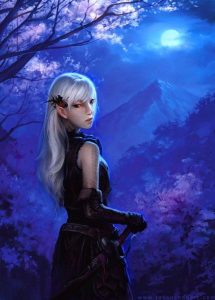 The Peoples
I’m a big fan of more exotic settings far removed from worlds based on medieval Central Europe. But for a Dark Fantasy world you can’t get too colorful and varied either. So I decided that the people inhabiting the setting are somewhat related races of semi-humans. Similar to the Melniboneans, the Red Men of Mars, or the Dunmer of Morrowind.
This is still very much unspecified, but I am leaning towards not giving any of them any significantly usual traits and abilities. It’s mostly an aesthetic choice.
The world is by nature a wild and savage place. There are many spirits that have great power over the environment and its creatures and they don’t apppreciate people making too much of their own mark on the land. Out in the wilderness, people are limited to living in small scattered clans that survive by hunting, fishing, and relying on some low intensity farming in forest clearings. They have to make regular offerings to the spirits of the land they live on and even then they are still frequently plagued by natural disasters and attacks from other clans. But such is the life in the wilds and the way things are meant to be.
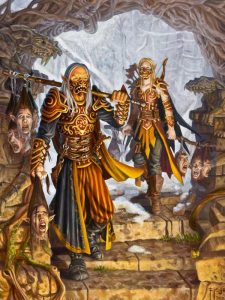 The five kingdoms are an aberration and they exist only because of the power of the god kings. The god kings draw great supernatural power from the natural energies of the lands they rule, which grants them a great degree of control over the weather and the elements and leaves the power of the spirits greatly reduced. Under the rule of the god kings, the people are enjoying an unprecedented degree of prosperity and security, being able towork the land, build great cities, and raise large armies to protect the realm from hostile neighbours or barbarian raiders. But this prosperity and security comes with a price. The people are forced to obey the orders of the god kings and their priests and governors, pay taxes in grain and serve in the armies and build their palaces.
For most people of the kingdoms, this is a price they would gladly pay many times over to be safe from angry spirits, earthquakes, floods, and famine. The god kings are rarely beloved by their people, but in their eyes the loss of a god king would plunge the realm literally into hell. To the barbarian clans such a life is unthinkable. They are used to make important decisions by consensus and elect their leaders and the thought of being slaves to a ruler who ursurps the power of the true gods of the land is abhorrent.
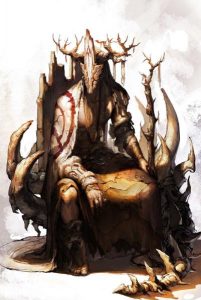 The Supernatural
In the five kingdoms, the presence of the supernatural is greatly reduced and often obscured. The people are performing their rites to the god kings, say their prayers of protection, wear their charms and carve runes into their houses, and don’t go outside during ovrcast nights. And most of the time it works. There is little influence of the spirits felt in the villages and towns and those that do make their presence known generally don’t cause much real trouble. However, while the power of the god kings seems absolute, there is a dirty little secret that the priests would like the people not to think about. The god kings are not divine and their abilities are not unique. Magic is a skill that can be taught and learned and there are a large number of occult and esoteric societies, orders, and cults that practice their arts away from public sight and scrutiny of the priests. However, none of them possess powers that come even close to those of the god kings and how they managed to transcend the limitations of mortal sorcerers is one of the great mysteries. Despite of what the priests claim, god kings are also not immortal. There are ruins of previous civilizations below many of the great cities and palaces and scattered in the wilderness. Who they were and how they disappeared is another great secret presumedly known only to the god kings and their highest priests.
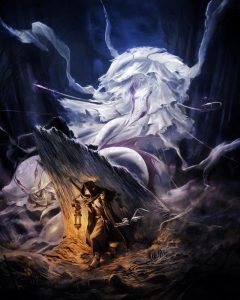 The power of the god kings over their realms is also not nearly as complete as the priests are teaching it. The strength of their influence varies from place to place and there are large numbers of holes in their realms where spirits still roam mostly unrestrained. These places are considered to be haunted by the common people and it is often forbidden by the priests to enter them under any circumstances. Occasionally something manages to slip out of these forbidden lands and the low ranking priests serving in these remote parts of the kingdom are often poorly prepared to handle them. And of course there is always the vast unclaimed wilderness beyond the border where neither god kings nor priests have any influence at all.
Sorcerery and witchcraft in the world is generally a rather low-magic affair. Most occult knowledge deals with potions, protective charms, and the means to harm and repell spirits. The binding of spirits is the greatest form of sorcery and gives a sorcerer access to powers far beyond mortal capabilities, including divination and shapeshifting. There is no throwing of fire and lightning, creation of matter, or teleportation though, or any similarly flashy forms of spells.
As with the people, the world is inhabited by many exotic fictional creatures, but for the most part they are simply ordinary animals. Monsters are always some kinds of spirits or undead and there is a very clear and unabigous distinction between what is an animal and a monster.
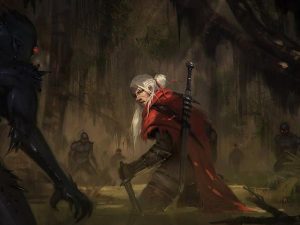 So what is going on?
Despite the powerful presence of the god kings and the paranoid fear of barbarian invasions, the setting is not actually about them. What it really is about are the various secret societies that exist within the kingdoms. While the common people don’t notice much going on, there’s actually a huge bustle going on out of sight. Everyone is hungering for every shred of occult knowledge like the writings of past and rival masters, the means to bind spirits, artifacts from overgrown ruins, the locations of sites of power, and of course any hints towards the secret of the god kings’ power. And as in the criminal underworld of Noir stories, most sorcerers will use any means neccessary to get their hands on these invaluable treasures before someone else. While in the background there are always the priest trying to maintain the priesthoods monopoly on supernatural power in the society. As priests are often incapable to deal with hostile spirits that break free of the god kings’ influence, it frequently falls to sorcerers, witches, and their disciples to take care of it.
The typical heroes of the setting are not usually reclusive scholars spending their days over scrolls and cauldrons. Most are warriors first and possess a collection of charms and potions to help them deal with spirits. Magic is of little use in a fight against mortal opponents and those are the ones that stand in the way to occult secrets and esoteric relics. With characters I am drawing heavily from the wuxia genre as well as the world of The Witcher. Think of heroes as kung-fu masters, taoist monks, witchers, or sorceresses.
Overall I am quite happy with the state of things so far. I still feel that it’s a bit bland, but that’s not too surprising at this stage where everything is pretty much placeholders and there exist no information about any specific kingdom, god king, or secret society. I am very much looking forward to how this will be working out as I keep going.
What if The Witcher were wuxia and set in Morrowind?
I have a strong hunch what it would be: Awesome.