A simple system for supplies and hunting

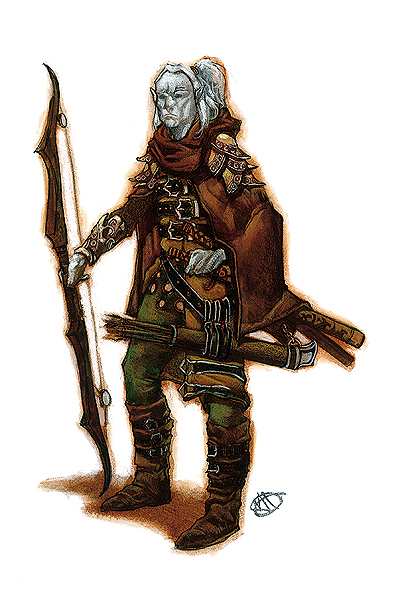
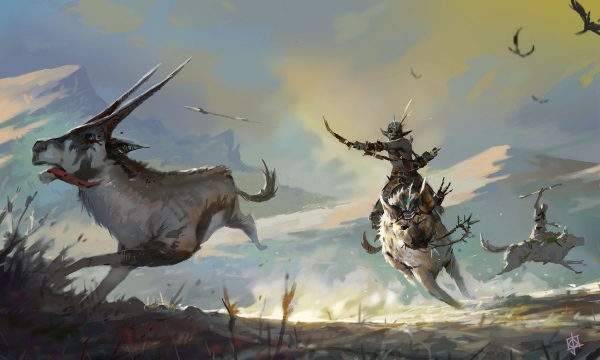
Way too dramatic fantasy hunting scene, but this is what I got.

Kaendor is a continent that is very large and very sparsely populated, with almost all land covered in trees or steep mountains. For campaigns in a setting like this, especially when it ‘s intended for parties with numerous followers and animals, tracking food and water supplies and dealing with the consequences of hunger and thirst is something that really should be part of the game and the everyday travel procedures. While B/X provides a neat simple system for hunger and thirst, the rules for hunting are very vague and appear implausibly inefficient.

So here’s my take on it. The foraging system is taken straight from the Expert set, and expanded with the hunting mechanic. With how often players will likely go hunting throughout a full campaign, I really don’t want to bother with having combat encounters with rabbits and deer that might just run away. The mechanic for hunger and thirds is straight from Basic Fantasy, though I added the time limit to die from dehydration regardless of remaining hit points.

Hunger and Thirst

Humanoid characters need one ration worth of food and one waterskin of drink every day. Characters who do not get sufficient amounts of food lose 1 hit point per day. If they don’t get sufficient amounts of water, they lose 1d4 hit points per day. In either case, the characters are unable to naturally heal any damage without magic until they receive enough food and water again. In addition, characters who go without water die after 3 days. Characters with a Constitution score of 13 or higher can survive for an additional number of days equal to their Constitution bonus to hit points.

Foraging and Hunting

In most circumstances, parties come across enough sources of drinkable water in the wilderness to refill all their waterskins to full. So unless the GM specifically states that no water source was encountered during the day, water consumption does not need to be tracked. If the party stays in areas without natural water sources for an entire day or more, one waterskin has to be subtracted every day, but finding any source of drinkable water is usually enough to refill all waterskins to full.

Rations of food have to be tracked every day the party spends outside of settlements. While traveling through the wilderness, characters can gather edible plants they find along the way, and the party has a 1 in 6 chance to collect 1d6 rations worth of food on any given day. In practice, this number is simply subtracted from the number of rations that are consumed on that day. (Assume the characters eat food that is close to perishing first and keep any food that keeps well for later, so there’s no mechanical difference between preserve rations and fresh plants or meat.)

Alternatively, the party can decide to not travel on a given day and instead spread out around the campsite to hunt for food. Each group of hunters has a 1 in 6 chance to collect 1d6 rations worth of food, but also makes separate checks for random encounters at noon. (Random encounters in the morning and evening are assumed to happen at the camp.)

The Essentials Version

Hunger: Characters who do not eat one ration worth of food in a day, suffer 1 hit point of damage and can not heal damage naturally without magic.

Thirst: Characters who do not have one waterskin worth of drink in a day, suffer 1d4 hit point of damage and can not heal damage naturally without magic. After 3 days + 1 day per CON bonus, the characters die.

Foraging: A traveling party has a 1 in 6 chance to find 1d6 rations worth of food per day.

Hunting: A party resting at camp for a day can send out hunting parties that each have a 1 in 6 chance to find 1d6 rations worth of food per day.
The History of Planet Kaendor

An early-ish draft

The Age of the Ancients

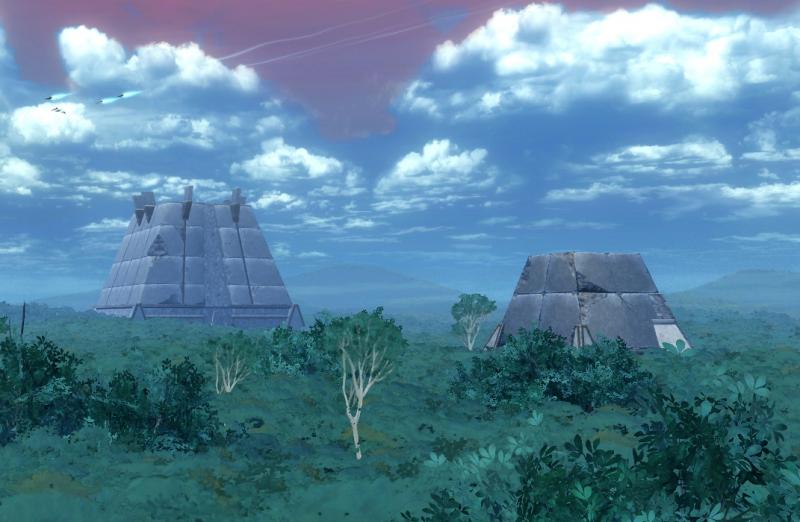
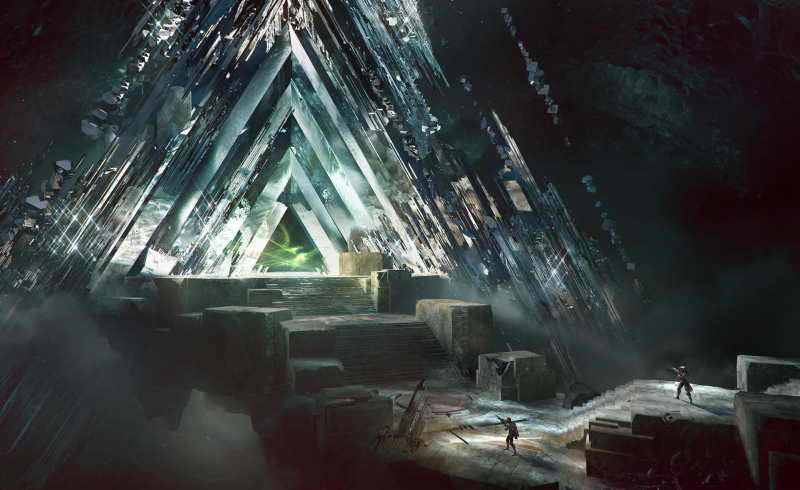
In the ancient times long before the beginning of history, unknown beings known as the Glass Makers created numerous large structures from a nearly unbreakable, dark green, glass-like material that have been found everywhere across the continent from the mountains of Venlat to the jungles of Kemesh. Nothing is known about the Glass Makers except that someone must have created these ancient ruins at some point in the long distant past.

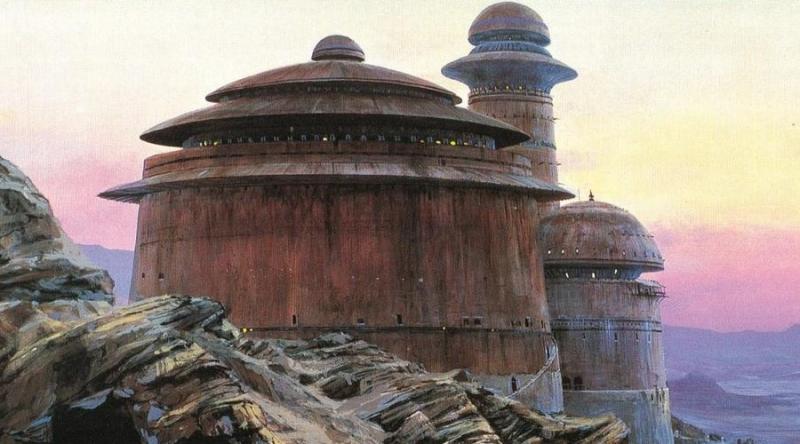
After the Glass Makers, a civilization appeared across Kaendor that people call the Rock Carvers. The Rock Carvers created many large cities and fortresses, which were build not from bricks or blocks of stone, but appear to have been carved entirely from the solid rock. While many of the ancient stone castles have large sections made from stacked stones, these appear to be repairs and extensions made by later inhabitants of the ruins, as they don’t match the precise angles and smoothness and often lack the sophisticated carved decorations. The ruins left behind by the Rock Carvers leave little information about their civilization, but the size and scale of rooms, doors, and windows makes it likely that they were not too unsimilar in body from the people inhabiting Kaendor today.

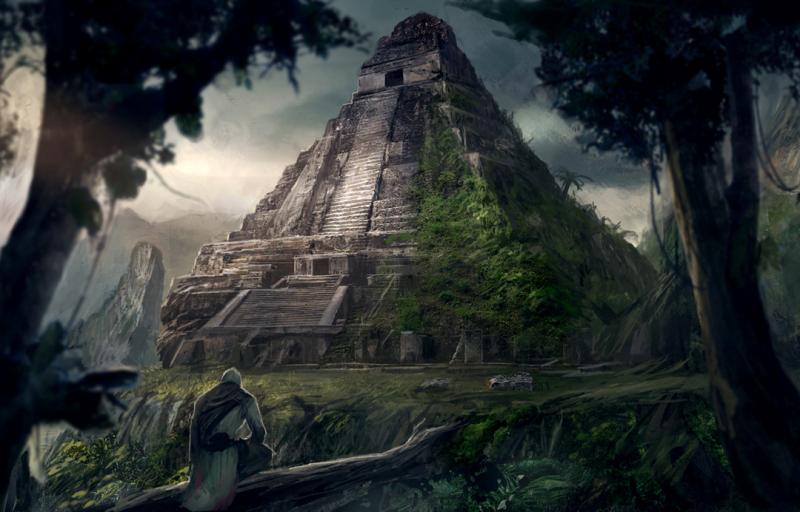
The age of the Rock Carvers was followed by the Tower Builders, who build their castles from large, tightly fitted blocks of stones that are dominated by tall square towers. Many shamans tell stories of having talked with the Folk of the Forests, who claim to have build these towers, but it’s not clear if they are referring to themselves or their ancestors. The square towers are found in many places in Senkand and Dainiva, and a few are known to be still standing in Venlat and even the islands of Suiad. While some of them are currently inhabited, most famously Kamir in Senkand, all known towers appear to have been abandoned by their builders for a very long time.

Eventually the Tower Builders came into conflict with the Naga from the south, who expanded their own civilization far into the woodlands of Dainiva. It is said that during this time, the Kaska fled the wrath of the Forest God Livas across the Misty Sea to the Witchfens of Venlat. Nobody knows how long the great empire of the naga lasted, or even if it was a single civilization or numerous unrelated kingdoms But there are old stories of a great winter that lasted for centuries and made the naga flee from their northern cities and retreat to the jungles of Kemesh where they are said to rule to this very day.

When the naga disappeared from the lands north of the Southern Sea, people who had been living deep in the forests mountains of Senkand moved into their deserted cities and created the first civilization of mortals. The Tulean are said to have ruled in Var Sharaz, Kamir, Ven Marhend, Hadakar, and the Gray City for over half a milennium until they too were defeated by the Murya who became the new rulers of Senkand. It is said that some of the Wilder clans high up in the Mountains of the Moon are the last descendants of the Tulean, but most other survivors have blended in with the Murya many generations ago.

The Age of Kings

Murya Wilders

After the disappearance of the Tulean, Murya culture spread north along the coast to the Fenai, and east over the mountains to the Yao, leading to a new age of great cities appearing throughout the lands of Kaendor that had been nothing but wilderness and home to small scattered clans for countless centuries.

Over 500 years ago, the golden-skinned immortal Kor-Sharazan, claiming to be the youngest of the nine children of the Moon Goddess Ashana, who are the ancestors of all mortals, founded Var-Sharaz on the ruins of an ancient naga city. To this day, it remains the oldest surviving city north of the Southern Sea.

Kuri Warrior

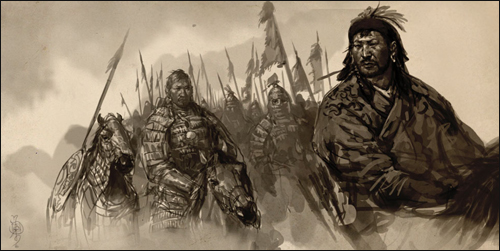
Some 300 years ago, three nameless mystics founded the Sakaya in the Mountains of the Sun, which in the generations since then became the dominant religion of the Yao, though they count many Fenai and Murya among their ranks as well. Far to the north, the fey witch Meiv appeared among the Kuri in Venlat and led many of  them to rebuild the ancient ruined city of Halva, becoming their immortal queen. Nobody knows where she came from or how old she really is, but some Kuri privately belief that she’s a daughter of the North Wind who had been banished from her home for unknown deeds.

Far away in distant Kemesh, slaves of the Naga escaped across the Southern Sea and eventually found their way to the islands of Suiad and the old abandoned naga ruins of Kelay, where they became the Suay.

Ven Marhend, City of the Sorcerer Lords

Other cities followed, such as Kerlon, which grew around the ancient mountain temple of the Disciples of Temis; Kamir, under the rule of the powerful Murya sorceress Yenati; and Ven Marhend, the city of the Sorcerer Lords.

Some 40 years ago, the Sorcerer Lords fought a long and terrible war with their neighbors to the north, which ended in a great magical disaster that devastated the land, leaving behind the Gray City on the banks of the River of Ash. Most recently, the Red Sakaya left behind their kin in the Mountains of the Sun for good to seek their fortune north in Dainiva. They breached the walls of Aleya and in the terrible fighting the city was reduced to charred rubble. With the city being left uninhabitable, they continued along the shore of Lake Amara until they reached Kars and managed to take the city without a fight.

Yora’s Law of getting 1s in a dice pool

While I was checking the odds on an old system for rolling for random encounters in the wilderness, that I’ve come up with some years back, I discovered an amazingly simple equation (with help from gunnervi and A1vin) to calculate the expected amounts of 1s that come up in a roll of multiple dice of the same type.

If you roll N number of P-sided dice (NdP), then the expected amounts of 1s to be rolled is N/P.

When you roll 4d6, the the expected amount of 1s to be rolled is 4/6 (or 0.67).

When you roll 3d8, the the expected amount of 1s to be rolled is 3/8 (or 0.375).

My random encounter system rolls a single die four times per day, with a result of 1 indicating an encounter. To get different odds for areas with high or low population densities, you switch to different types of dice, with d4s being used for very busy areas and d10s for very desolate wastelands. I wanted to know how many encounters you would get per day on average, and the numbers I got for the four dice types are 0.4, 0.4998, 0.666, and 1. With the d8 looking like a rounding error of 0.5, I realized that these are all fractions. Specifically 2/5, 1/2, 2/3, and 1/1. That doesn’t look much like a pattern, but I felt like poking at it just a bit more, and you can write the same numbers of 4/10, 4/8, 4/6, and 4/4. Which matches the sizes of the dice, and as I figured out a bit later, the number of rolls!

I only checked this for rolls of one to four dice and only for the d4, d6, d8, and d10, but the results are so exact that I am very confident that it works for any number of dice of any type.

I had decided to go with random encounters happening on a 1 instead of the max number of each type of dice because it just seemed neater to say “encounter always on a 1!” But the math works out the same either way. If you have a player roll Xd6 and want to know how many 6s you can expect to come up on average, it’s the same as counting the average amounts of 1s. Or any number actually. As long as it’s just a single number you are looking for, and not a range of numbers (like “3 or higher”), this equation works.

You can even use this to get the expected average result for mixed dice pools. To get the expected amounts of 1s that you get from 3d8+4d6, you just add them together as 3/8+4/6. Not as neat, but still really simple.

This might be of some use for people tinkering around with dice pool mechanics.

Sometimes I think nobody at TSR knew what they were doing

When you pay a little bit of attention to discussions about rules interpretations in old D&D systems from the 70s and 80s, you run into people all the time who say things like “this is the way to do it, because that’s how Gary did it”. And Gygax created the game, he must know what’s best.

When you look at OD&D and the AD&D rulebooks, I find that very hard to believe. And if you pay a bit more attention, you also very often come across people saying “Oh, you should just ignore those pages from the DMG. Gary never used those rules himself.” I believe Gygax didn’t really have any clue what he was doing. Which isn’t to say that anyone else did either. For one thing, this new Fantasy Adventure Game was a new concept with pretty much no pre-existing foundations to build on and compare to. There was very little data to work with, and also no real established procedures for designing such games. And those early designers literally worked out of their living rooms.

But sometimes I see things that just make me grasp my head in disbelieve. Why did anyone think that was a good idea? The completely backwards math to roll against Armor Class is the obvious black sheep. But sometimes there is also stuff that makes me feel absolutely certain that nobody ever playtested it before it went into print. And possibly the writer didn’t even check how the math works out.

What I am looking at in particular right now are the wilderness movement speeds in the 1981 Expert rules. I am generally a huge fan of Cook’s work, he’s probably my favorite of the TSR designers. But this overland travel system? What the hell was he thinking?

To determine the speed of a character, you first need to look out the base movement speed based on Encumbrance in the Basic rules on page 20. Then you go to the Expert rules on page 20, which has a list that tells you the miles traveled per day based on the base movement speed. Then you have to go to another table that tells you the speed is 2/3 the normal rate in forests, 1/2 the normal speed in mountains, and 3/2 the normal rate on roads.

Why not simply give us a table like this?

It’s so easy. With this table we could easily travel along our 6-mile hex map (as implied on page 56).

But what do I spot there? 27 miles per day? 9 miles per day? 16 miles? 4 miles? Those aren’t divisible by 6! Did nobody notice this when the Expert rules were written? Did they notice it and not thought about maybe changing the system so it works with 6-mile hexes?

At least the movement rates for ships are all in 6-mile increments. But I think for sea travel, I’d rather use 30 mile hexes instead.

But we have authentic contemporary depictions of it in art?

When it comes the the discussion of how medieval and ancient soldiers were actually equipped and fought in reality, something that comes up all the time is the mention of authentic artwork from the time that shows various weapons and how they are being used.

I admit those as evidence, but I dispute that they are proof.

Art is art. Not documentation. Sometimes art can be helpful in figuring out how certain things needed to be constructed to work, and held to be efficiently used. But in those cases you still have to try and replicate the depicted construction or handling and try them out to see if it actually solves problems people have encountered with modern recreations.

People have build plenty of ball and chain flails and studded leather armor over the recent years, but nobody has ever demonstrated that those can be of any use in a fight.

My favorite example of why authentic contemporary art can not be used as proof that people actually did things that way at the time is the 1987 movie Predator. In Predator, we see American soldiers fighting in a jungle, dual weilding MP5 sub-machine guns and carrying a hand-held minigun.

This artistic depiction of American soldiers was created by American artists in 1987, depicting scenes that take place in 1987. It can’t get more authentic and contemporary than that. There are countless historical records that show American soldiers actually saw action South America at that time, and in the archeological evidence we have thousands of surviving MP5s, and numerous still existing Miniguns that are extremely close to the one shown in the footage.

But should we take Predator as a reliable source for how American soldiers conducted jungle warfare in the 1980s? I’d be cautious about that.

And let’s also not forget that many pieces of medieval art were clearly drawn by people who clearly had never seen the things they were drawing.

This was a mistake

If you can’t be a good example, you can at least be a cautious warning.

I’ve been thinking about how I can get myself into thinking of Planet Kaendor as a wilderness setting instead of always ending up putting all my efforts into the city states, which are supposed to be exceptional special cases in the setting and not the site of much adventure.

And in the process, I realized that the whole geographical layout that I cobbled together years ago is actually really bad.

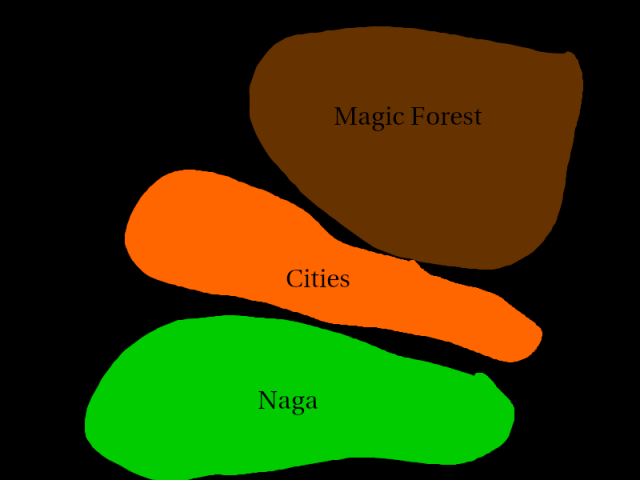
The idea for the setting is that there are a few small clusters of civilization on the coast of the mainland, beyond of which lies a vast expanse of strange and wondrous forests. And the one thing the setting has in the way of major bad guys are the naga, who used to control much of the world in the ancient past, but are now driven back into the southern jungles where they plot their return.

Breaking down the layout for the overall geography like this immediately show the problem. The big weird forest and the naga jungles are in opposite directions? Delving deeper into the wilderness does not bring the party in closer contact with the naga, it takes them further away from them. And it doesn’t make sense for the naga to do some plotting and scheming in old ruins in the great forests because they would first have to get through the cities to get there.

I think all the way back when I came up with the general map layout, I didn’t really had much thought put into the naga yet, and only decided that I want to have them somewhere. But with the ways the ideas have morphed in the years since then, it has become increasingly impractical for the new concept.