I believe that is the lamest title I’ve ever used for a post. But it does get across what’s inside: How about implementing some of the moves from Apocalypse World in Barbatians of Lemuria?
Now there is already a Sword & Sorcery conversion for Apocalypse World that basically just replaces all the names with S&S terminology, and simply using that for a fantasy campaign is an option that I did serious entertain some time back. But as cool sounding as it is, AW is a very strange game, compared to which BoL seems like a much “safer” choice for introducing new players to a new setting. But many of the concepts and principles of AW are quite fascinating and I’ve long been wondering how much one could adapt them for running other systems as well.
The core mechanic of Apocalypse World is the move. There is no initative system, instead players simply announce when they want to do something, and its up to them to share the spotlight, with some moderation by the GM if it becomes necessary. Hostile NPCs take their turns as reactions to the players making a move. Or more precisely, a reaction from NPCs or the environment is part of the various moves that the players take. If one player wants to push on the stage and take four moves in a row, he also can expect to be the target of four reactions and consequences, and with the way character endurance works you usually want to spread the return fire across the party. (In addition, the rules make it very clear that if the players are paralyzed with indecision, the GM can just throw a reaction at them at any time to shake up the situation and get the action moving again.)
It’s a pretty interesting system, and while the existing combat mechanics of Barbarians of Lemuria make the combat moves of Apocalypse World non-applicable, some of the more interaction oriented moves should be quite easy to incorporate. Both systems use 2d6 for rolls, with an attribute modifier that usually ranges from -1 to +3. AW generally requires a 7 to succeed and BoL a 9 before any other modifiers are applied, and a 10 in AW and a 12 in BoL results in a greater than normal success. This makes importing AW moves into BoL very easy.
In AW, characters can read a charged situation, that is any situation that looks like it could lead to conflict, and ask various questions about useful information about the situation from the GM. Using this action in BoL, a Mind roll of 9 would be a success and allow the player to ask one question. A roll of 12 would be a mighty success and allow the player to ask three questions. These can be things like “Who is really in charge here?”, “Who is the most dangerous person present?”, “Where would be the best escape route?”, “What do these guys really think of us?”, and things like that. If the roll is a failure, the player still has to ask one of these question, but the answer will reveal a new complication that wouldn’t have been present if the player had rolled a success or not rolled at all.
There is also the move to read a person. The mechanic is the same, but the player can ask things like “Is that guy telling the truth?”, “What is that character really feeling?”, “What is he going to do next?”, and “What does he wanting me to do?” These are things that players might already ask in most campaigns, to which the GM would probably either reply to make a suitable attribute or skill check, ot that the character can’t know that. In games like D&D, where the core if the gameplay is the overcoming of obstacles with the powers and resources the characters have, GMs will probably go mostly with the later option, and when a roll is allowed, failure would simply mean that the player learns nothing or gets false information. BoL is not really a game like this, and letting players have generous access to information to make individual scenes more dramatic and exciting seems like fair game to me.
A third move that I feel should fit quite well is seducing or manipulating a person. In BoL, that would be an Appeal roll. On a 12 the roll will be a mighty success and the character will go along with what the player wanted. On a 9 and a regular success, the character agrees if the player offers something of comparable value in return. If the toll fails, the attempt will come to bite the player in the ass. Maybe now, or maybe much later. It could turn out to be something that no longer matters when it happens, and the NPC might still give the player what he asked for.
The beauty of these resolutions is that they provide an easy mechanic for failing forward. One of the biggest killer of momentum and cause of games stalling is when players come up with an idea or a plan, but a random die (or a GM who set an impossible target number) determines that “nothing happens”. From a gameplay perspective, nothing is the worst thing that can happen. It’s better to either give the players what they want, or something that they didn’t want. Either way, the situation has now changed and the players need to think of a new best idea for a new problem. Not of a second best idea for the old problem.
Apocalypse World also allows all player characters to perform a kind of basic divination at any time. Basically the player asks for some kind of useful hint related to the current situation and the answer from the GM could be basically anything. In return, the higher powers ask something about the character. The player than has to share something of the character’s backstory or personality, or make up a new addition on the spot. The GM will then file away that information to maybe be exploited in some way at some point in the future. On a success the information will be vague, and on a mighty success something really useful. On a failure, something unexpected and bad will result. It’s definitely one if the weirder elements of Apocalypse World. (But by far not the weirdest.)
I am really wondering if this could also be incorporated into BoL. I could see it as a cantrip that could be performed by any characters with at least 1 point in the Magician career. That would make it unavailable to many player characters, but it also would contribute to making sorcerers dangerous and strange even to their allies. Really not sure if it’s a good idea, but I think it sounds too fun not to try it out.
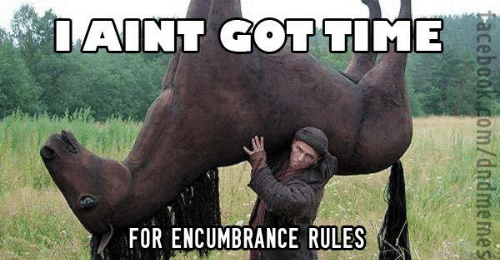 Encumbrance in D&D has always ranged from bad to terrible. The idea behind encumbrance is actually great. The default assumption for the first decade or so had been that the party enters a dangerous place, gets their hands on valuable stuff, and gets back out again, preferably with their loot and without anyone dying. When wandering monsters are a thing (look forward to part 3) and fighting battles is a negligible source of XP (look forward to part 4), then getting in and out quickly is of the essence. The longer it takes you, the greater is the risk of anyone dying with no benefit in trade. So as you keep delving deeper into the dark unknown, you are using up some of the tools and supplies you have brought with you, but at the same time get weighted down by the treasures you find. Which leaves you with two choices. Slow down and risk fighting more opponents and reducing your odds of being able to run away. Or reduce your weight, either by choosing to leave some of the treasure you’ve found behind, or by dropping some of the equipment that you hopefully won’t be needing on your way back to the surface. Hang on to all your potentially life saving tools and weapons as you slowly crawl back to the exit, or make a mad dash to safety? Or play it safe and leave some of your hard fought for rewards behind? This is a real question that players will have to face. There is no right answer which two out of these three you should choose and will greatly depend on the constantly changing situations. To me, this is one of the big things that make exploration adventures so exciting.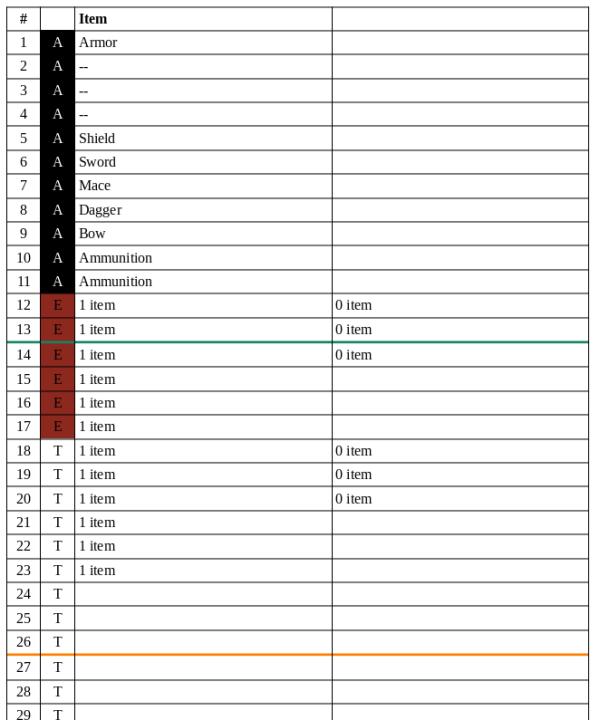
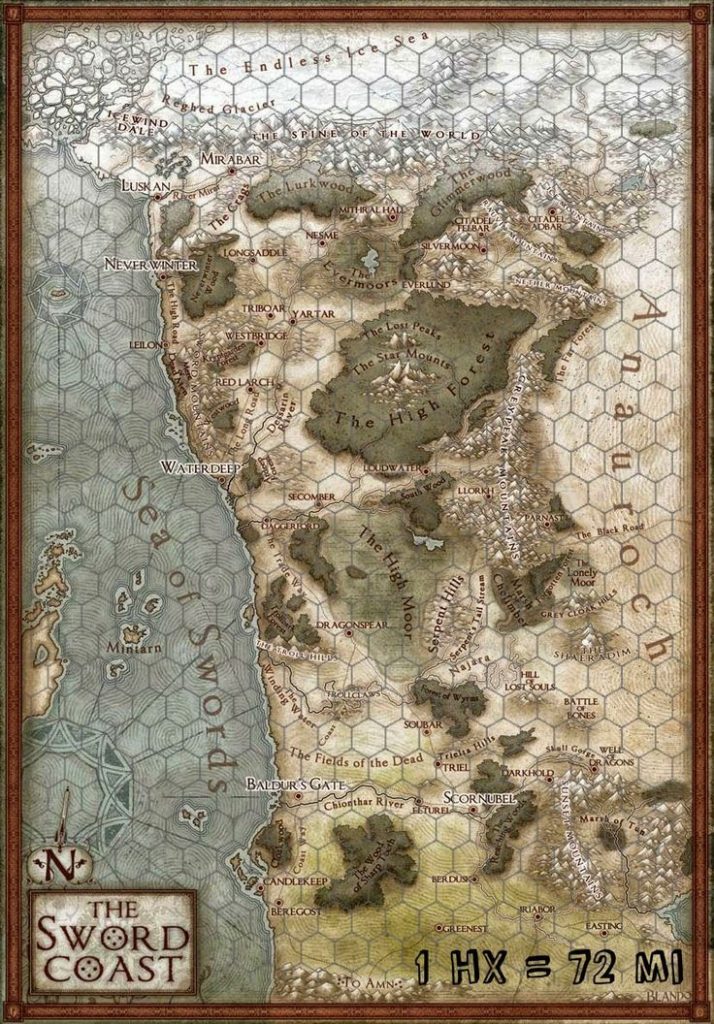 I have a long and very conflicted relationship with hex maps, which I attribute primarily for my distaste of hexcrawl campaigns and my appreciation of