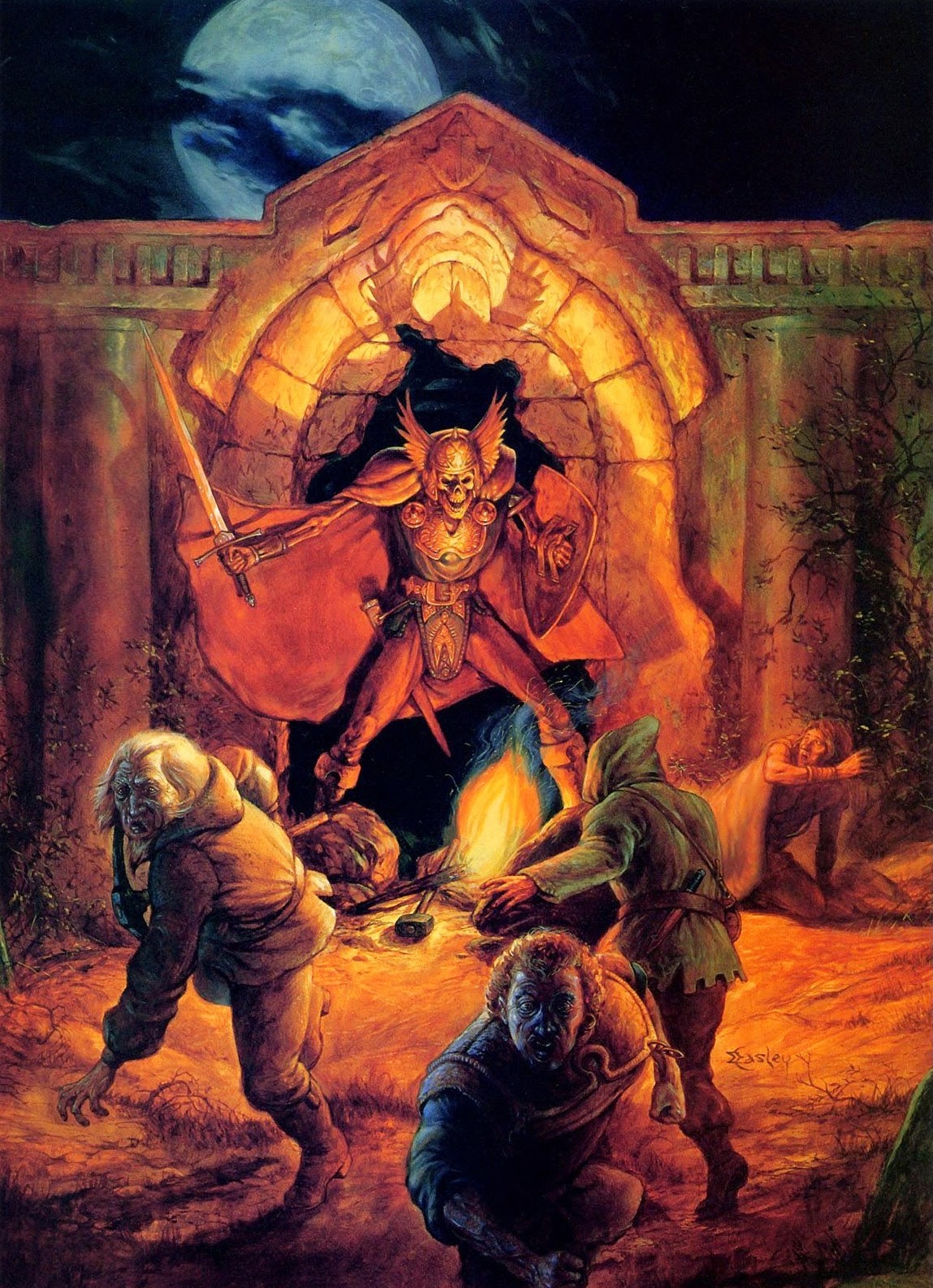
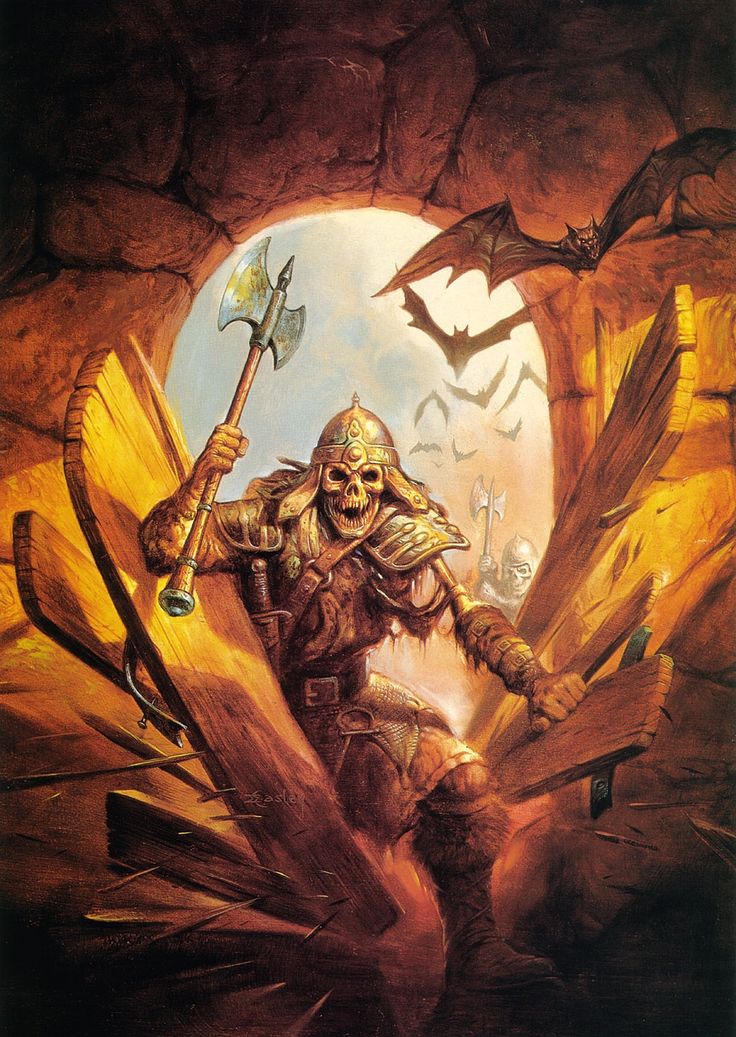
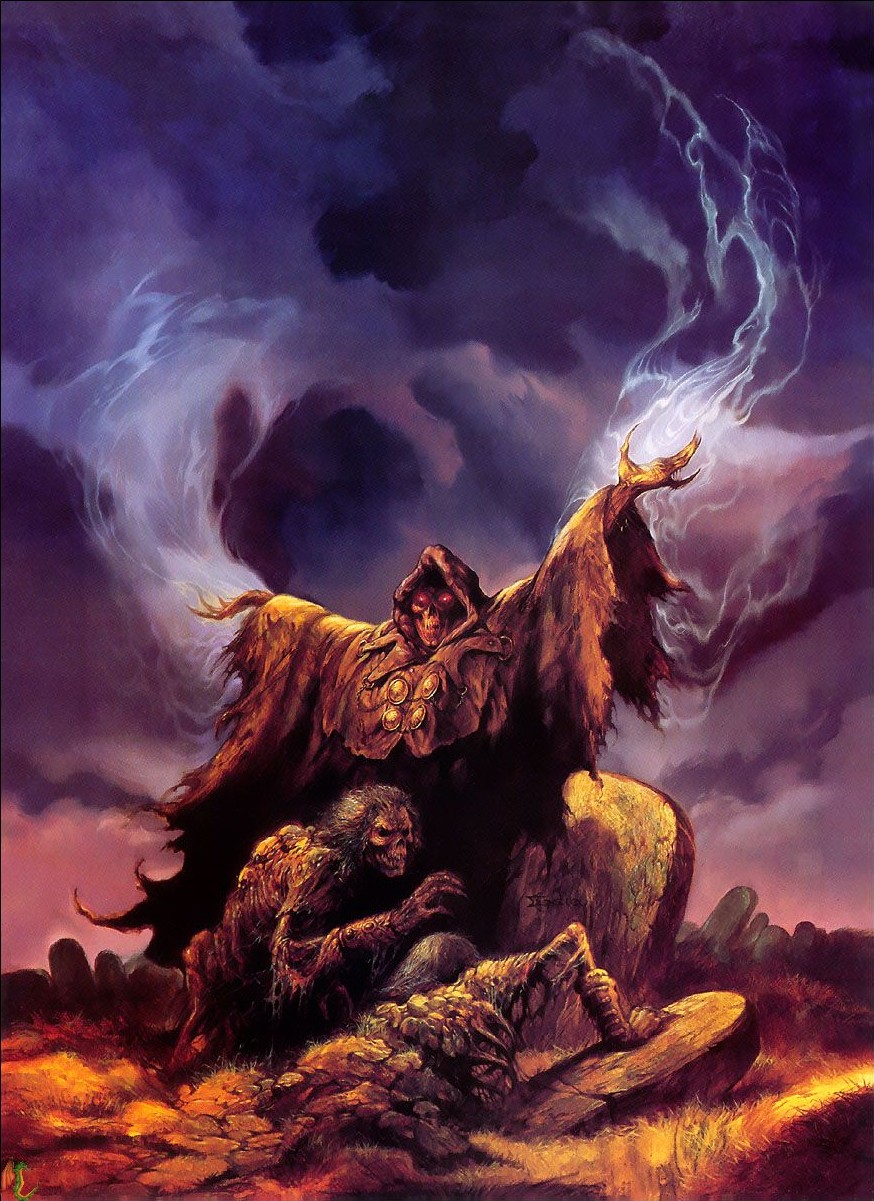
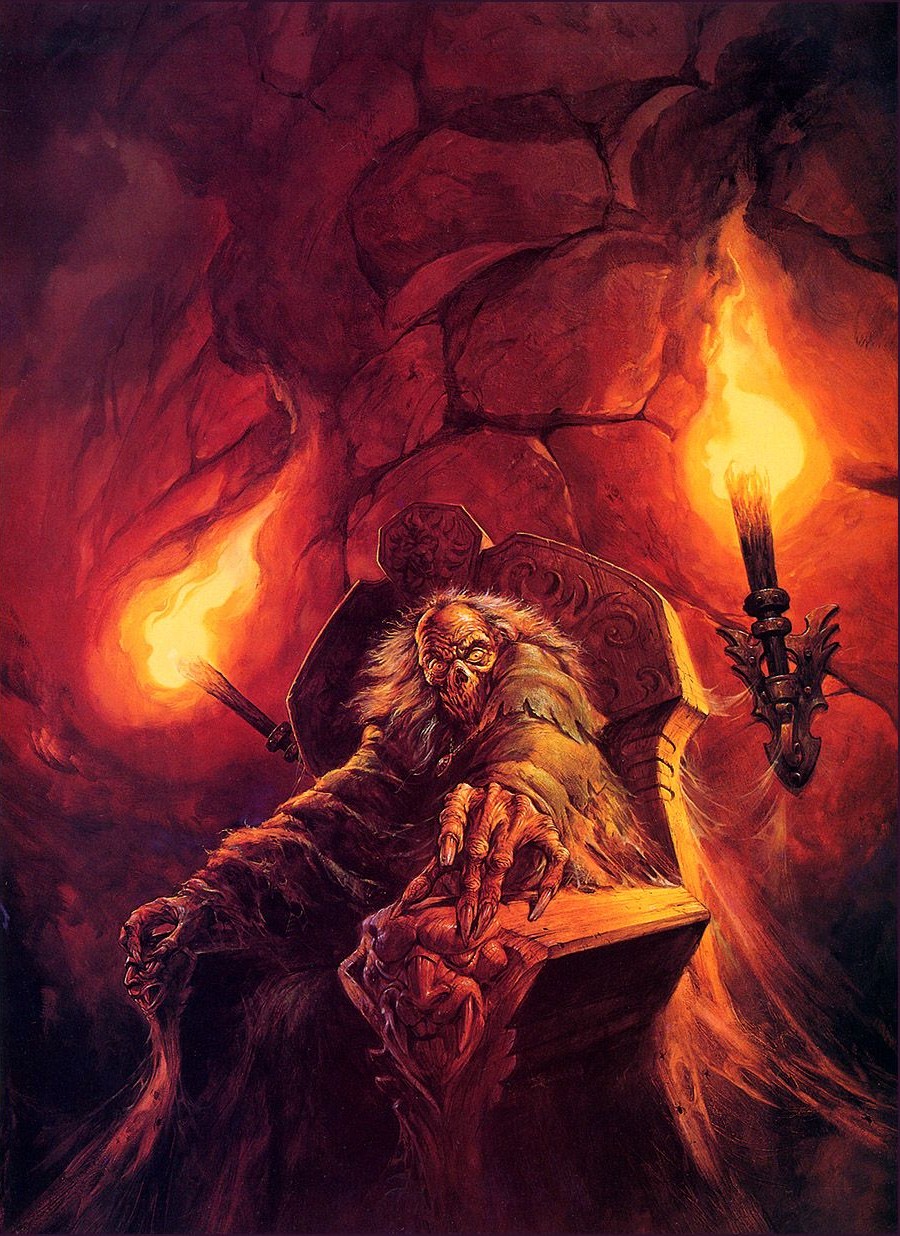
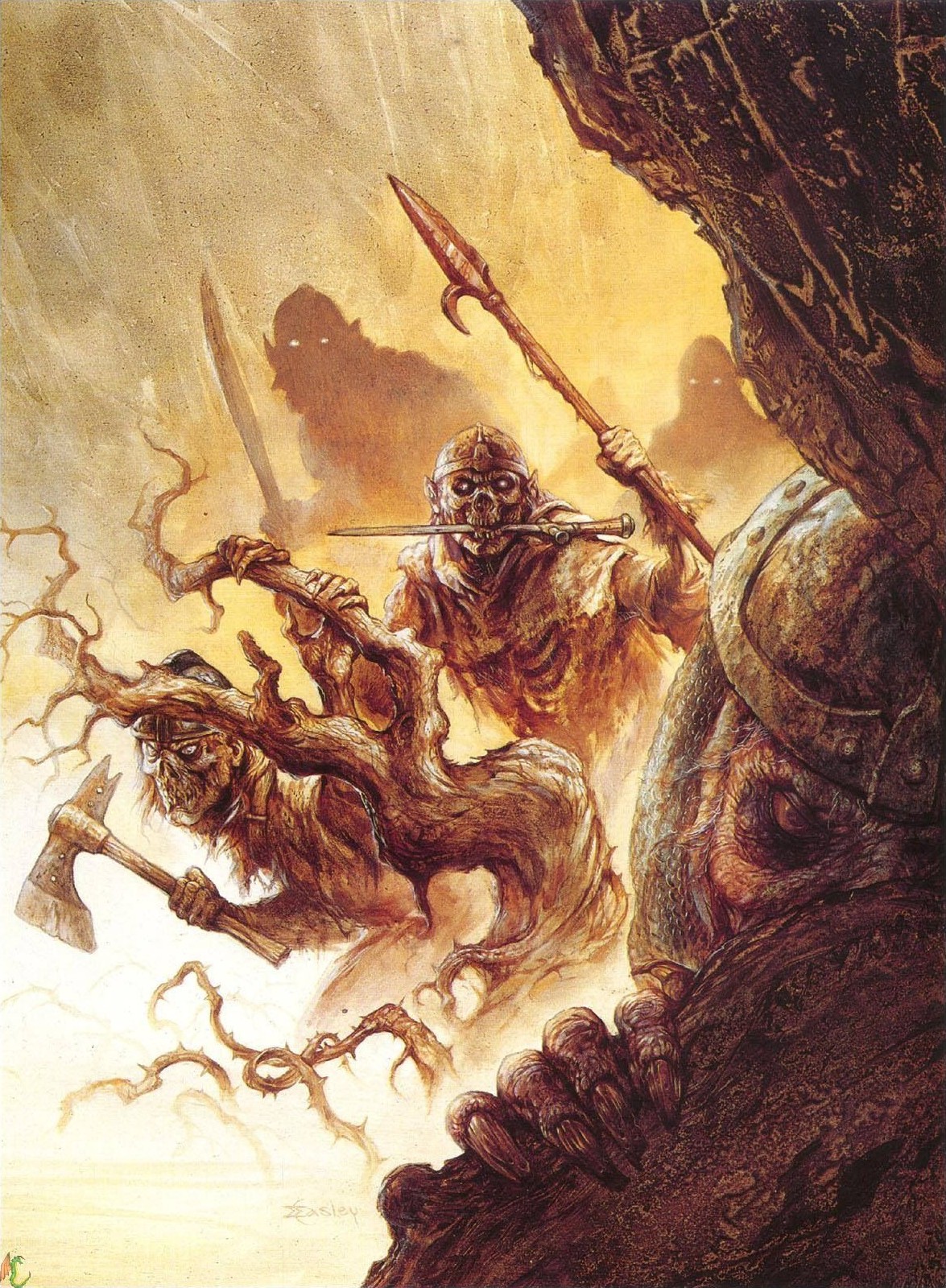
When it comes to how I envision the world of the original 1st edition Forgotten Realms to look like, right after Keith Parkinson comes Jeff Easley.



Yora's site for Sword & Sorcery RPGs
When it comes to how I envision the world of the original 1st edition Forgotten Realms to look like, right after Keith Parkinson comes Jeff Easley.
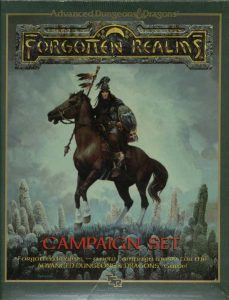
As I might have mentioned in my recent posts, the Forgotten Realms bug has bitten me again. In particular the world presented in the AD&D 1st edition Grey Box and The Savage Frontier. This is the setting of Icewind Dale and Neverwinter Nights, which were two my first fantasy games, and a few years later I was one of the GMs and level designers of a huge German NWN server network that ran for several years and set in the same region. It really was my first campaign setting and I lived and breathed that stuff for several years during my whole time as a 3rd edition GM. I pretty much lost interest in it after that and eventually went into homebrewing my own settings, but every couple of years, I remember that little The Savage Frontier book, that I earlier had dismissed as being entirely superseded by the much superior The North box and the Silver Marches book, and think of all the cool ideas that were lost in the later versions and I never got to use in the adventures I ran. While I currently have a new homebrew setting in the fire and another one in the drawer to work on any time the fancy strikes me, I also really just want to start a new campaign in the new year and go out to take the OSE Advanced rules for a spin. And The Savage Frontier is looking as attractive as it always does.
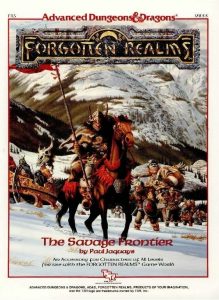
FR6: The Savage Frontier is one of 12 expansions for the original Grey Box campaign set. I think it’s Janelle Jaquays’ greatest work and possibly the best campaign setting sourcebook released for any RPG. Like all the books in the FR series, this one is really thin. Only 64 pages plus a really cool map of the entire region, which I used as the basis for my own giant hexmap. But this thing is just packed with content. One way in which it accomplishes that is that it is entirely setting description. There are no pages spend on new character options, spells, magic items, or monsters. This is all content for GMs to use as starting points for creating their own adventures. The amount of information that is provided on each subject that is covered is usually very sparse. Neverwinter gets a third of a page in total and Sundabar half of that. In contrast to that, The North box has lavish descriptions of various inns and taverns in every town and village. But looking back at it now, those descriptions didn’t actually give you anything that could be used to create adventurers for PCs. I guess that’s where the weird “laughing people around a table” trend started for D&D.
Dungeon descriptions are just as sparse and in many cases you don’t get anything more than a name and the reason why it has that name. That can seem quite underwhelming and not that helpful, but what The Savage Frontier is made for is to give you ideas to start of creation of your own game content. You’re not meant to discover the Forgotten Realms that have already been made for you, but to create your own version based on the provided seeds and stepping stones. And the stuff here is just really inspiring.
My plan for the campaign is to take the Forgotten Realms just as they are presented in these two sources and expand on what is on the page, without referring to any information from later sources that overwrite, contradict, or are thematically mismatched with what was established in 1988. I put the villages of Mornbryn’s Shield and Uluvin on my map because they don’t contradict or subtract anything from the original sources, but it is still the year 1357 with Hellgate Keep and the Blue Bear tribe, a massive orc stronghold right outside Silverymoon and Sundabar, Bane, Bhaal, and Myrkul, and all that other awesome metal shit! Also, the North is truly a Savage Frontier! It is a region that has been settled by humans from the South only fairly recently and outside of Waterdeep there is only a sparse scattering of homesteads raising cattle, sheep, and horses on the prairies. The elves are long gone. All that remains are a few stragglers occasionally showing up in human cities. The dwarves are still hanging on, but only barely. King Harbromm of Citadel Adbar is the last dwarven king in the North. They all know that the days of their people are over and that they are the last survivors of a great civilization who are left with the only two choices of fleeing to human cities or isolating themselves completely from the outer world in their greatly diminished underground strongholds.
The concept for the campaign is that the players start out as a (recently) established adventurer company. As laid out and explained in great detail in the Grey Box, adventurers in the Forgotten Realms are very much like mercenary companies roaming from town to town in search for work. Not single wanderers who just happen to be in the same backwater tavern when the plot hook comes crashing through the door. It also makes sense when you take into consideration how the rules for 1st edition were designed and the game presented. A party does not consists of 3 to 4 PCs, but of 10 to 15 PCs, henchmen, and hirelings with a whole baggage train of supplies. I’ve found that with this context, the whole setting makes a lot more sense. Individuals roaming around, hoping that someone is in need of a weird stranger to rescue Lassie from the well never felt really believable to me. But small armies for hire in a huge and sparsely populated wilderness where the next Lord’s knights are weeks away? I can see that being an actual career option.
My idea for adventures is to have essentially miniature sandboxes. The players hear that a town has been suffering from an ongoing threat from barbarians, orcs, monsters from the wilderness, or a strange curse and set out to offer the locals their services to protect them for a fee. It is then up to the party to go explore the surrounding woods and marshes to find the source of the threat and deal with it. They either can make a contract to find and kill a specific monster that is terrorizing the town, or to simply guard the town and patrol the nearby area until the townsfolk think it’s safe enough to not extend the contract for another week or month. I think this is a great setup to combine wilderness exploration and dungeon crawling and have the players discover all kinds of lairs, strange spirits, and odd hermits, while at the same time leaving it entirely in their hands where they want to go and how they want to respond to the things they encounter. No need to script any events with predetermined outcomes. Like any West Marches campaign, this also makes the game very flexible, with the game being able to continue with whatever players are present on that day. The characters of players not playing that day would be staying back guarding the town while the party is out on patrol or hunting.
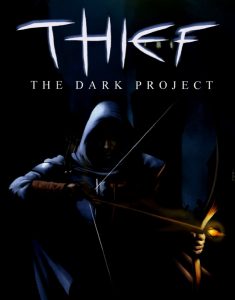
I first got into the setting around 2002, a few years after I’ve first started playing, and was still regularly playing Baldur’s Gate, Icewind Dale, and Thief. It was also right after the Lord of the Rings movies had come out. All of which obviously had a huge impact on how I was imagining all those things I was reading about. And which I am using now extensively to scrounge for ideas for the new campaign. The Savage Frontier does not mention gnolls existing in the region. But the gnolls in Baldur’s Gate are extremely cool, way cooler than the mad cackling idiots that appear in more recent D&D material. And of course Kuldahar, the Severed Hand, and the Dragon’s Eye from Icewind Dale are just totally awesome.
I don’t recall when I first watched The 13th Warrior, but that movie is as oldschool D&D as it can possibly get. And it’s vikings, so a perfect fit for the North. They are perhaps my own ideal archetype for what an adventuring company should be like. And the dungeon at the end is a thousand times cooler than straight 10-foot wide stone corridors and square rooms. Skyrim of course came out many years after all these other works. But I still think it’s very much in the same general style as the Savage Frontier. There’s a couple of cool dungeons and caves and other interesting stuff. Again, the sources don’t say if there are any Mammoths in the North, but there very much could be. And pairing them up with stone giants? Yes please!
I first got into Forgotten Realms, RPGs, and even just fantasy in general for the first time with Baldur’s Gate and Icewind Dale, at an age where anything you’re really into probably is going to stick with you forever. Eventually I did cool down significantly on the Forgotten Realms as a good setting for playing campaigns in, and once I threw out 3rd edition and Pathfinder and got interested in B/X, I actually got actively annoyed at how silly and bloated Faerûn had become, and aware of how cloyingly cutesy and twee those 2nd edition sources had been. But a year ago I had decided to sit down with the original AD&D 1st edition Grey Box and some of the FR-series sourcebook and really read them front to back to find the world that was actually originally presented, before the many many retcons of 2nd and 3rd edition.
It’s much smaller and also a much better setting for adventures, with a very different style of fantasy than what D&D has been for the last 20 years. I actually really want to run a big OSE campaign in it now. And I was thinking earlier today what I feel the original Forgotten Realms should look like, and what illustrations I could use to set the tone for players only familiar with the Forgotten Realms of today.
And the answer is Keith Parkinson. Just straight up Keith Parkinson. (click to embiggen)
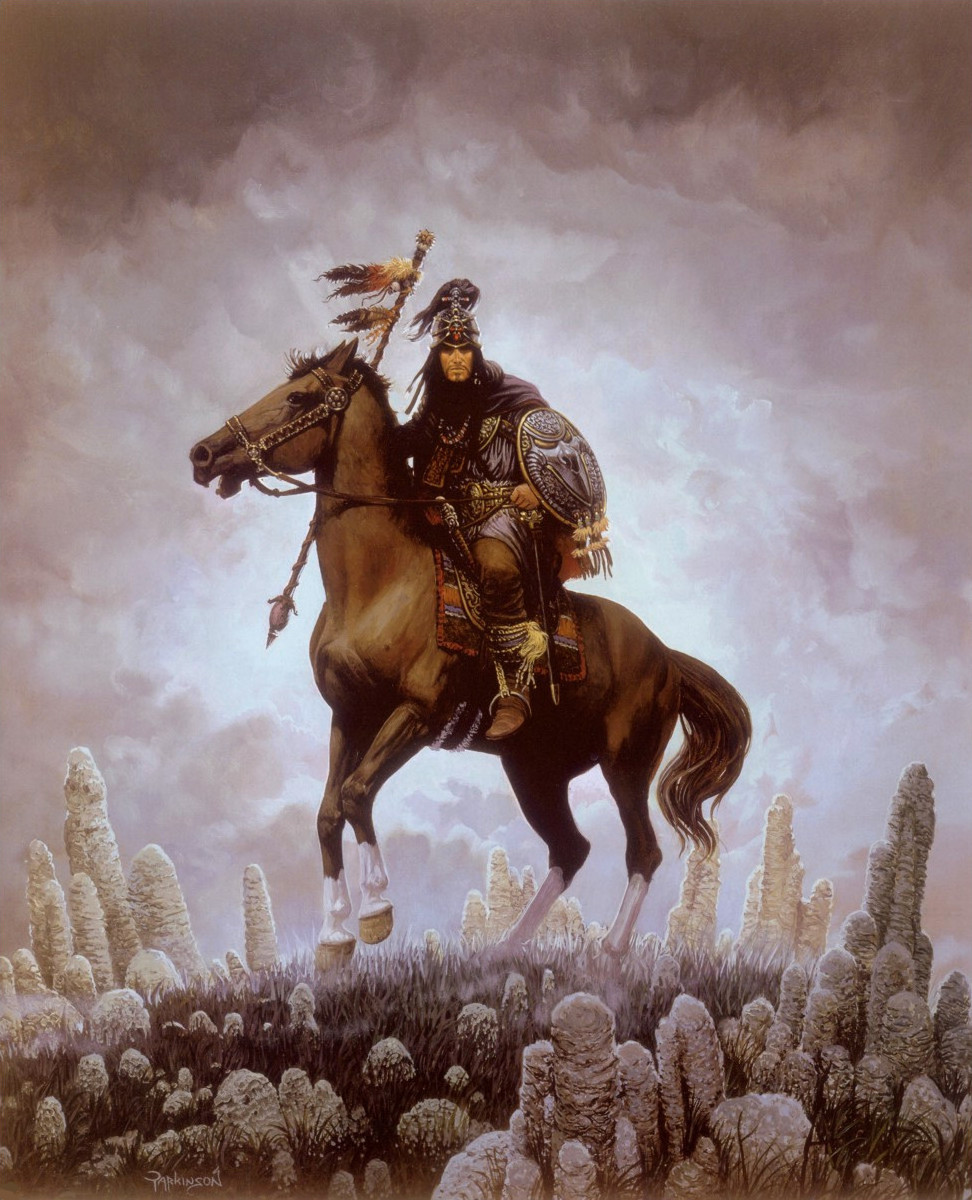
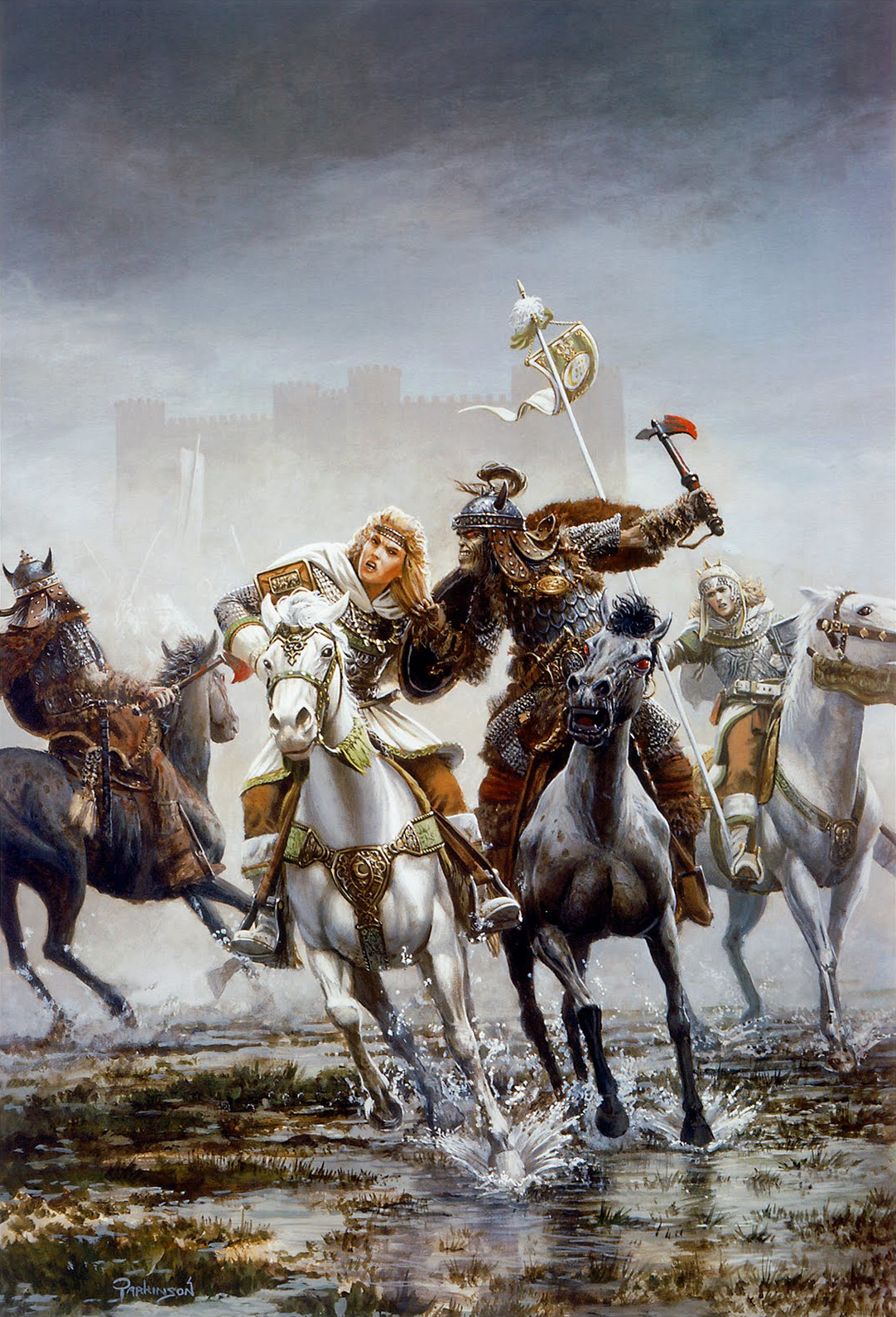
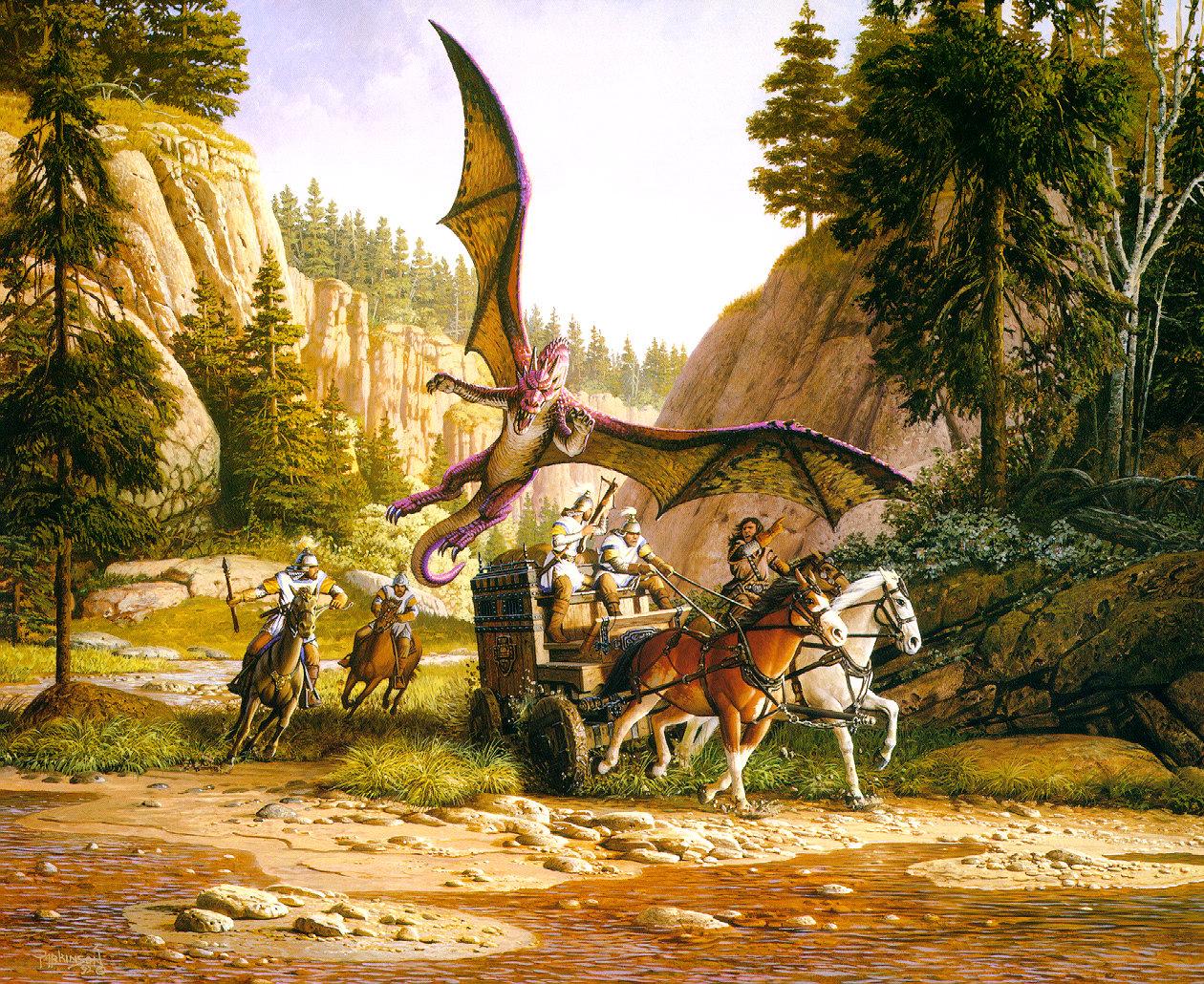
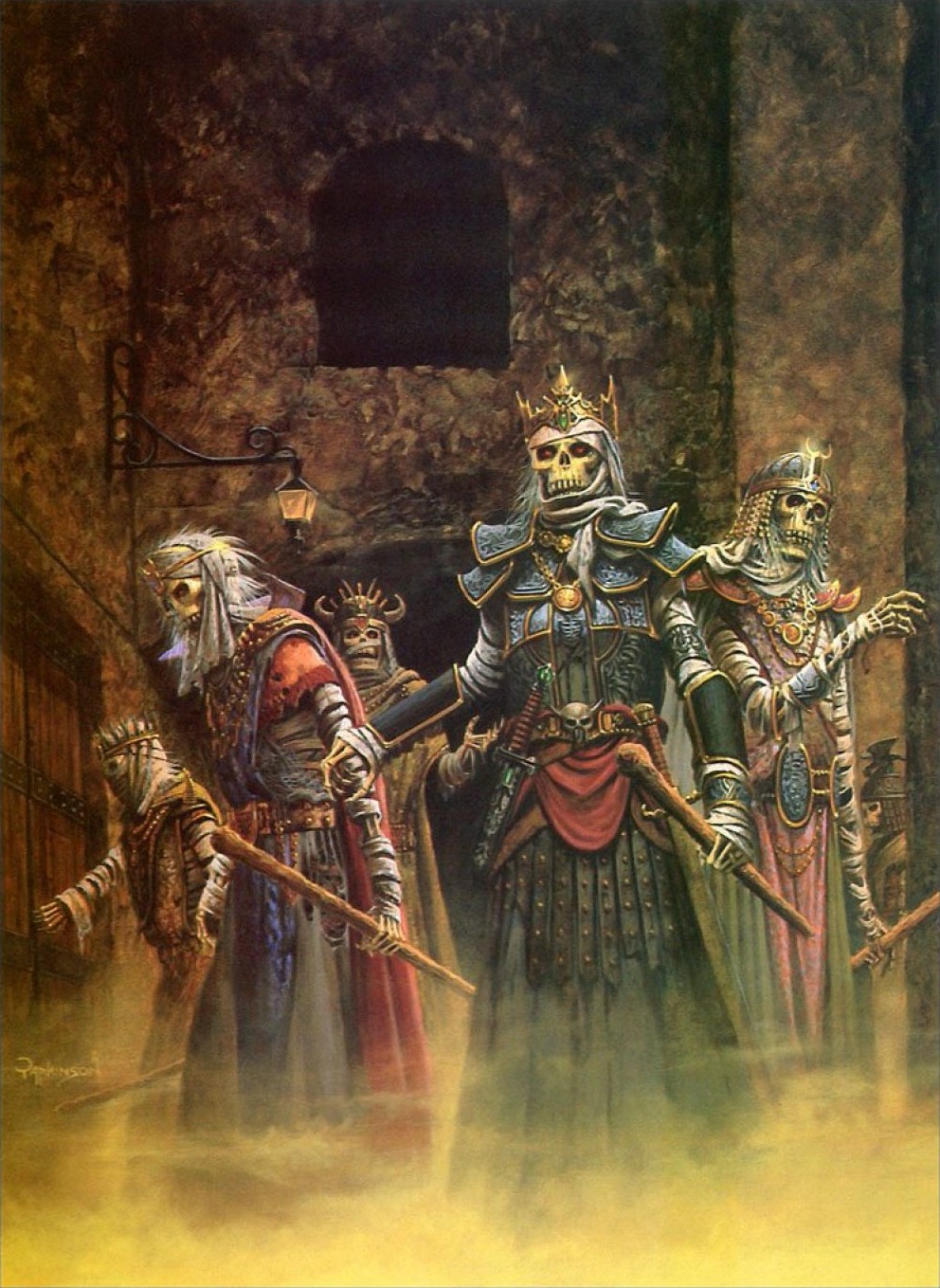
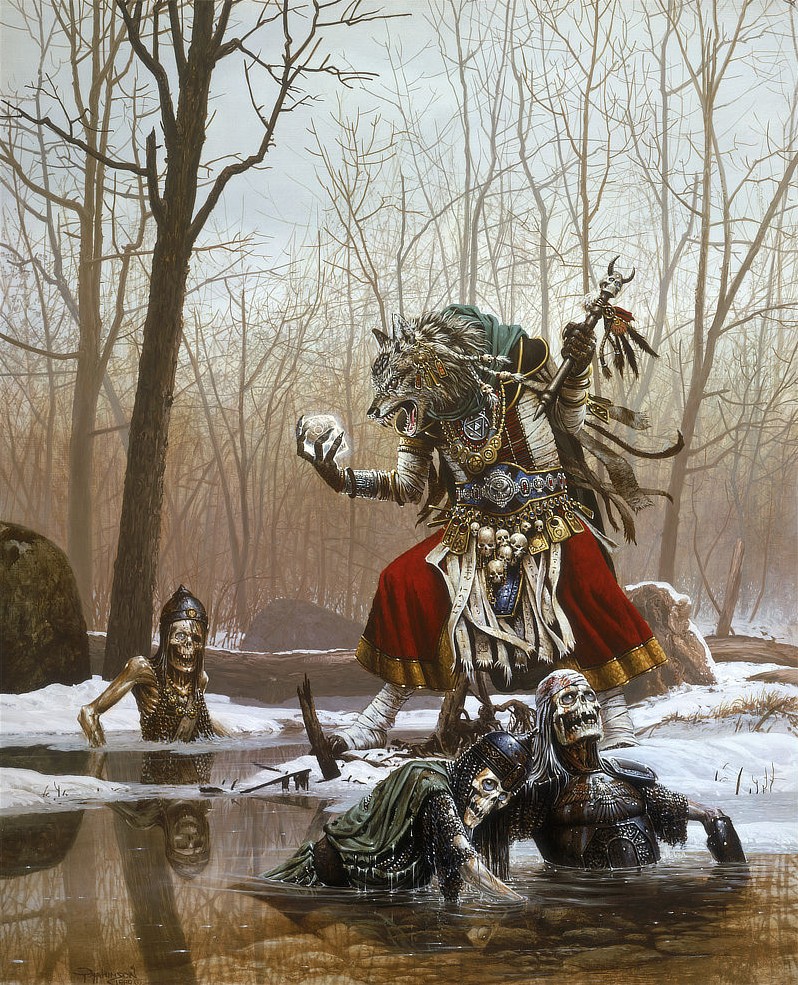
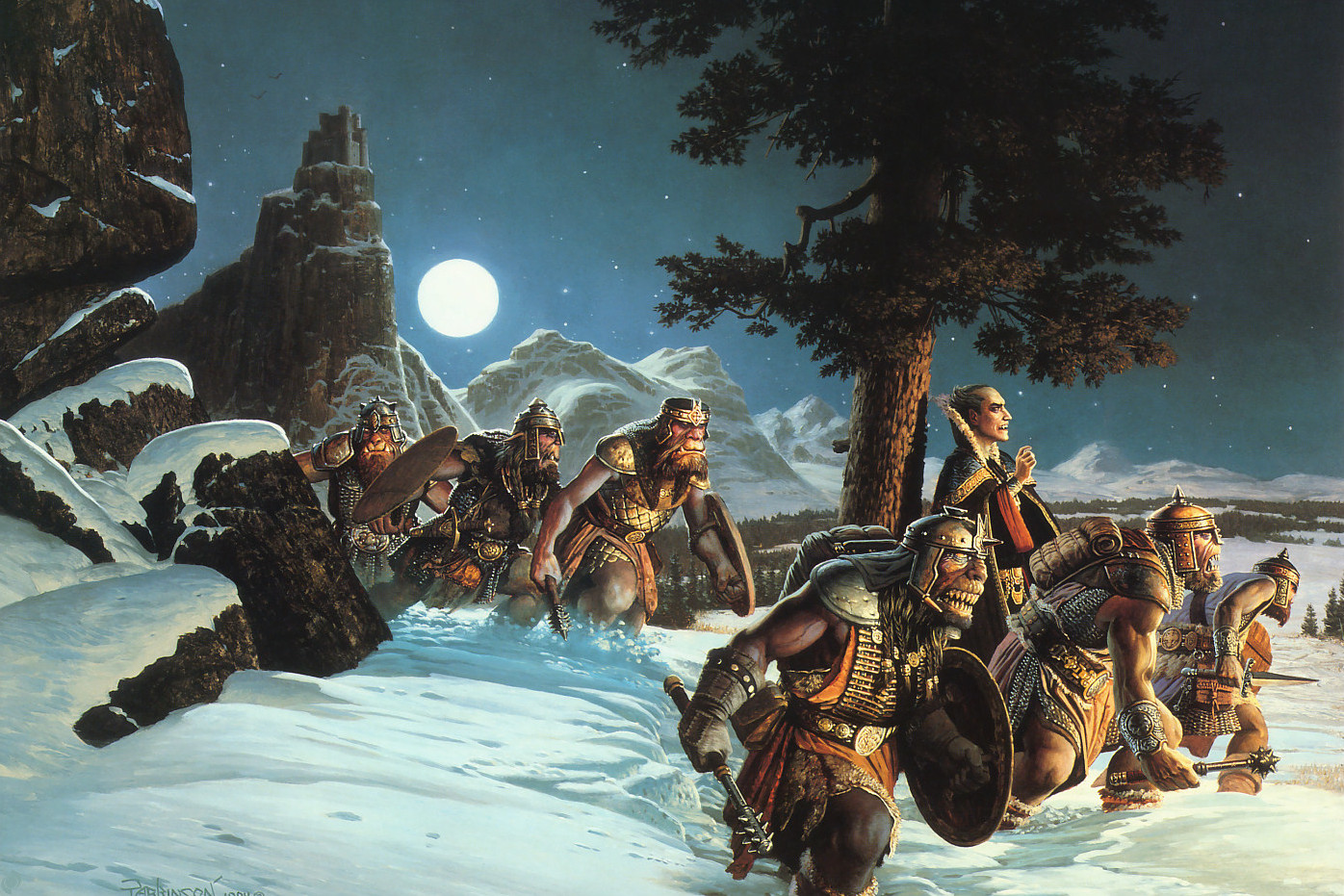
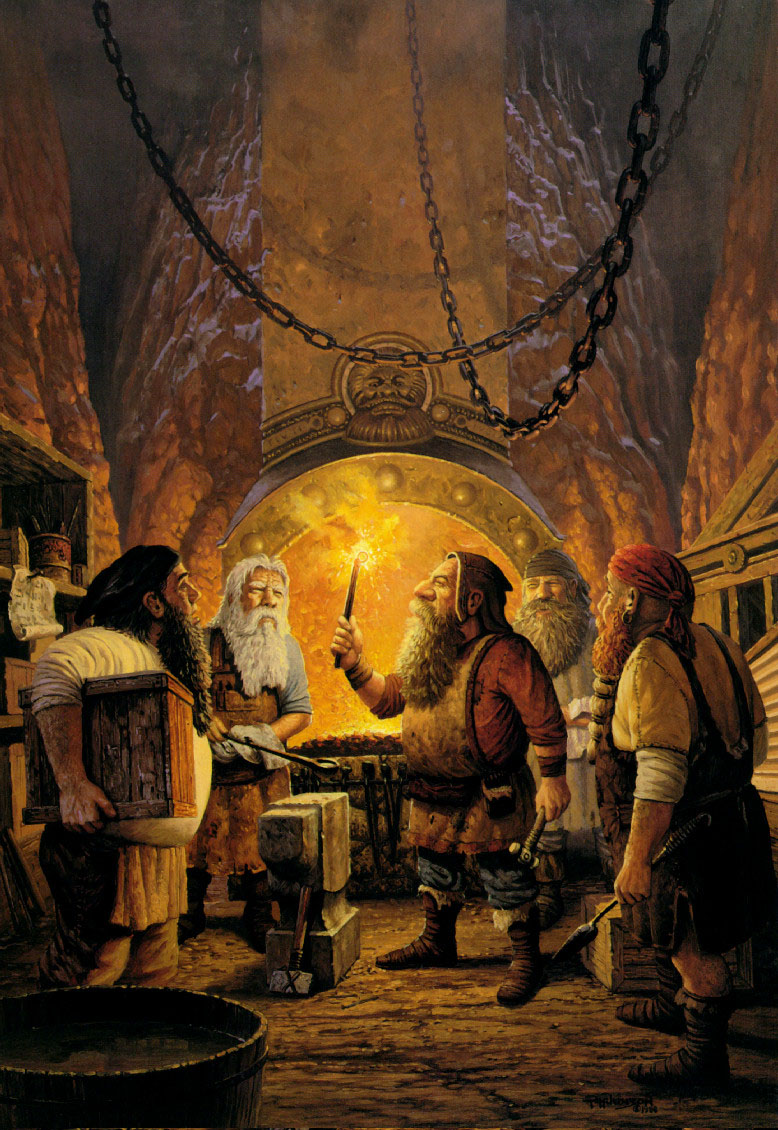
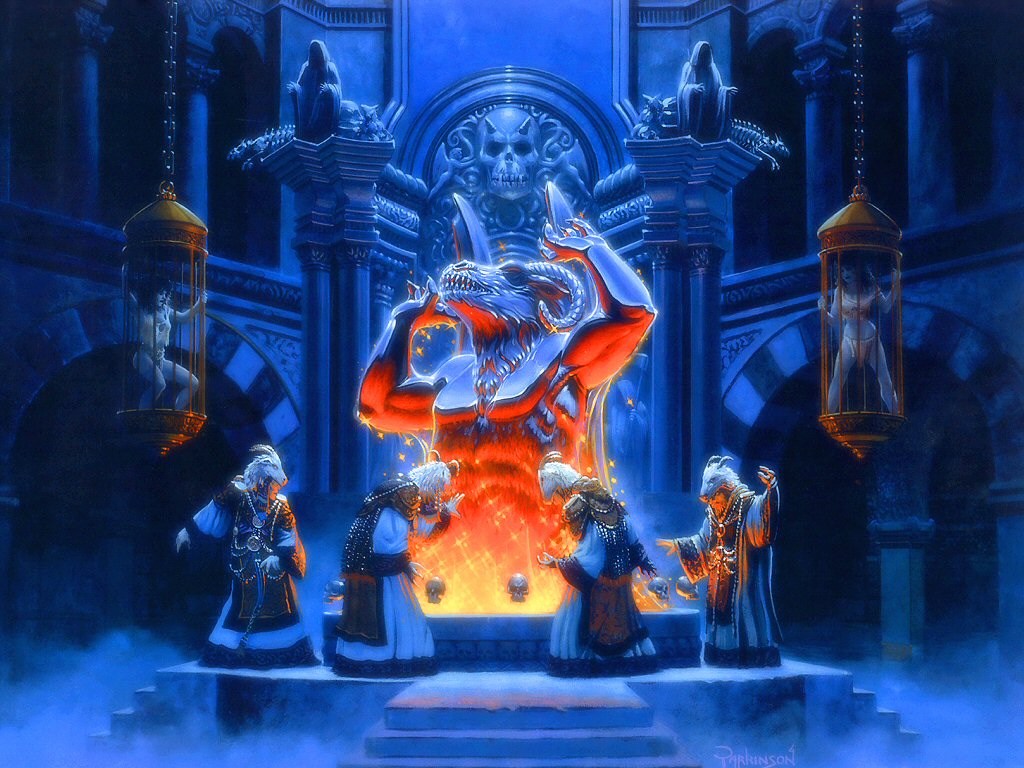
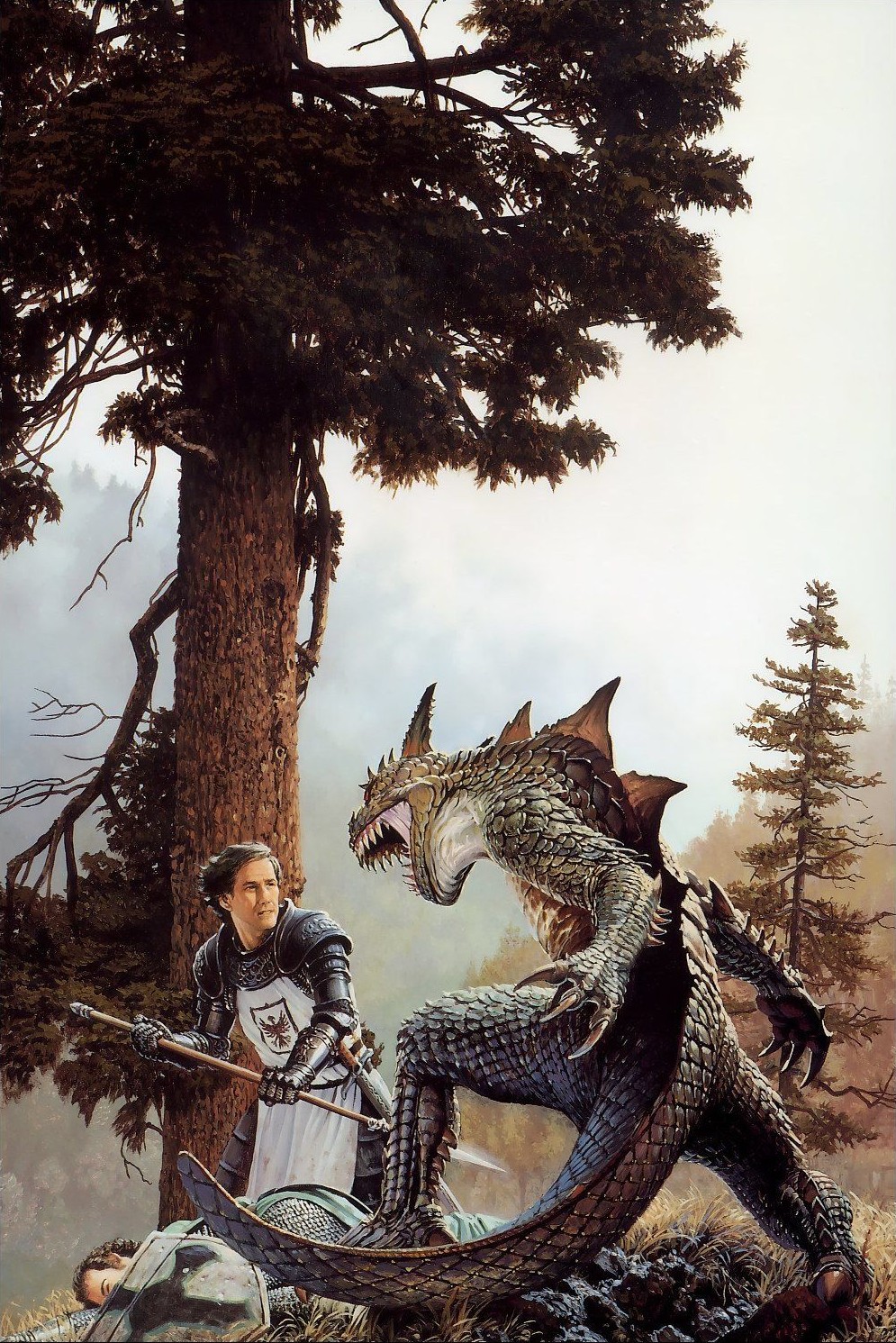
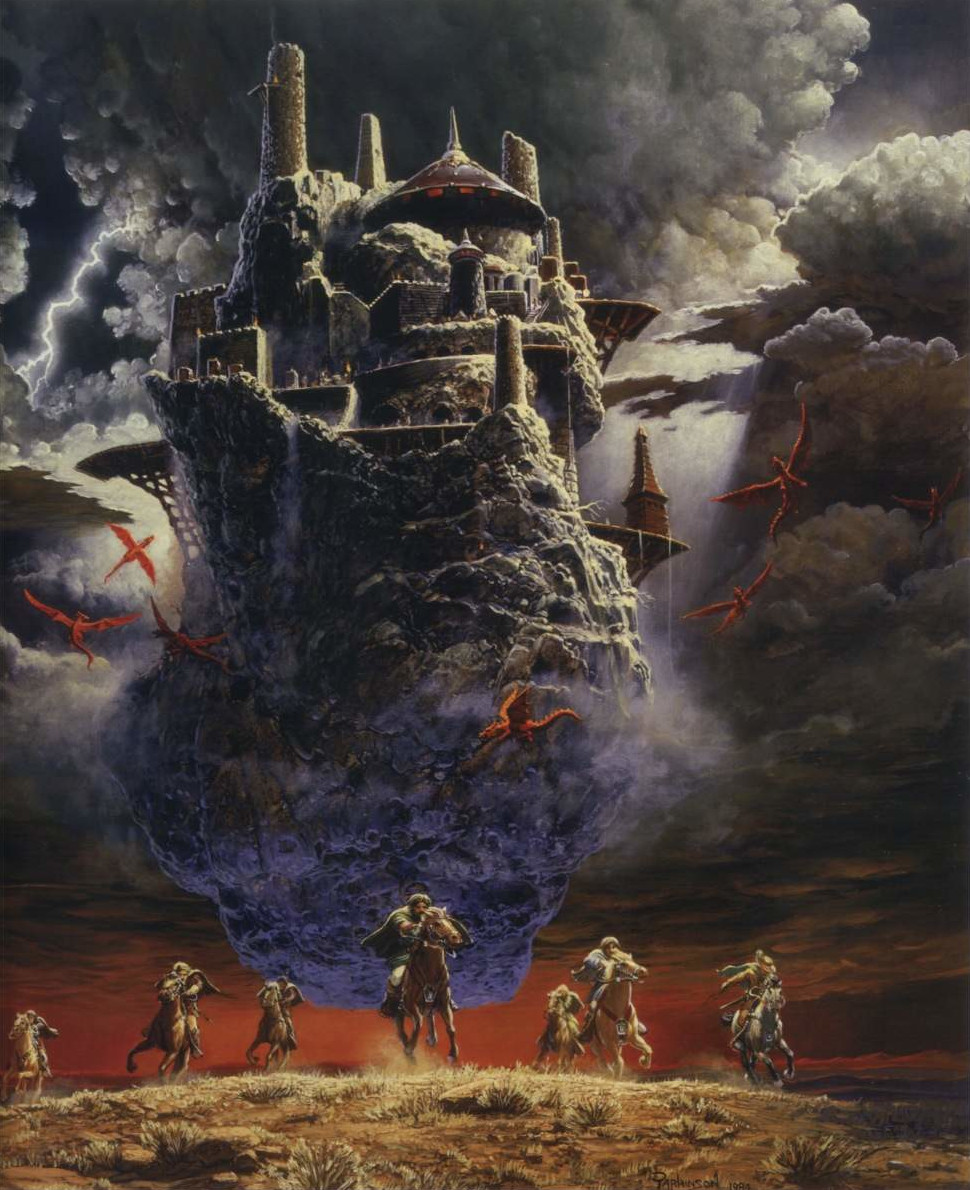
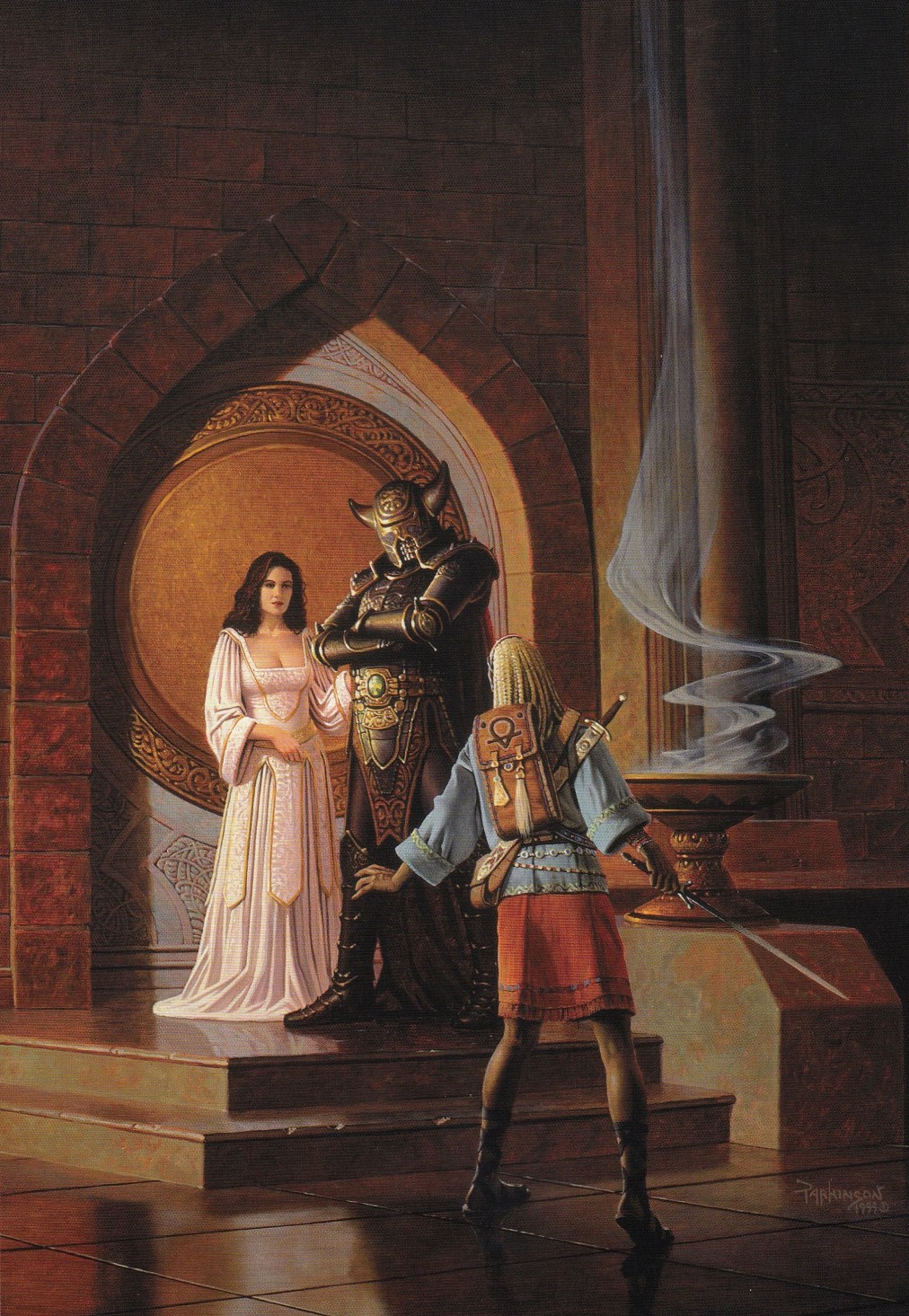
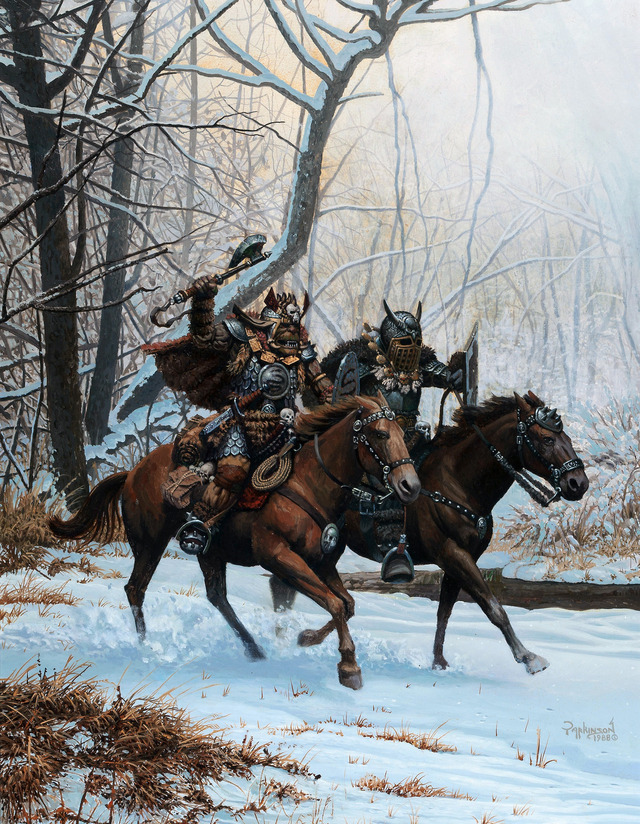 There are many great Jeff Easley paintings as well, but I think the depth of the background landscape that Parkinson regularly did adds a lot more to the feel of a large and wild world. I also get an impression that the visual designers of both Baldur’s Gate and Icewind Dale took very big inspiration from Parkinson’s illustrations, which makes them feel more right and on spot for me.
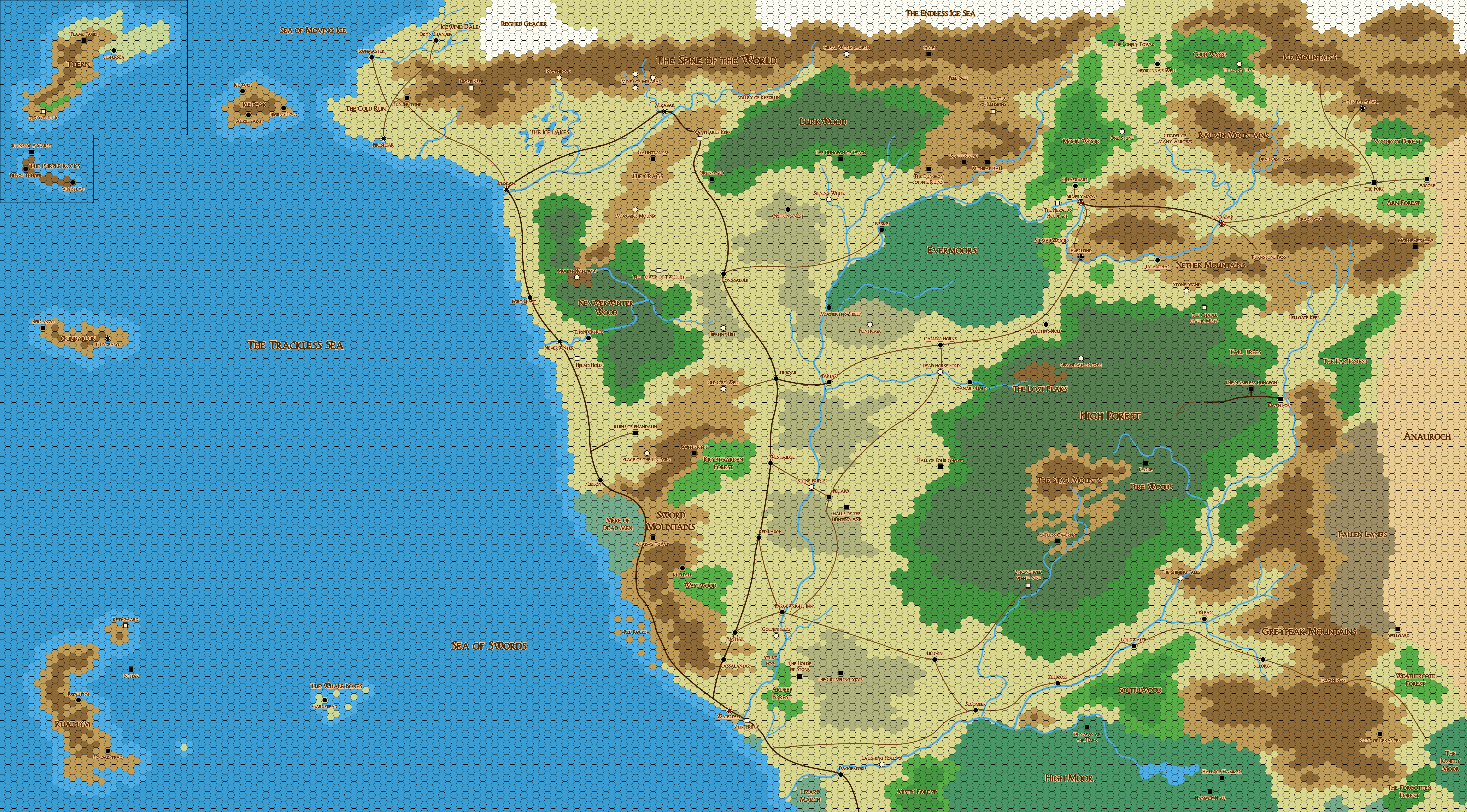 Probably my most commented post on this site has been the hexmap of the Savage Frontier that I made nine years ago. I’ve always been very happy with it, but with a recent interest of starting a new campaign in the region, I’ve been thinking that I could do a lot better now. And here it is.
(Updated to new version from September 2023.)
The map is directly based on the map from the 1st edition sourcebook FR6: The Savage Frontier, with some additional markers from the 2nd edition The North box. This map uses a 6-mile hex grid over the original AD&D maps. 3rd and 4th edition Forgotten Realms uses considerably altered maps, so distances won’t match exactly with any of those sources. 5th edition maps of the Sword Coast seem to have returned to the original AD&D map shapes but slightly scaled down. Treating the hexes as 5 miles across should get very close to matching the distances of 5th edition sources.
This map comes in three versions. The GM map, which includes all the map markers and labels; the player version, which includes only those places that would be commonly shown on maps the PCs would have access to; and a blank map without any markers or text.
The Savage Frontier – Player Map
The Savage Frontier – blank map
The idea behind the three versions is that GMs can easily make their own custom maps showing the area relevant to their campaign or adventure and only include the places that the PCs in their campaign would know about. To make your own custom version, simply open the GM map and the blank map in GIMP, Photoshop, or a similar image editing program, with the blank map covering up the GM map below. Then make the blank map on top partly transparent and simply use the select tool and delete key to make holes through which the labels and text you want are visible. Then set the opacity back to 100% and export the map as a new file. You can then crop the new map file to only the area that you need to make it easier to handle or print out, or do whatever you want with it. Or you can take the blank map and draw whatever icons and text that you want. I would share the original .xcf file, but it’s over 200 MB in size, which is rather impractical.
Use the way in whatever way you like. All I ask for is a link to this page with the original files if you post or upload it somewhere else.
So with everyone cheering at Elon Musk for finally doing something good for the world by sparing no expenses to shred Twitter, there’s been some recent hubbub about Mastodon. Any many people pointing out that Mastodon isn’t just open-source twitter.
I’ve only really seen Twitter in the Alexandrian page and often thought it looks like it could be a really useful tool for sites like mine, but never considered using it. Because it’s Twitter. Just like I won’t touch Apple, Facebook, or Google. But a similar open-source tool from a nonprofit? And now people seem to have a significant interest in it?

Small RPG sites like this one aren’t the kind of thing that they were 10 years ago. There’s a lot fewer than there used to be, though with new ones still coming up regularly, and many of them only have new posts every month or two, unlike the nearly daily or even multiple daily posts that you see in the early years of many older sites. (Which isn’t necessarily a bad thing, because most of them say nothing of much relevance.) It also used to be that pretty much all sites were on blogspot, but now there’s also substantial numbers of wordpress sites hosted on private servers. And unlike blogspot, there is, for some reason, no widget that lets you show a list of the sites you follow sorted by most recent updates in the sidebar. Which makes following what others are writing on their sites more laborious, and also more difficult to find new sites. There is of course RPG Planet, which aggregates RSS feeds for sites that are signed up, but I don’t find it to be a perfect solution since it always shows you all the sites that are signed up, even the ones you really might not care for but update pretty frequently. And the first two sentences of a post typically don’t tell you much about what a post is actually about. Also, lots of blogspot sites only allow comments with a google-account, and other people have told me that I am by far not the only one who refuses to use one on principle.
I think Mastodon could be a useful tool to help reaching new audiences for sites like these. As it stands, it seems to me like a pretty closed system that you don’t really are aware of unless you already know about it. I still somehow get pretty frequent comments on my posts even though the only way to find my site is through the link in my Giant In the Playground and Enworld signatures and RPG Planet. (Also Dragonsfoot, but if you hang out there you’re already in the in-group.)
What I want to try out is to put up messages on Mastodon every time I have a new post on my site, with a link and a short summary of what the post is about. (Like Justin Alexander does on Twitter.) I think it would also be useful to share messages of “I just saw this post on another site and thought it’s interesting”. Putting such short posts here on this site would make the whole place look cluttered up and I want to keep what is posted here to meaningful articles that are still worth reading if people browse the site some years later. For simple shoutouts like that, something like Mastodon seems a much more fitting tool. And I can put my opinion out on posts by other people who don’t accept comments without some account or registration, even though the odds of them seeing it is probably pretty low.
I think there is potential to boost the sphere of small private RPG sites with Mastodon, if it can get sufficient momentum. Quite possible that two months from now, everyone has forgotten about it again already, but this sudden surge in interest because of Twitter might be an opportunity.
This is why I have now made a Mastodon account where people can get updates about new posts on Spriggan’s Den. And why I want to encourage other site owners to also give it a try, as well as readers. Maybe this could be a new boost in interactions, which can also be conductive to more ideas worth writing about. And unlike Google+, there’s no significant risk that the service will be shut down in a year or two. :p
In the ancient days, long before any mortal memories or records, the world was home to strange civilizations of mysterious inhuman elder beings. They may have ruled over the surface lands for many hundreds of thousands of years and raised great cities and empires, but nothing of them remains. Some 10,000 years ago, great glaciers moved south and buried the land to the shores of the sea under miles of ice and snow, anihilating everything in their path and grinding it into dust.
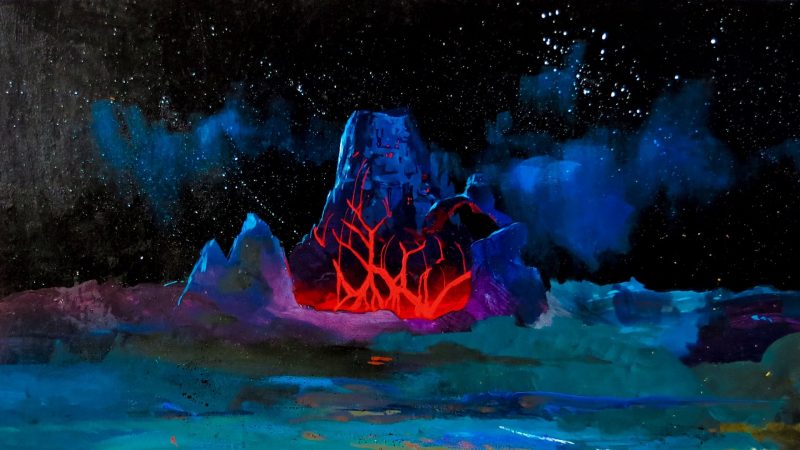 After several thousands of years, the age of ice and snow came to an end, with the glaciers retreating and the barren rubble slowly turning into new forests. As life returned to the northern lands, so expanded the reach of the serpentmen, who claimed much of them for their ascending empire. For over 2,000 years the serpentmen empire span across the lands on both sides of the sea, but even their time eventually came to an end.
Dark haired barbarians from the east settled on the borders of the empire, and as they saw the power and reach of the serpentmen decline with every generation, they eventually invaded the northernmost provinces, creating a mighty kingdom around the Great Lake. As the serpents retreated further and further south towards the coast, the power of the Lake Kingdom grew, and it became home to many great sorcerers. Though like the serpents before them, their time of greatness and power wouldn’t last forever, and their great cities and towers were abandoned and fell into ruins. The remaining people eventually mixed with other barbarians in the great Woodlands to the west and the mountains in the east, becoming the barbarian tribes of the Witchfens and the Plains.
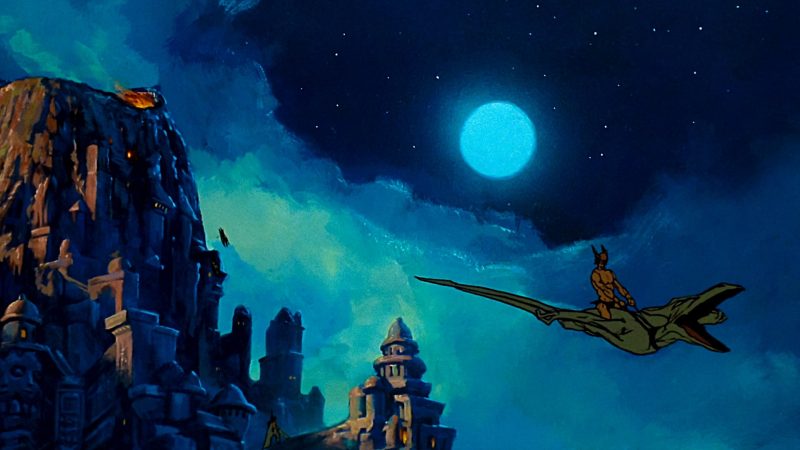 Though the empire of the serpentmen had survived the rivals that had driven them from the northern provinces, they had lost much of the great power they onces possessed. So when new barbaric peoples appear on their borders, led by four powerful sorcerers who had united the tribes under them, the serpents stood little chance to resist them, though the wars of conquest ranged for many decades. The invaders conquered all of the great Grasslands and much of the coastal lands north of the sea, driving the empire from the north.
Greatly weakened by the decades of fighting a losing war, the serpentmen eventually suffered a great revolt by their mortal slaves in the provinces most directly affected by the fighting, which ultimately led to the creation of the new kingdom of tbe Southlands.
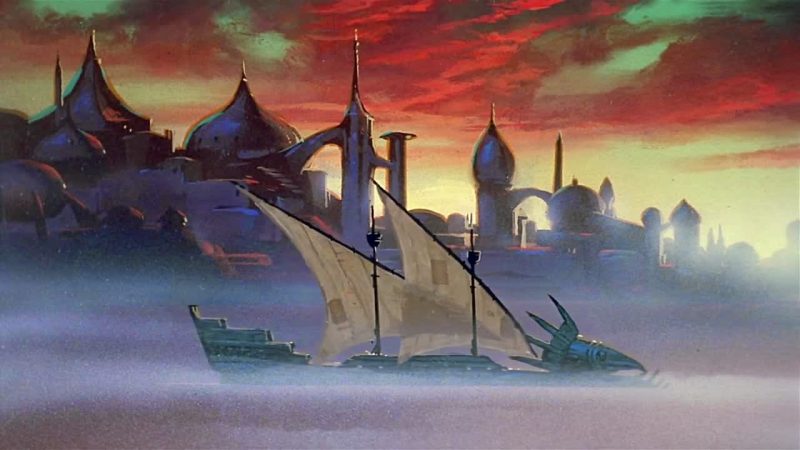 With the hated serpents now no longer on their borders, the sorcerer lords turned towards securing their own hold over the lands they had conquered, and soon came to be elevated to be worshiped as living god kings. They also became each others greatest enemies, competing over the most valuable farm and graze lands along the large rivers that run through the great valley of the Grasslands.
After the death of one of the god kings and the conquest of his land, and the usurpation of another by his closest lieutenant, the three remaining realms have been at war with each other every few decades. The increasing taxes, endless conscription of soldiers, and ruthless pursuit of dissenters by the templars during these wars have frequently driven farmers and deserting soldiers to flee into the densely forested hills that surround the Grasslands on the west and east. The mixing of the refugees with the local barbarian tribes has led to new unique societies that follow their own rules and customs.
Over the last ten years, the fighting between the god kings has become excessively fierce and destructive, causing peasants, merchants, and even some nobles who have fallen out of favor to flee into the wilderness in numbers rarely seen before. Instead of integrating with the people who have lived in the hills and valleys for many generations and adopting their customs, the recent newcomers outnumber the native villagers in many places or even set up entire new towns of their own.