I started working on the Ancient Lands that eventually evolved into Kaendor around the same time as I was setting up this site nine years ago. Lately I’ve been trying several times to get back on that horse again and continue creating new material for the setting. But I just can’t find the spark that motivated and inspired me to make it, and in hindsight I notice that I haven’t really been that into it for well over a year now. Tinkering with space opera and toying around with ideas how I might do a post-apocalyptic campaign were mostly distractions to keep me creatively occupied, but my real love and passion is for Sword & Sorcery heroic fantasy. And now I feel that Kaendor has probably been done. I’ve been revising and overhauling it several times over the years and even tried to disassemble it and repurpose the pieces for the Shattered Empire to spice things up again. But while I think those ideas were pretty decent, it just never had the joy and excitement that I had in the past. I think now it’s time to start with something really new from scratch. A new fantasy setting tailored to a different type of campaign, with a different set of basic assumptions that serve as the foundations for a new type of world.
Some of the ideas for the new setting might sound very familiar to people who remember reading older stuff I wrote years ago. Mostly they are things that I really wanted to incorporate in the world of Kaendor, but they mostly remained things that I wanted to work in but never really became part of the existing whole. That setting originally began as an attempt to construct a version of the Sword Coast of the Forgotten Realms as it had been 4,000 years in the past, and I guess you just can’t get the DNA of the Fantasyland established by Tolkien and Gygax out after the fact. Which is why I think it really is important to start all over with something really new.
Style Ideas
This is probably were things are most familiar. This mostly is stuff that I’ve been loving for a long time, but which Kaendor never really managed to bring to life. This time I don’t want them to be grafted on, but be foundational elements from which everything else expands.
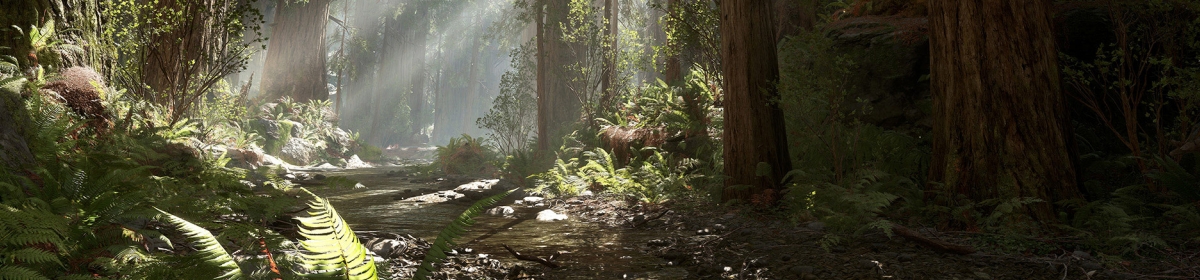
The new world is an alien and exotic forest moon around a blue gas planet. It is inhabited by numerous big prehistoric beasts like giant reptiles and large insects.
The original great civilization of the world were the naga, and the great empire of the serpentmen once covered much of the continent. But their power has greatly declined and they have been reduced to a permanent state of constant infighting between the serpent lords over the title of emperor.
The lands in the north fell to slave uprisings and barbarian attacks long ago and are now home to several humanoid Bronze Age civilizations. These take rough cultural and aesthetic influences from Indo-Iranian peoples for the main kingdoms and city states, and from Turkic and Baltic peoples for the more barbaric societies.
The humanoid kingdoms are ruled by various god-kings who claim to be immortal and have divine powers to repell naga invaders and force demons to obey their will, but their actual abilities are no different from extremely powerful sorcerers.
Gods are immaterial entities that are different manifestations of a supreme ultimate divine source that is beyond any mortal grasp or comprehension. The gods don’t hold special domain over specific aspects of the natural world or human life, but each of them has strong affinities to various elements. Each community worships a small number of gods who are associated with things that are most important to their lives, and no two temples in the world practice exactly the same religion. Everything supernatural that is not a manifestation of the divine power of the gods is seen as demons or demonic in nature. All demons are physical beings with a permanent body just like mortals, though many can communicate and control with their mind over great distances. Druidic cults among barbarian tribes believe that not all demons are hostile or all magic evil, but they still know that they can be extremely dangerous. Some demons have vague resemblances to wild beasts, but most are very alien in both appearance and minds.
Campaign Concept
I am a strong believer in worldbuilding deaigned specific to purpose. Before putting anything on a map or creating a single location or power, it is necessary to specify what kind of campaign is going to be set in the world and what kinds of things are intended to happen during play. Of course you can always just create a fantasy world according to whatever whims of your fancy at the moment, but this temds to results in settings were anything is possible and nothing is promoted over anything else. But when running a campaign, the group needs to be on the same page on what kind of story the characters are in so that they and the GM can work together instead of against each other. And having the right kind of setting for the campaign can shoulder a huge part of the burden of that job. A purposfully designed campaign setting has content that attracts the players to engage with certain themes and modes of play, and also sets up invisible soft barriers to not drift away too far from the campaign’s focus by not presenting much to interact with outside of its intended scope. A diplomacy and politics campaign doesn’t need much detail about the survival challenges in the wilderness, and it actually helps maintaining the focus when there isn’t really much of interest for the players to do in the forests and hills. So even when the players are free to “do anything”, a purposefully designed world will keep the campaign on focs without the players ever noticing barriers.
For this new setting, the main focus of mode of play that I am aiming for is establishing, expanding, and defending of strongholds in the wilderness. Forbidden Lands already exists as a game system for such campaigns, and the sandbox tools from Kevin Crawford’s Red Tide are also big inspirations to me for populating the surronding environment with various neighbors. A huge inspiration that really got me hooked on the whole idea is of course the videogame Kenshi, which really is very much the same thing in a post-apocalyptic desert.
What I see the campaign to mostly consist of is surviving the dangers and obstacles of the wilderness while trying to gain control over valuable resources and making alliances and deals with other inhabitants of the area for trade and defense against common enemies. Managing the stores of supplies and finances or governing over subjects are aspects of domain play that I find both not very interesting and not really suited for a group game. Conveniently, the mechanics of Forbidden Lands already have a similar focus.
Interactions with the leaders of neighboring settlements being such an importantt part of adventures, establishing different factions with different wants and needs becomes obviously a very important element of the worldbuilding. Players need to be able to quickly understand the demands and negotiating positions of other groups in the area, and easily figure out what kind of group they are dealing with when encountering new people. Of course, everyone having their own secrets and additinal agendas always makes things a lot more interesting. But for the players being able to be proactive in navigating their social environmwnt, the primary conflicts of the big picture should be really easy to grasp. No matter how straightforward and obvious things may seem to a GM who comes up with such things, they are always much less clear to players who only work with fragmentary information and can easily fill in blanks with completely wrong assumptions. When players encounter a new faction, they should immediately have a good picture of who and what they are dealing with, so that they know where to apply their leavers to accomplish something. Even when there are more hidden layers behind it that will become evident only much later. The goal is to make the players think they know what to do to change things to their benefit, and avoid them becoming paralyzed because they don’t understand how everything fits together.
With the focus on negotiating with neighbors, making friends through providing services, and neutralizing hostile leaders and monsters, the world does not need to provide a large number of big dungeons that somehow are still full of treasures that nobody else has looted yet over the centuries. This is probably the biggest difference to the worldbuilding of Kaendor, where the whole history and society was set up specifically to create such an environment. Dungeons and other ruins still have a place in the new frontier wilderness, but that would be primarily as lairs where the PCs confront a major creature, NPC, or supernatural phenomenon. These lairs don’t need to be big or have a large variety of puzzles and other obstacles, and they don’t need a lot of ancient treasure scattered all over the entire place. Huge labyrinths are actually to be avoided, as they will take a lot of time to explore and cause an interruption in the current events the players have been observing and engaged with. Player freedom is good, but it’s also highly desirable to avoid them loosing track of something they’ve been engaged with because they got distracted, and potentially struggling later to pick up where they left off months ago.
Going with the Forbidden Lands system, character advancement is unaffected not only by the discovering of treasures, but also the slaying of monsters. A consequence of this is that the setting does not require a large collection of different monsters with a wide range of power levels to keep fights from getting repetitive. A bestiary of just one or two dozen creatures should suffice and it can consist almost entirely of agressive animals and quite powerful demons with not much else in the middle. And with intelligent creatures, their design can focus strongly on creating interesting social situations than variety in combat. Hunting a monster can be a much bigger part of an adventure than finally cornering it. Which I think opens up some really interesting new possibilities with monster design and how to integrate them into the world.
Next Time
I already have a vague general outline for the environment of the campaign and the factions that inhabit it, which build on the principles I outlined above. But those will be an entire post of their own.
 In the early 90s, a large asteroid crashed into the ice of Antarctica, releasing an enormous cloud of steam and dust high into the atmosphere where it stayed for weeks. Once the dust from the impact started to clear, researchers went to study the huge crater, they discovered an unknown orange-brown lichen growing on the newly exposed barren rock. Within a few days the scientists developed a severe lung infection that killed all of them soon after. Whether the spores had been frozen under the ice for millions of years or had arrived on the asteroid, the explosion from the impact had thrown them up into the atmosphere and to be spread by the wind all over the world over the following months. Nearly all people and animals everywhere became infected by the spores, usually ending fatal, reducing the global population to only a small fraction of what it had been within a year.
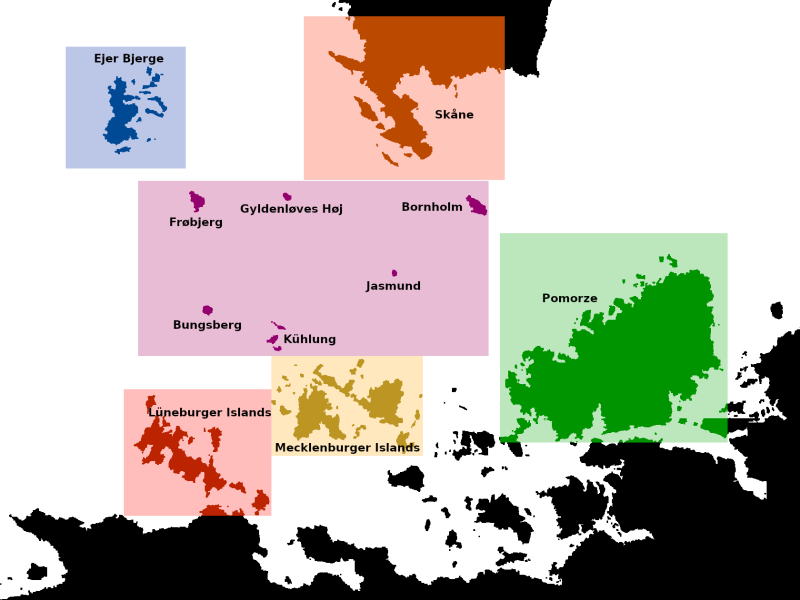
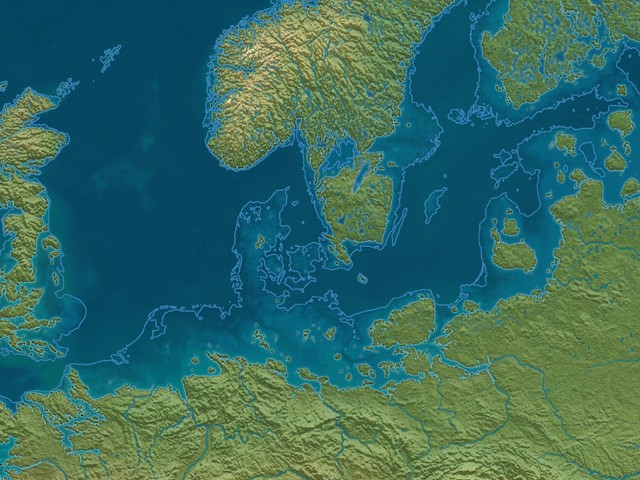 Four decades later, the rising of the waters finally came to an end, some 80 meters above what it used to be, which some have calculated to mean that all the ice in Antarctica must be completely gone. In Northern Europe, most of the regions around the North Sea and Baltic Sea sank beneath the waves. All that remains of Denmark and of Northern Germany are a few groups of small islands, and a small number of larger islands are where Northern Poland and the Baltic States used to be.
 Without any ice to reflect sunlight and a larger ocean surfaces for water to evaporate, the new world is one of frequent and often massive storms. Clear skies are rare in a region that always used to be cloudy and wet, but these days smaller storms happen nearly every week. Towards the start of winter, they become almost daily and often grow to devastating strength that can snap or rip out trees. But people have discovered that salt is quite effective at killing the spores and the swampy marshes along the new coast lines are nearly free of lichen growth. This makes these areas much more hospitable than places further inland, where clouds of spores quickly overwhelm the lungs even of people resistant to them.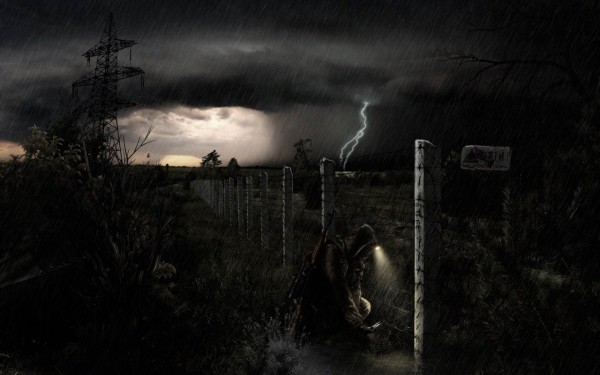
 Long in the distant past, the lands between the Sea in the West and the Mountains in the East was home to the northern civilization of the Rakshasa and the southern civilization of the Naga. Eventually the two rising powers came into conflict, which turned into centuries of warfare. As the wars dragged on, both sides unleashed incresingly devastating sorcery, turning the forests that made up the borderlands between the two powers were into a blasted wasteland. Even when armies managed to cross the burned plains to lay siege to the enemy’s cities, there was no way to possibly hold a city that was taken on the other side, and so the original plans for conquest gave way to a rage of blind destruction. As the desolation spread further into the two great woodlands and both sides exhausted their power, invasions became more difficult and less frequent, until eventually they simply stopped altogether, with nobody having any claim to victory.