The Realms, Spirits, and Magic

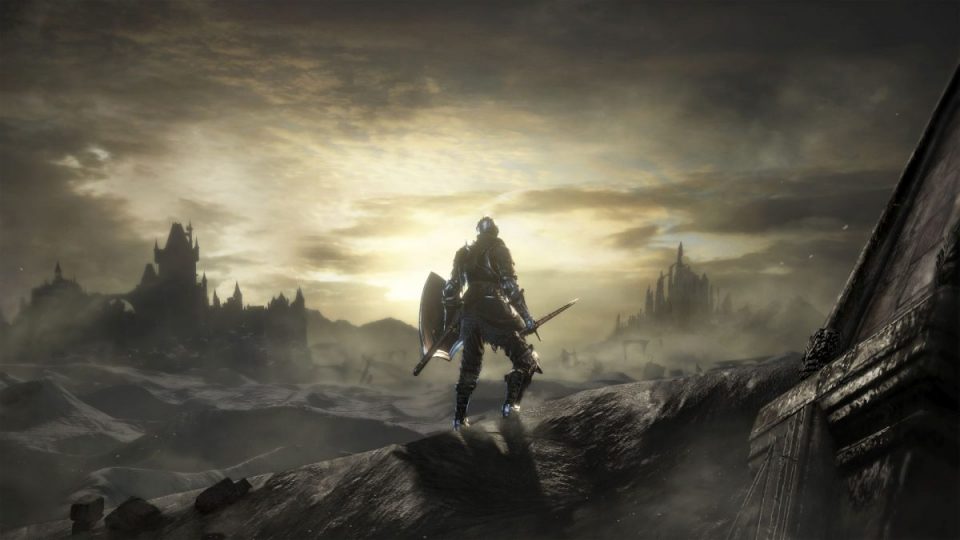
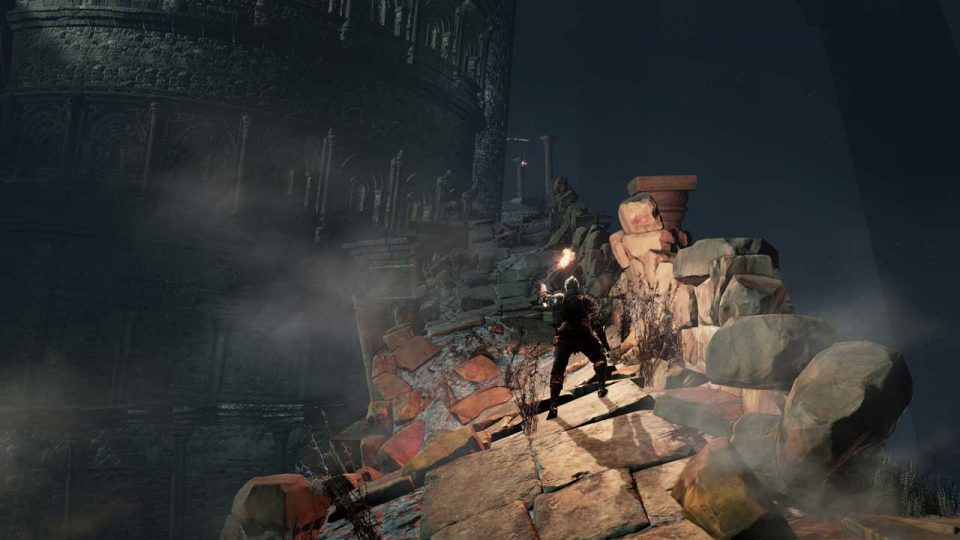
While working on barbarian wilderness settings, I’ve always been swinging back and forth between trying to create a world that is pure wilderness with civilization being something that is only heard but never seen, and city states trying to keep the encroaching Chaos of the wilderness at bay. I have a tendency to just run with whatever has caught my fancy at the moment and losing sight of the bigger picture. I feel that for the last months, I’ve been focusing far too much on the politics and hierarchies of the big cities and drifting away from an actual wilderness setting. But one aspect in particular I found to have neglected the worst is the magical and mystical element of a true primordial wilderness. To that end, I’ve picked up playing some more Dark Souls 3 again, which is just soaked into all that mythic stuff without being an Epic story of great rulers and grand battles. I’ve been inspired by that game even more so than the first back when it came out, but felt that many of my ideas would need much more transformation before they stop seeming like blatant copies of someone else’s popular work. But now I decided screw at all that! I take from Star Wars and Conan without any shame all the time, and it’s only ripping off if you imitate the form without giving it any of your own context. If anyone looks at any of this and thinks, “hey, that reminds me of Dark Souls“, I’m totally fine with it. After all, Dark Souls has Berserk plastered all over it and everyone thinks that’s awesome.

The Three Realms of Kaendor
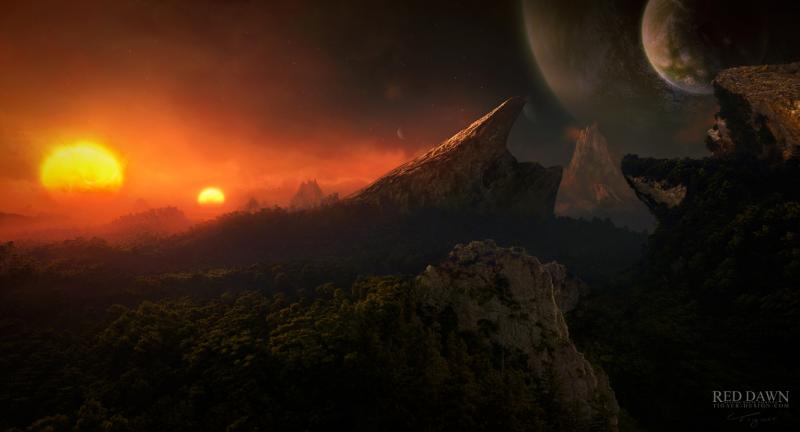
The world of Kaendor is ancient beyond reckoning. There must have been a point were time first began, but not even the most ancient spirits remember a time before this one. As far as anyone can tell, the world has been the way it is now forever. If there ever was a time before this one, nothing remains to tell of it.

The world consists of two primary realms, which the mortals call the Wilds and the Underworld. The Wilds consist of all the forests, mountains, and islands that make up the continent of Kaendor and the unknown lands beyond. They are the world of plants and beasts, and the countless spirits and gods of the Wilds. Beneath the surface of the earth lies the Underworld, the realm of fire and demons. Both realms are primordial and eternal, controlled by supernatural forces and the inscrutable wills of spirits and demons. As the two sides of the natural world, they are neither good nor evil, but they are harsh and uncaring, no more concerned with the fates of mortals than those of beasts. And in the hierarchy of beasts and spirits in the Wilds, mortals stand far below the peak.

But at some point, or perhaps at many different points in the vastness of times, mortals discovered that the power of fire, which occasionally rises into the Wilds from the Underworld by pure chance, can be an incredible weapon and tool to deal with the many threats of the forests and the mountains. By learning to weild and control the fire, mortals gained the ability to change their environments , drive off the beasts that prey on them, and push back against the influence of the spirits that control the weather and the land. And as the power of mortals grew, the small and scattered Civilized Lands they controlled became like a third realm in their own right.

Magic and Civilization

Civilization in Kaendor is not an enduring thing. Once control of the land is gained, it must constantly be maintained to keep the Wilds at bay and keep them from reclaiming what was once theirs. Pacts and truces with the spirits of the surrounding Wilds must be honored and renewed, and the temples and priest-kings must perpetuate the rites to maintain the stability of weather and floods required to grow the food that feeds their cities. But inevitably, there are only two possible fates that await every city and civilization. Even with the powers of temples, the constant unpredictable changes of the Wilds can only be slowed but never stopped, and eventually the prosperity of even the mightiest city will start to fade. As populations decline and roads and fields are no longer maintained, the rites that ensure stability weaken in power until they fail completely. At that point, the Wilds will reclaim the land faster and faster, until their is nothing left but abandoned and overgrown stone walls, which in time will also crumble and disappear.

But all too often, people try to escape this inevitable fate, and instead of allowing their civilization to fade, they turn their gaze to the Underworld for powers much greater than simple fire. As ordinary magic draws its powers from the supernatural energies of the Wilds, Sorcery draws on the demonic powers of the Underworld. Not only can sorcery hold back the Wilds even when the power of fire and skills is failing. Sorcerers can create things undreamed of priests, sages, and craftsmen. By using the powers of the Underworld to bend the Wilds to their will, sorcerers believe that they can create civilizations much grander and more prosperous than any that came before them. But there are countless ruined cities overgrown by the forests and crumbling into the sea that stand as proof of their madness. Sorcery may prolong the inevitable end of a declining  city, but instead of quietly fading out as the Wilds return, they always end up burning out and leaving nothing but charred cinders. Fire is the main tool of mortals to assert power over the wilds, but if allowed to run free, it will simply consume everything.

The Cult of Heotis

The Fenai of the Dainiva Forest worship three primary deities. Idain, the Lady of the Woods; Livas, the Lord of the Beasts, and Heotis, the Keeper of the Fire. Idain is the goddess of the fields and Livas the god of the herds. Heotis is the goddess of the home. Her role is that of the bringer of fire used for warmth, light, cooking, and smithing, without which mortals would live no different than beasts; but she is also the one who protects the house and the family from its flames. Fire is not good or evil, but it is the demon that is invited into the home, because without it there would be no home. Fire is a blessing, but it also must be respected and feared. Because otherwise it will destroy and kill everything near it.

Wilders
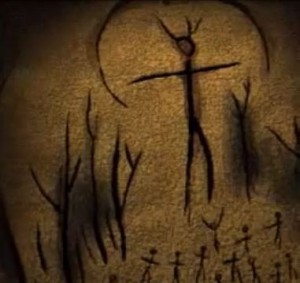
Not all mortals embrace civilization, and there are probably just as many people living simple lives in the forests and mountains, away from the grain fields surrounding the city states. Civilized people call them the Wilders, and look down upon them as savages and heathens. Wilders have found their own way to coexist with the spirits of the Wilds, making pacts with the spirits of the land to live as subjects within their domain and acknowledging their rule through sacrifices. Wilder settlements are small and rely largely on hunting, herding, and foraging, growing no larger than what the domains of the spirits they worship can sustain, and remaining flexible enough to adapt to the changes in their environment.

Wilders usually use fire only as much as they need for warmth and light, and never to clear land. Though most clans are not above torching the villages of the enemies, which they regard as an additional desecration and humiliation of their foes.

Corruption and the Undead
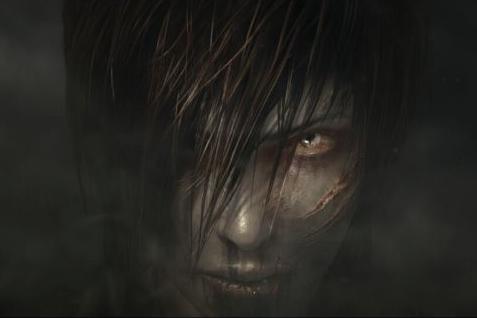
Eventually, the flames of sorcery will consume the bodies of mortals, but long before that they char their souls. The use and regular exposure to sorcery is not kind on the spirits of mortals. At first it leads to slight madness, but over time leads to the creation of ghouls. Ghouls are still more alive than undead, but as the effects of sorcery continue to gnaw on their flesh, they develop a craving for the flesh of the living to sustain their own failing bodies. Ghouls are not only found among the minions and slaves of sorcerers, but also the desperate inhabitants of old ruins and plains of ash that have been consumed by the flames of the Underworld. Ghouls who practice sorcery eventually rely entirely on the energies of the Underworld to sustain their warped existence and turn into wights, though the same fate can also await their closest servants. If the corruption progresses past this point, eventually the dead flesh with crumble into ash, leaving behind only a spirit of demonic power in the form of a wraith.

Sometimes people are killed by the powers of sorcery very quickly, completely destroying their bodies and leaving behind only a charred remnant of their soul in the form of a shade.

Skeletons and zombies in Kaendor are always deliberately created by sorcerers or demons and usually have a charred and burned appearance as their dead bodies are animated by faint spirits of flame.
Call of the Planes

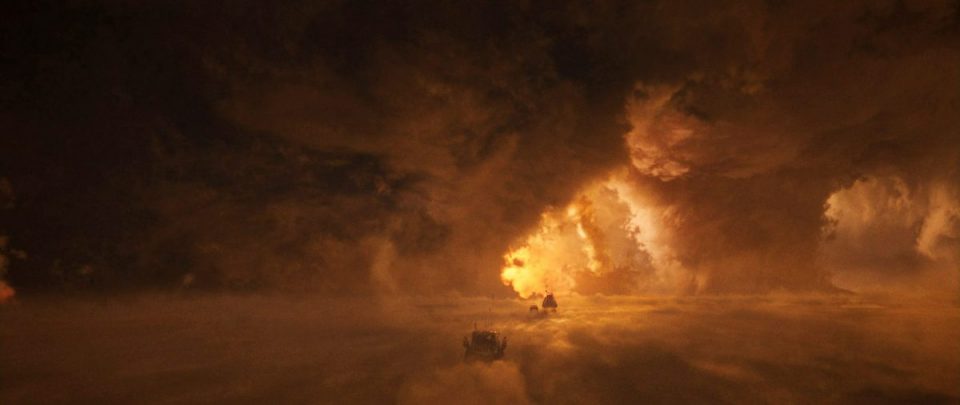
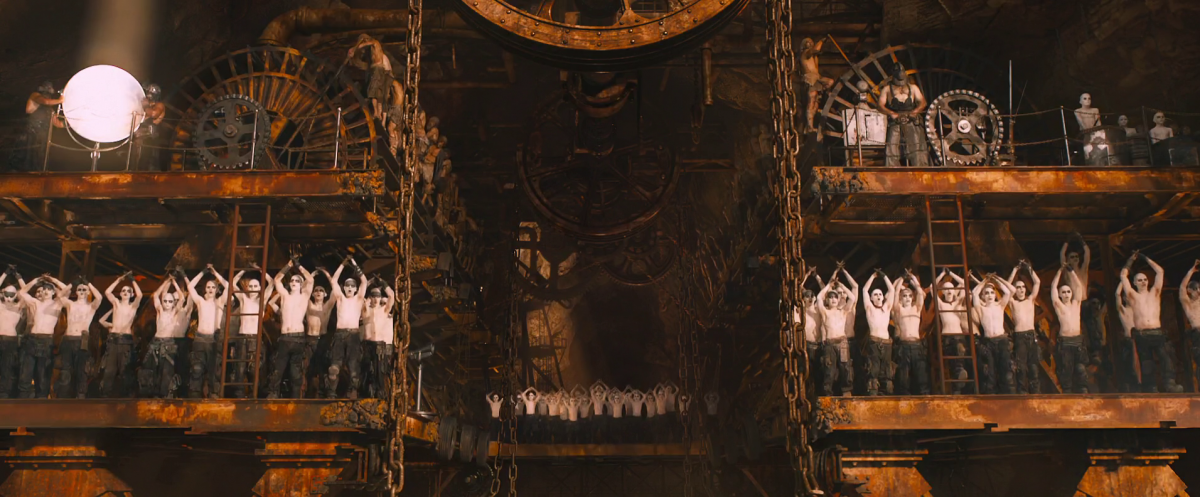
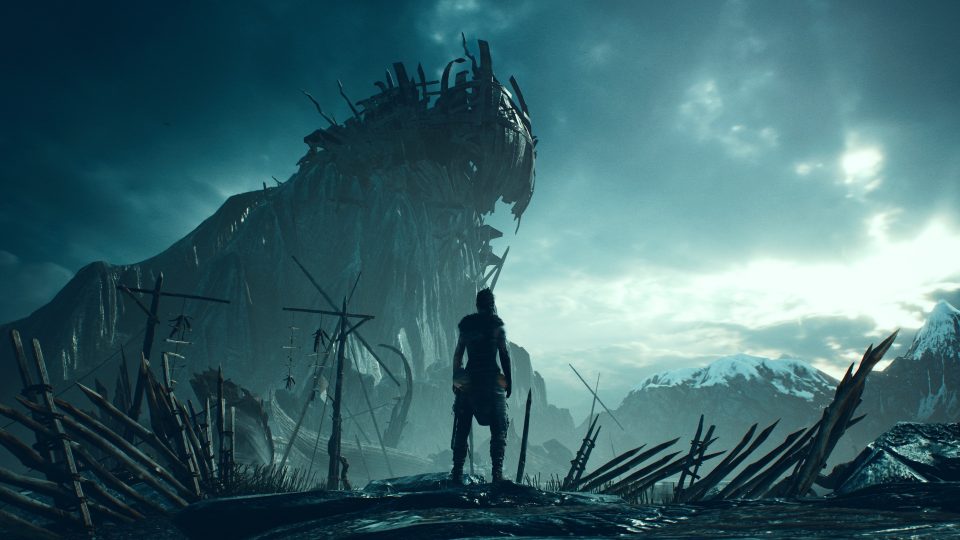
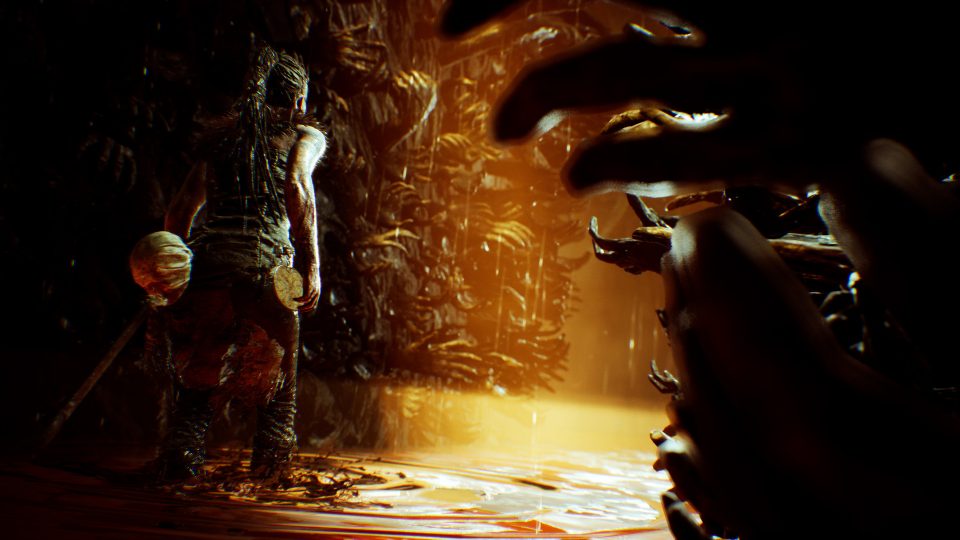
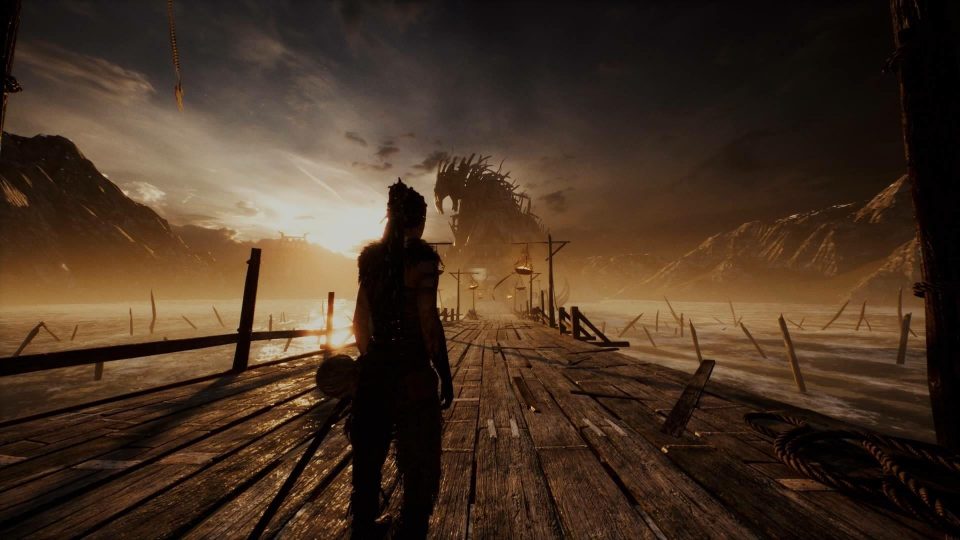
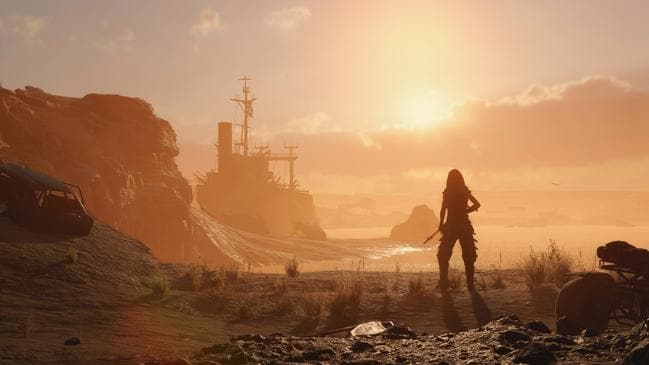
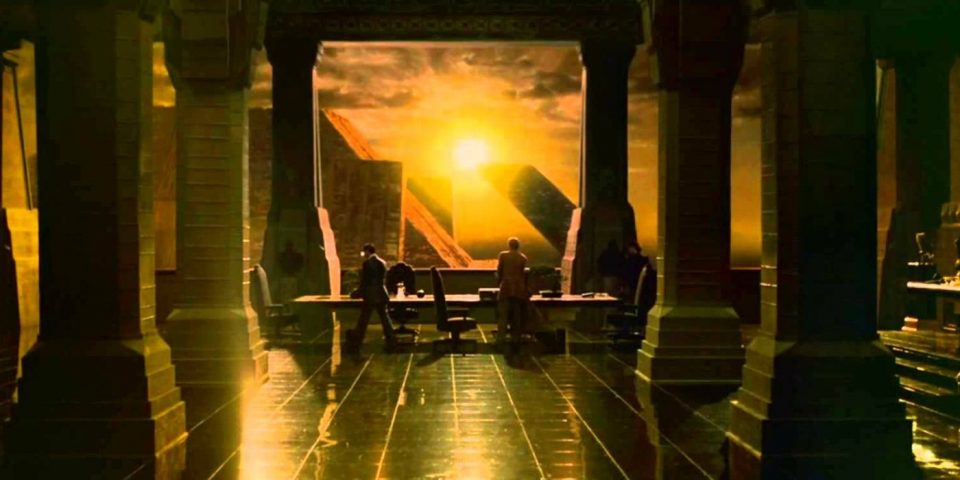
When I wrapped up my 5th edition campaign last year, I was pretty fed up with the system for it just not being the kind of game that works for the kind of campaigns that I had created my setting for. It also made me throw a small pile of notes into the corner that I had scribbled down for a Planescape campaign. Last week I came across a discussions about planned campaigns we never got around to run, which reminded me of those ideas. And here I am now, picking up right where I left a year ago.

Blade Runner
Dark Souls 3
Dark Souls 3
Dark Souls 3
Fury Road
Fury Road
Hellblade
Hellblade
Hellblade
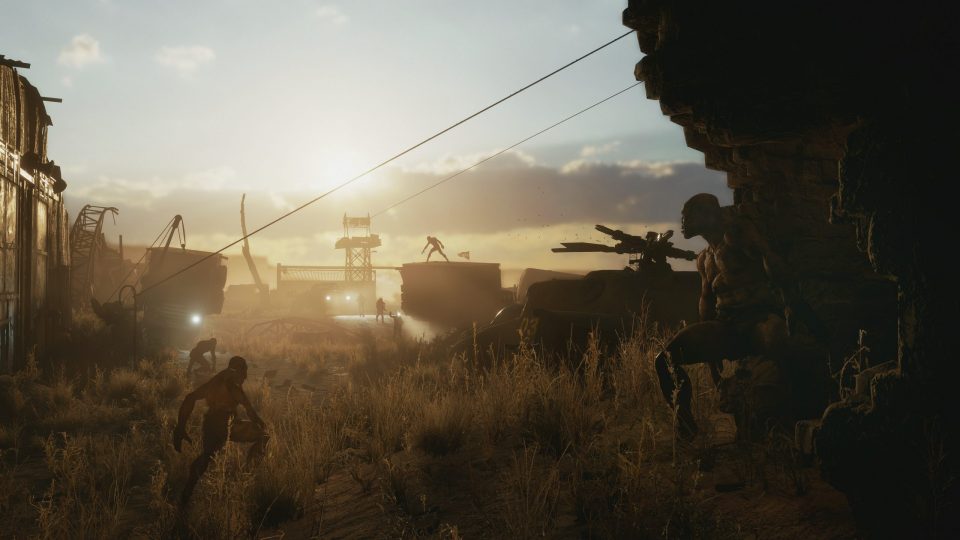
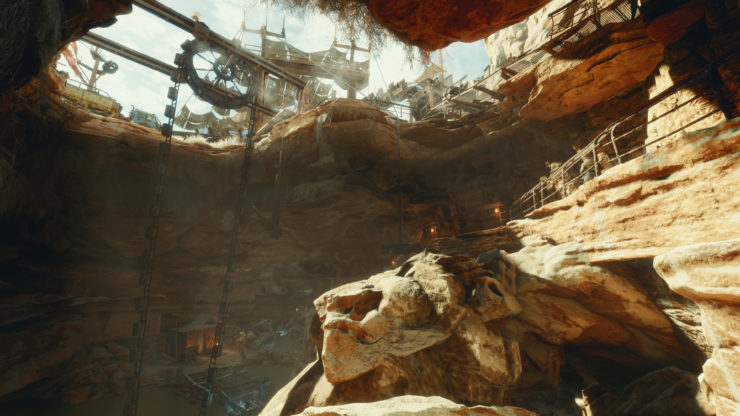
Metro: Exodus
Metro: Exodus
Metro: Exodus

And yes, I am super pumped for Carceri. (But also Ysgard and Pandemonium.) And the factions I want to include in important roles are the Bleak Cabal, the Doomguard, the Dustmen, and the Revolutionary League.

With references like these, keeping the thing from going all grimmdark will be one of the priorities, but I think with the quirkiness of Planescape it shouldn’t be too hard to find a good balance. If everything breaks, a Solaire and Siegmeyer duo should always be able to save the say. With jolly cooperation

Buried Ruins

Hey look, I got a useful (and very short) video to share. People don’t seem to this very much these days.

I knew about ruins getting buried, but didn’t think the effect would be this pronounced. There’s some really good examples at the end, which is something I now think I really should include in most dungeons I make.

A take on Reaction Rolls and the Charisma modifier anomaly

The Basic/Expert rules are the system that keeps on giving. At only 121 pages (of which 43 are monster and treasure descriptions), they would make a pretty thin rulebook and still I keep coming back to them to reread various sections over and over. I’ve seen people considering the ambiguities and unfinished nature of some rules to be a virtue many times, but I don’t consider it good design or even intentional. I’m quite certain that Moldvay and Cook mostly had specific rulings in mind but were not aware that they didn’t sufficiently communicate them in a clear way, and possibly in some cases simply copied things that Gygax had written before without really understanding how it’s supposed to work either. I’m usually not too hard on this, giving them some leeway considering that they had no real reference for what they were doing and making things up as they went. And with rules that into only 78 pages, filling in the gaps is not that much amount of work.

One section I was going over again recently are the mechanics for Reaction Rolls. The reaction roll is used to determine how randomly encountered creatures react to the party, if their behavior isn’t already obvious given their nature and circumstances of their encounter. Creatures like zombies always attack everything they encounter. Goblins always attack when they encounter dwarves. And if you have the party trying to sneak into a guarded enemy stronghold and they run into a guard patrol, the attitude of the guards is also obvious. The Reaction Roll is for situations in which the reaction of the creatures could be anything. But there’s still a lot of ambiguity left. What are you supposed to do with “Uncertain, monster confused”, which is the most likely of all reactions? How is it different from “No attack, monster leaves or considers offers”? The reaction roll is also modified by a character’s Charisma score. But whose charisma score? And if the Charisma score is 13 or higher, the result of “Immediate attack” is impossible to happen. So after pondering the issues over several days, I came up with the following procedure. I believe it mostly just fills in some blanks without really changing anything that is printed on the pages.

Beginning an Encounter

An encounter can start in two ways: The party enters an area in which monsters are already present, or the GM made a roll for Wandering Monsters for that turn. In the order of events for every turn (10 minutes of dungeon exploration) the first step is rolling for wandering monsters. The second step is “moving, entering rooms, listening at doors, and searching the environment”. Dealing with monsters comes as the third step. I think this order is significant because it can mean that wandering monsters can stumble into a room while the party is in the process of searching it. The random encounter is something that happens within the turn, not between turns.

Surprise

If the party and monsters encounter each other, the next steps are determining the distance at which they can become aware of each other, and rolling for surprise. These two steps happen basically at the same time and it doesn’t appear to matter which of the two rolls you make first. But I think it’s actually more convenient to roll surprise first and determine the distance after.

To roll for surprise, both the party and the monsters roll a d6. By default, a 1 or 2 means that they are surprised, while a 3 to 6 means that they are not. Two d6s allow for 36 possible results that cover four different outcomes.

Odds Outcome
4 in 36 Both sides are surprised.
8 in 36 Party is surprised, monsters are not.
8 in 36 Monsters are surprised, party is not.
16 in 36 Neither side is surprised.

Some monsters have a special ability that makes the party getting surprised by them on a roll of 1 to 3 or even 1 to 4, which significantly changes the odds to get the jump on the party in their favor. (A monster ability that modifies the party’s roll instead of their own roll isn’t very elegant, but it’s probably the least complicated way to get the desired result.)

The results of both sides being surprised and neither side being surprised are basically identical. However, I’ve seen a rule somewhere, and to my actual surprised it’s not in B/X, that in the case of both sides being surprised, the encounter distance should be half of what it would be in the other three outcomes. I really like it and so I’m mentioning it here anyway. This is also why I would make the roll for the encounter distance after the roll for surprise. Inside a dungeon, the distance is 2d6 x 10 feet, outdoors it’s 4d6 x 10 yards (or 4d6 x 30 feet, because we really don’t need two different units of measurement).

Something that surprised me coming from later editions is that the rules for surprise don’t really seem to take into account that one side or the other could by lying in ambush, or have time to quickly set one up. However, the Expert rules state that a group of three or more gains surprise outdoors they could be set up to have surrounded the other side. Maybe the idea is that even when you see a light at the next corner or hear footsteps approaching, there just isn’t enough time to set a proper ambush indoors. But I am a big fan of sneakiness myself, and I think it should absolutely be possible for players to avoid getting noticed by the wandering monsters, or quietly retreat from an area that has unaware monsters inside.

The rules as they are written only state that “those not surprised my move and attack the first round, and the surprised enemy may not”. I think the whole game becomes much more interesting if the side that has surprise can use its turn during that first round to back away without the surprised side becoming aware of them. Not only can it be a great opportunity for fun shenangians on the players’ side, it can also be interesting to have monsters stalking them in secret and wait for a good opportunity to strike.

Reaction

After surprise and distance have been determined, the sixth step is the Reaction Roll. As I mentioned earlier, the reaction roll is modified by Charisma. But whose Charisma actually? I long assumed that it would be the character who is walking at the head of the column or perhaps the party member with the highest Charisma, but that never really felt right since there is no indication either way.

The new idea I got recently, and which is the reason for this entire post, is that the reaction modifier for high or low Charisma only applies if a PC has the opportunity to talk to the monsters before a fight breaks out. If the monsters are surprised but the party is not, one of the PCs can hail the monsters and they make a reaction roll modified by the PC’s Charisma. If both or neither side are surprised and the party wins initiative for the first round of the encounter, the players also have an opportunity to hail the other group.

There is also the possibility that the monsters surprise the party or they win initiative, and their reaction is “Uncertain, monster confused”, which is the most likely result for an unmodified 2d6 roll. I’ve seen some retroclones rephrase this result as the monsters waiting to see what happens, which I think is a great interpretation. What you get is the monsters simply doing nothing for now. Then when it’s the party’s turn and the party is aware of the monsters, the players have another opportunity to hail them. At which point you could make a second reaction roll, but this time modified by the respective character’s Charisma.

And there’s actually something in the order of events for each exploration turn that supports that. Step six is making a reaction roll, but step seven, the resolution of the reaction, says “If both sides are willing to talk , the DM rolls for monster reactions and initiative, as necessary.” Making two reaction rolls is already written into the rules as they were printed. And I think it makes perfect sense to have a character’s Charisma modify a reaction roll only in those cases where that character is talking to the other groups. In situations where the monsters spot the party but the party is not aware of them, I think the reaction roll should be done without any modifiers at all. It’s of course also possible that the players might think of something so convincing that no reaction roll is necessary at all. If for example they encounter a group of guards and know the password to identify themselves as people who have permission to be in the place, then making a reaction roll can become moot. In the same way, if the party has surprised and decides to attack immediately and ask questions later, no reaction roll is necessary either. (Though a morale check might be.)

The Charisma Modifier Anomaly

Unlike in AD&D, the modifiers to various things based on the various ability scores are quite consistent in Basic. An 18 in Strength gives you a +3 bonus to melee attack rolls and melee damage, an 18 in Dexterity gives you a +3 bonus to ranged attack rolls and Armor Class, and an 18 in Constitution gives you a +3 bonus when rolling your hit points for each level. But Charisma stands out. An 18 in Charisma gives you only a +2 bonus to Reaction rolls instead of +3, and a 16 or 17 only a +1 bonus instead of +2. Some retroclones fix this by applying the same modifiers to all six ability scores, and I actually did this myself in the past. But I now think that this inconsistency is not an oversight but actually a deliberate choice.

The modifier in question is not a generic modifier to Charisma rolls, but specifically an “Adjustment to Reactions”. Reaction rolls are its only intended application (though this includes retainer hiring reactions for which the following calculations apply equally). The Reaction roll is 2d6, and the Reaction table lists results from 2 to 12. The “Immediate attack” result can only happen on a 2 (or lower, one presumes), and the “Enthusiastic friendship” result happens on a 12 (or higher). If you get a +1 bonus to the roll, a result of 2 becomes already impossible. You can’t go lower than 3 and get “Hostile, possible attack”. Which is one more argument why some Reaction rolls should be done without applying Charisma modifiers. But not only that, the 2d6 also give us a bell curve and shifting a bell curve sideways results in often very significant changes in the odds for any given value. When you get a +3 bonus to the Reaction roll, even the hostile result only has a probability  of 3%. Pretty much anything would be somewhat friendly if you’d happen to have someone with 18 Charisma doing the talking for the group.

But I think the +3 bonus from an 18 is not even the main reason for why the modifiers are different for Charisma. The chance for any given Character to get a randomly rolled 18 on 3d6 is under 0.5%. In a group of four characters, that’s still below a 2% chance for any of the characters to have an 18, and that player might not even want to do all the talking with everything they run into. It’s an unlikely scenario. But the chance for any character to randomly roll a Charisma score of 16, 17, or 18 is almost 5%, and getting someone in a party of four with a 16 or better is 17%. And a bonus of +2 to Reaction rolls is still really big. At +2, you have a 17% chance for a friendly reaction and only an 8% for a hostile one. With a 42% chance for monsters to negotiate. That frankly doesn’t sound particularly fun to me. Having the odds for this scenario being only 2% for any given party of four instead of 17% seems a very sensible change to me, even if it breaks the beautiful symmetry of ability score modifiers.

You used to be an Adventurer like me?

This post somewhat continues on my thoughts from two months ago.

When Dungeons & Dragons appeared and became the last common ancestor of basically all RPGs today (I know, it didn’t appear ex nihilo in a complete vaccum), it wasn’t even called a Roleplaying Game. It was labeled on the box as a “Rules for Fantastic Medieval Wargames” and later “Fantasy Adventure Game”. The PCs went to the dungeon because it was there. They looted all the treasures in the dungeon because the treasure exists to be looted. The adventurer’s life of dungeon crawling started as a game mechanic. Some kind of plausible fictional reasoning for why people would engage in an activity with such an outrageous fatality rate for the sake of collecting piles of gold they didn’t actually have any use for was tacked on later. It also followed the footsteps of Greek heros and Arthurian knight. The adventurer makes sense within the world of the dungeon, but its existence becomes much more far fetched and implausible when it is migrated into a semi-ordinary world of towns and farms, inhabited by lords and peasants who are going by their everyday lives.

Seas of ink have been spilled on how the world of the Forgotten Realms makes no sense, in which low-level adventurers have to risk their lives to save villages from deadly monsters if the local tavern owner or herbalist could wipe them all out in a matter of minutes with their legendary magic swords and awesome arcane powers. And when Fantasyland with its D&D conventions reached Japan and found its way into shonen anime aimed at 10 to 16 year old boys, we eventually ended up with stories that specifically acknowledge that the internal logic of the world runs on game mechanics. That American D&D cartoon, that I’ve never seen, probably played a big part as well. (Portal Fantasy is cancer!)

What we ended up with are fantasy world where adventurer is a common profession, with many larger settlements having a local branch of the adventurer’s guild where people come to list contracts for adventuring work like killing the rats in their basement. These worlds make no sense. And no, I’m not talking just about some juvenile anime or bad fan fiction. It’s all the way up in the most prestigious, big budget, and mass audience works of contemporary fantasy.

No, you are absolutely nothing like me.

I feel that to have a world in which people go into ancient ruins to face terrifying beasts and deadly traps, adventuring does not make sense as a career choice for regular people. To be in any way plausible, a setting for adventures of dungeon crawling, monster killing, and treasure looting needs two main elements (and a third lesser one):

First, ordinary people must not be able to fight back against “Real Monsters”. And this also includes professional soldiers. A king can not just send 30 of his best trained and armed men to deal with monsters threatening the realm. If that were the case, there would be no need for adventurers other than cutting costs by outsourcing the work to contractors. That hardly sounds heroic. When I am talking about real monsters, I mean stuff like a basilisk or a manticore. To my knowledge there are no famous tales of Sir Lancelot and the Wolves, or how young Perseus fought eight goblins. Those stories would not be worth telling either. Sure, a fantasy world can have fictional critters. I’ve made plenty of them myself. But those are mostly background flavor, not the stuff of heroic tales.

The second thing is that PCs can’t just be adventurers who thought fighting monsters would be an interesting career choice. This goes completely against the first point that I just established. PCs need to be Heroes, with a capital H. Extraordinary people who have been gifted with exceptional powers and abilities. The heroes of ancient myths are very often descendants of gods. And even in Athurian tales, you could argue that noble knights are a unique kind of people, different by birth from the ordinary folk and granted special status by god. This is something I’ve never seen mentioned in D&D outside of Birthright. Which I guess might very well be an American thing. But then, Superheroes are also one of the most American things ever, and they all have unique superhuman powers from birth, or incredible funds from a highly privileged upbringing. Now I am a very outspoken critic of Tolkien and seeing The Lord of Rings as a big apologetic manifesto for the racial superiority of the English aristocracy, so I can fully understand if people don’t like the idea of PCs being destined to be Heroes instead of earning their merit through hard work and dedication. But a special trait that makes rare individuals capable of becoming Heroes in ways that are completely out of reach of most people does not have to be tied to specific ancestral bloodlines. You can also have something like Star Wars, where being strong in the Force is a rare inborn trait that apparently can appear in everyone completely at random. But I think it’s important that player characters are not random people, and not everyone can become a Hero. If that were the case, nothing would stop the king’s 30 best trained men from becoming 8th level fighters and deal with all the monster problems in the realm themselves.

I believe that for a good background setting designed for campaigns that center around dungeon crawling and monster slaying, having a distinction between Heroes and normal people is important. And it can even be valuable to have that distinction be consciously understood by the people who inhabit the world, and make it part of their culture. I feel that the whole life of adventurers makes so much more sense and feels so much more believable in such a cultural context. It provides a reason for why the PCs gain access to the highest ranks of society that are usually barred to common folk, and why people put all their hopes into them. It’s a relatively easy way to make the setting shape itself to the game, rather than awkwardly trying to make the game fit a setting.

Earlier I mentioned a third worldbuilding element that helps making a world of treasure filled ruins much more plausible, which is one possible most people here would already have heard about long ago. It is the idea that the implied environments of early D&D were all post-apocalyptic settings. And it certainly helps. Why are there so many dungeons everywhere, often within a relatively short walk from the nearest settlements? Why are they loaded with huge hoards of treasures and magical items? And most importantly, if they are that easy to access, why haven’t they been plundered centuries ago? It all makes a lot of sense when you assume that there was a civilization much wealthier and with much more magic than there is today. And it also used to be that way until relatively recently.

There are so many magic items in abandoned ruins and old tombs because at the time, these were not nearly as rare as they are now. The minor king who was buried with his legendary sword and ring of incredible power did not take the greatest treasure of the realm into his grave. Those were only baubles with sentimental value to him, but sacrifices his successors could afford to make to honor his memory. And why do adventurers keep breaking into these tombs to loot all these magic treasures today? Because these tombs and forgotten stashes are the only places where you can find such items now. It’s less treasure hunting than salvaging. Not to say that all the magic items used to be minor junk in the days of Atlantis, but their presence in tombs and old castles makes a lot more sense if you assume that these items were not nearly as valuable as they are today. One reason for it being people being able to make more of them. The creation of new magic items being nearly impossible is a big factor in making the looting of old ruins worthwhile and the pillaging of grave goods more justified. If your average town alchemist or blacksmith can make minor magic items, this aspect starts coming apart at the seams. Wizards being required to be 9th level to start creating magic items might seem excessively high and seem a bit implausible. But when the goal is to make the creation of new magic items exceptionally rare and difficult, it does make a lot of sense.

It all also becomes more plausible the more recent you place the fall of the previous civilization, or at least the rise of the new one. Even low-level PCs can still find great treasure in relatively easily accessible dungeons because they are among the first people who have come to raid them since treasure hunting became the primary way to gain access to such riches and items. The people in the village may know about the old ruin up on the hill, but since the founding of the village the PCs are some of the first people who have shown up and might have a shot of surviving crossing the first threshold.

So yeah, my points. Insert witty conclusion here.

Prime Requisites are pointless

The original D&D edition, AD&D, and Basic all had the Prime Requisite mechanic, in which all classes have one main ability score that affects the amount of XP they get. It’s a modifier that gets applied to all XP a character gets before they are added to the character’s XP total. In B/X (where I will be taking all further numbers from) the modifier ranges from -20% for a score of 5 or lower, to +10% for a 16 or higher. Which sounds quite significant when you put it like that, but actually makes a much smaller difference than you might expect, because of the way XP requirements to reaching the next level increase.

The way it’s supposed to be done is that the GM announces the amount of XP every player gets, and the players have to remember to apply their relevant modifier to that number before adding it to their total. (I don’t exactly have high trust in this.) Since the players might encounter various magical effects that increase or decrease their ability scores, and potentially change their XP modifier, I can see why this approach was chosen, instead of having five different columns for XP needed by each class based on the prime requisite score. But to make the comparison easier, I did just that with the XP requirements for fighters. Because adding and subtracting percentages changes the outcome based on the order of operations, a -20% to all XP gained translates to the character requiring 125% the amount of XP to reach any given level. And a +10% bonus to all gained XP means a requirement of 91% the XP to reach the same level.

How does this translate to characters advancing through levels faster or slower? Of course, a character with a very high prime requisite score will reach Nth level before a character with a very low score. But how big is that advantage in the long run?

  • At 10,000 XP, a Fighter with a -20% penalty will have reached 4th level, and a Fighter with a +10% bonus will still be 4th level.
  • At 50,000 XP, a Fighter with a -20% penalty will have reached 5th level, and a Fighter with a +10% bonus will still be 5th level.
  • At 100,000 XP, a Fighter with a -20% penalty will have reached 7th level, and a Fighter with a +10% bonus will still be 7th level.
  • At 500,000 XP, a Fighter with a -20% penalty will have reached 10th level, and a Fighter with a +10% bonus will be ahead at 11th level.

It is only at the point where the GM has awarded all characters 72,000 XP and a Fighter with no modifier has reached 13th level that there’s an actual gap to Fighters with a -20% penalty, who are still at 11th level. And that’s for the extreme cases where a player with a Strength of 5 or lower decides to play a Fighter anyway for shits and giggles. Such characters being played up to 11th level probably isn’t going to happen in a terribly high number of campaigns. If we narrow the scope to only penalties of -10% and bonuses of +10%, the effect becomes even significantly smaller.

It’s even more marginal in AD&D, where characters can’t have any penalties and it’s only the default XP or +10%.

This does not seem like something that is worth accounting for. Having players with high or low prime requisites remember to apply the modifier every time they get XP does not seem worth the near undetectable difference in results to me. If you have two characters with the same class start at the same point, then yes, sometimes one player might announce that he reached a new level before the other player. But if either of those two characters misses out on a single session, or gets disabled and gains no XP in one session,, that pattern will already be completely out of whack anyway.

In my opinion, prime requisites make too little impact to be worth bothering with. I’ve come around on my earlier opinion that all classes should just use the Fighter XP requirements because the level difference between a Thief and a Wizard with the same XP really is quite substantial. (A wizard needs +100% the amount of XP that a Thief needs!) But prime requisites is something I threw out right when I started running B/X games, and that  under closer statistical observation, I still see no reason to bring back.