What if The Witcher were wuxia and set in Morrowind?
I have a strong hunch what it would be: Awesome.
Yora's site for Sword & Sorcery RPGs
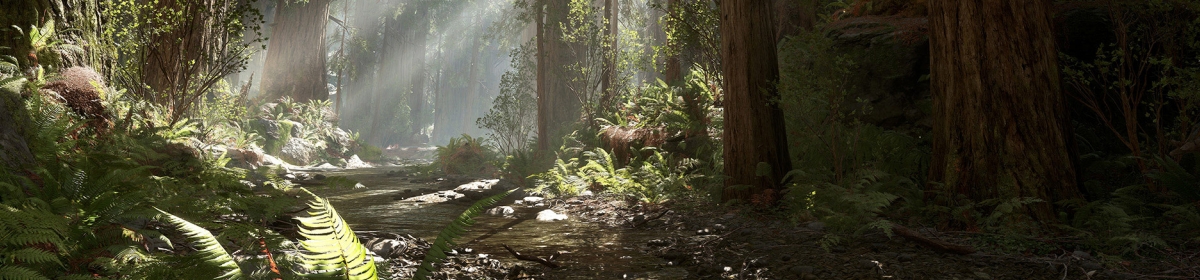
What if The Witcher were wuxia and set in Morrowind?
I have a strong hunch what it would be: Awesome.
Building on my post from last week, I have made some more significant insights into the telling of fantastical stories. I had my start in creating fantasy material with drafting up a campaign setting of my own after I had become dissatisfied with the world of the Forgotten Realms, and the Ancient Lands literally had their origin as the realms of the High Forest 4,000 years in the past. It quickly grew into more and more of a unique thing as I made changes I considered improvements and artistic upgrades and added ideas from other sources that I found very appealing. However, I have to admit that I never was really satisfied with the Ancient Lands as a campaign setting. In the several campaigns that I ran, I always had the feeling that I wasn’t really able to showcase it’s creative features and make it feel to the players as something more than a pretty generic D&D world. I had great ideas that I still really like, but was never really able to work them into the active game.
When I started dabbling at writing, I took a lot of the aesthetic ideas and concepts from the Ancient Worlds, but for this purpose they turned out to work even worse. And I think I am starting to see why. The style I refined and the worlds that I designed are tailored to what I consider interesting, inviting, and attractive. But at the same time they are completely different from the many works that I find really inspiring. Asthetically, the Ancient Lands style takes a lot from Warcraft 3, Morrowind, and the Tales of the Jedi comics. But I don’t really enjoy any of these for their stories and they are actually pretty bad in that regard.
When I want to tell a story that I find compelling, or set up an environment that funnels players into creating stories of that kind, I need a setting that is designed for such stories. A quick look at my favorite stories that inspire me to be creative makes it very easy to discern a pretty specific shared style and tone: There’s movies like The Empire Strikes Back, Raiders of the Lost Arc, Princess Mononoke, Blade Runner, and Ghost in the Shell. There are the Witcher books and the Hellboy and B.P.R.D. comics. There are videogames like Metal Gear Solid, Thief, Legacy of Kain, Mass Effect 2, and Mirror’s Edge. None of them are set in vast wildernesses inhabited by barbarian tribes. I find it a culturally fascinating environment and aesthetically very pleasing, but these works are all dark and set in quite advanced societies with complex political environments.
Bronze Age tribes are a very fascinating environment, but I am starting to see that I don’t really have a good idea what kinds of stories would fit into such a setting that I find compelling. This is not where my creative capital is located. I don’t have the toolbox to craft stories for it.
So with the creation of the Kaendor setting I want to go all the way back to the start and refocus on what the essential elements are that I want to and can work with. With the Ancient Lands I put some considerable effort into not doing what has been done a hundred times before, like going with Dark Lords, demonic invasions, lost Golden Ages of magic and technology, a good and evil duality, an intelligently designed universes (that is about to break down), and a generic medieval European setting. But in hindsight I think I went a bit overboard in some of it and ended up designing a world in which there isn’t really anything to replace these things as big background sources of conflict that force characters into action. Right now, I think I might be able to salvage the idea of small clusters of civilization separated by vast stretches of uninhabited wilderness. While a tribal Bronze Age society and settlements don’t look like they would work, I can take the asthetic styles of various Bronze Age empires to create a style that is distinctively different from the medieval European Standard Fantasy Setting. And the ambigous and unsettling spirits could become more actively prominent with a big Lovecraftian boost of weirdness.
In a way, I could see many of my ideas work in a setting that is actually more similar to the fantastic world of Morrowind. More great houses, more tongs, more daedra, and more living god kings.
Fantasy in recent decades seems to have a big thing for magic systems, and I believe partly becuse of the success of Brandon Sanderson. When I see people talk about magic systems it more often than not seems to revolve around different types of spells and the method of their casting. To the point that it seems to be taken for granted as a basic premise for any kind of magic to appear in fantasy.
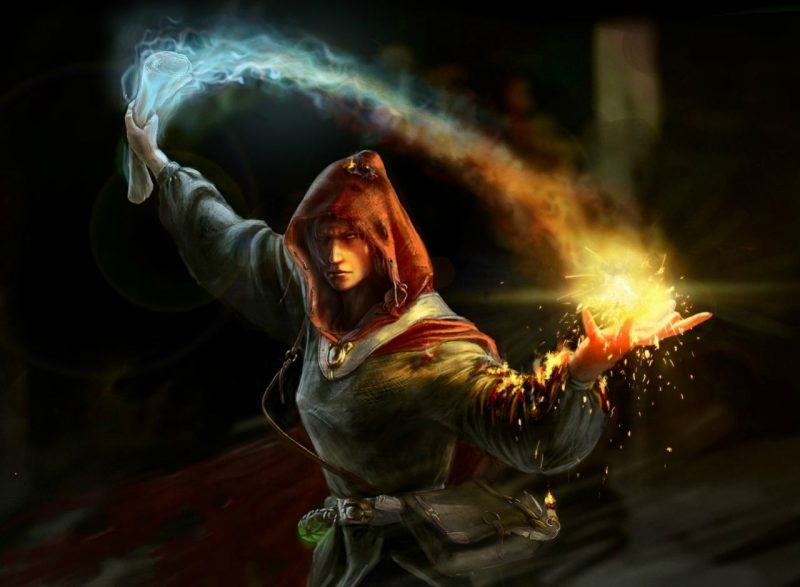 This week I was exploring the idea of converting Apocalpyse World to a Sword & Sorcery game. All in all, it’s a system that strikes me as a really good match right out of the box with the one major thing that is missing from it being a set of rules for spellcasting. But it’s not like the game is completely free of magic. One default assumption of the setting of an Apocalypse World game is the existance of a Psychic Maelstrom, which is the source of seemingly supernatural effects and phenomenons, but whose actual nature and trait are deliberately left completely unspecified to organically take shape during play. There is a single ability that allows one of the classes to use magical power in a somewhat direct way, but it is again very vague and open ended and does not really fit the image of casting a spell.
And looking at older fantasy books, this is actually very much like magic used to be portrayed in fiction. The oldest example of a straight up spell slinger I can imagine is Tim the Enchanter, who can summon up fire without flint or tinder. Gandalf, Elric, or Kane, or any of the sorcerers in Conan’s stories don’t say magic words and have stuff shoting from their outstretched hands. Instead their “magic” mostly takes the form of knowing things and being in contact to powerful entities otherwise invisible to the perception of regular people.
The spell in its modern form appears to be primarily a game mechanic. One that was carried over from RPGs to videogames and from there seeped out into the wider field of fantasy in general. While I am a big fan of fantasy games, I’ve always had reservations about the gamification of non-game fiction. Even with games I prefer mechanics to be as invisible as possible and maintain a more organic feel in the in-game fiction. (Which is why I find Apocalypse World quite appealing and always had a problem with D&D magic.)
With the Ancient Lands, I’ve always felt more like making a “game of the book” rather than a “book of the game”, even with the vast majority of my work over the last year being on game stuff with no actual book anywhere near to sight. But these days I feel once again more drawn to writing fiction, with my game development having reached a point where there’s not really much left to do other than playing it. And even with all the worldbuilding advice for writers that adresses magic systems, I find the idea of a spell-less magic to be a lot more interesting.
Knights of the Old Republic
THE SITH EMPIRE STRIKES BACK
Fifty years have passed since the returned Sith Lord Darth Revan has been destroyed for a second time in the Battle of Chandrilla, bringing an end to his seemingly unstoppable invasion of the GALACTIC REPUBLIC. With the death of their master, the surviving Sith forces were driven back to the Outer Rim.
Under the leadership of the mysterious SITH EMPRESS the Empire has been rebuilding its fleets and recovered its strength, slowly conquering many of the small independent systems in the Rim. Many fear the threat of a new great galactic war on the horizon.
Concerned by reports of recent activities in ruins of the Great Sith War, the Jedi Council has dispatched a group of its agents to the burned remains of the Jedi Enclave on the remote planet Dantooine.
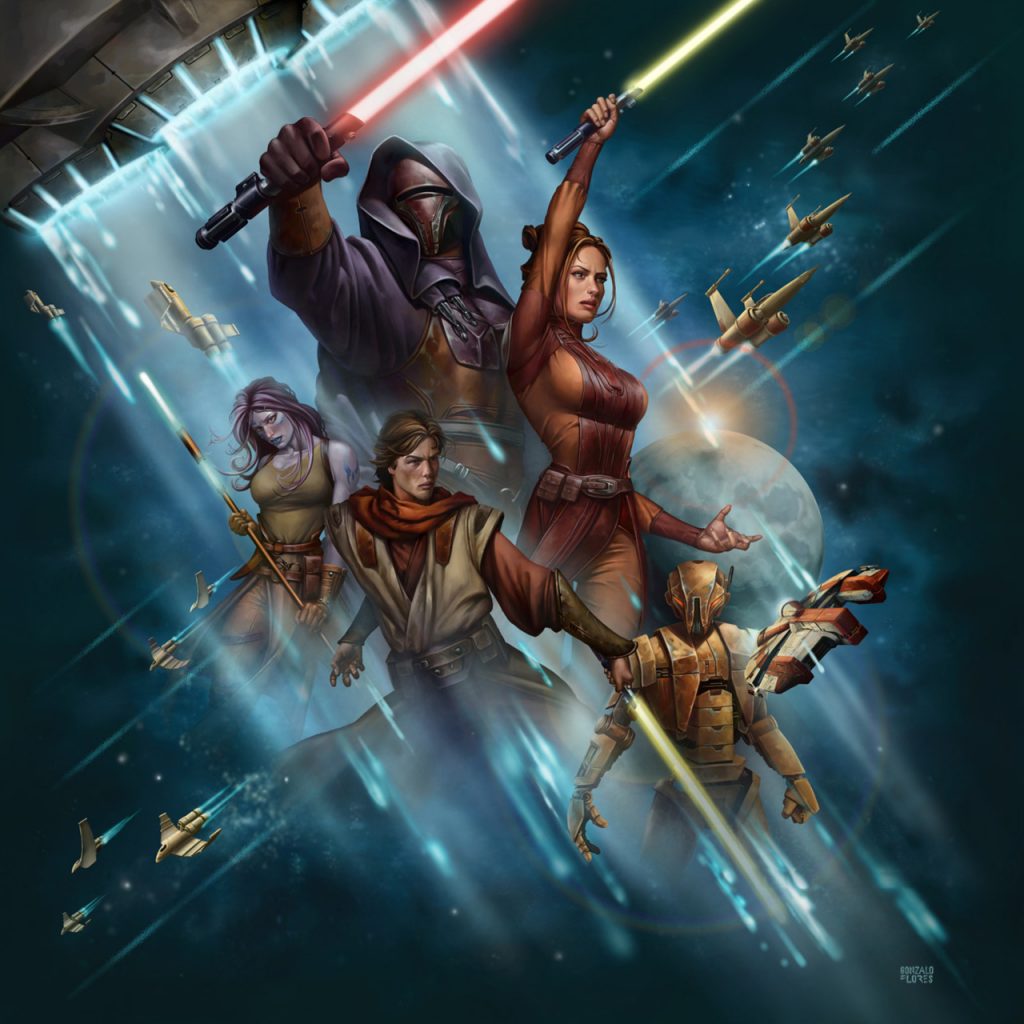
I didn’t post much this month so far because I was busy. With work on my Ancient Lands setting being pretty much complete but the launch of a new campaign still being a while off, I once again turned to my other hobbies for fun. Videogames from the early 2000s (being already old enough to prefer stuff from when I was 16-20 to new releases) and Star Wars.
And I always wanted to run a Knights of the Old Republic campaign, but never got around to it. And just having discovered the Apocalypse Engine games and also started replaying the KotOR game, I simply have to do this now! I am actually getting new inspirations for refining the Ancient Lands all the time these days and don’t expect to be able to stay away from it for long. But for the time being, expect a good amount of Star Wars material around here.
When creating a “world map” for a fantasy setting, I generally find it rather pointless to actually make a map that shows the entire world. Most fantasy worlds aim to be late medieval to early modern in the kind of world they describe and in these time periods much of the Earth was yet unknown even to the people with the most complete maps that existed. Also, an Earth-sized planet is massive and there is no way you could ever actually visit all those places, no matter how many books you write or games you play. At the very most, what a setting can practically make use of, is a region that covers all the major climate zones and ecological environments.
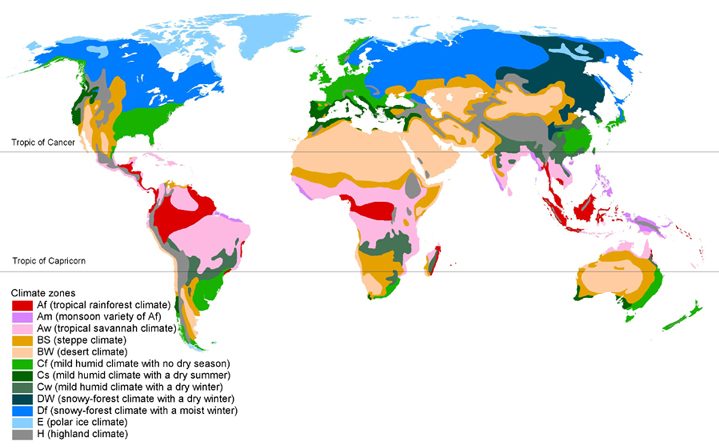 While the distance from pole to pole is a bit over 20,000 km, the north to south length you need for a map that provides all the environments you could ever wish for is much shorter than that. I took some measurements on world maps and the numbers that showed up again and again were all in the range of 3,000 to 3,500 km. Or in fantasy units, 2,000 miles.
It is the distance that takes you from the northern coast of Africa to the northernmost extend of the Baltic Sea. It’s the distance from Russia across all of Mongolia and China to northern Vietnam. It’s from Hudson Bay in Canada to Cuba and from Alaska to Baja California. The distance from Rio de Janeiro to the Falkland Isles.
If you really want the full range of possible climates from the thickest tropical jungles to the permanently frozen artic tundra it’s more like 3,000 miles, but with 2,000 you are already on the pretty safe side in your ability to cover any landscapes you might want to put into your world.
The kaas are one of the six mortal humanoid peoples that live in the Ancient Lands and were one of the very first things I created for the setting. It really started all with these two creature designs:
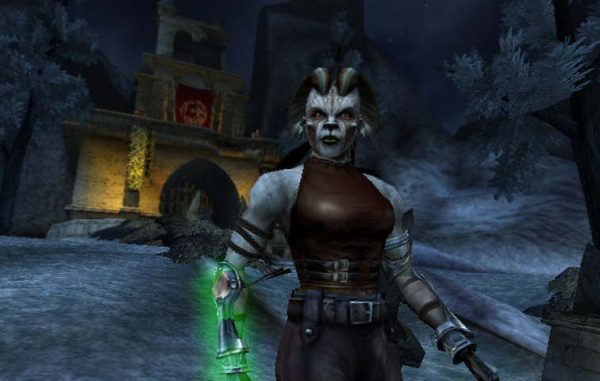
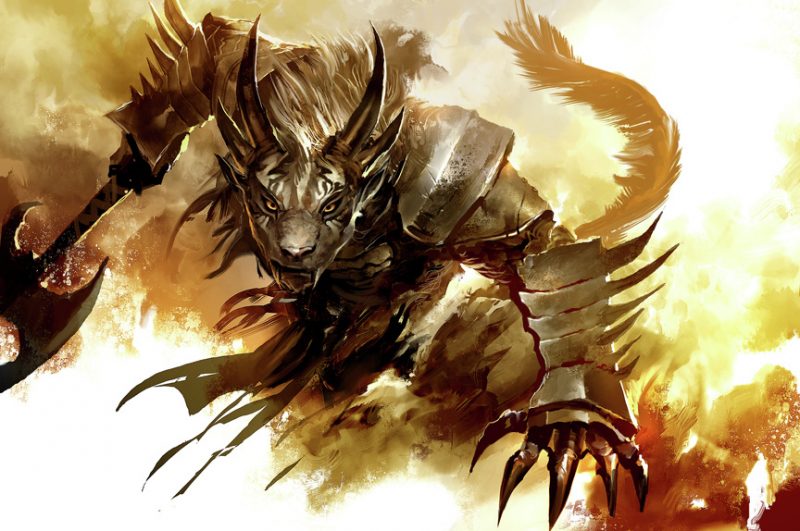
From a visual design perspective I think this is a really cool style for the look of a new fantasy race that fits into a Sword & Sorcery setting. But something that I have always been pushing back all these years is to really sit down and take the time to fully develop them into a full and distinct people and culture that will be recognizable to players. With the skeyn that wasn’t much of a problem and even though I came up with the yao and sui very late in the development they came together pretty much by themselves by relying on old archetypes that feel fitting.
But with kaas I mostly knew what I don’t want. I don’t want orcs, vikings, or klingons, or any of the many other iteration of this old stereotype and I also don’t want them to be the big silent guys who glower down on everyone else in mild contempt (that’s more the basis for the yao). Kaas are big and they are strong, and having a lion/bear motif making them at least somewhat more warlike than the other peoples just comes by itself. But I want them to be more “cheerful” and less psychopatic about killing or obsessed with honor. People that clearly are dangerous, but who could still be really fun to be around.
I think this last weekend I really made some big progress again by putting together a list with various existing characters from fiction that I could also really well imagine as kaas characters in the Ancient Lands. The resulting list is this one, which I hope will make some people as enthusiastic about having them in a campaign as I am.
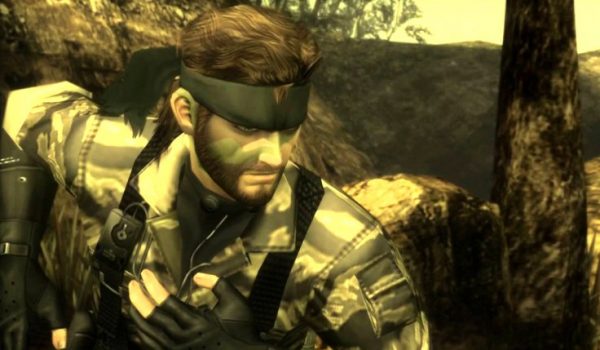
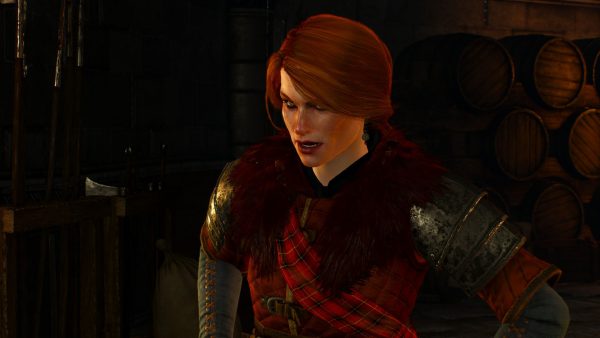
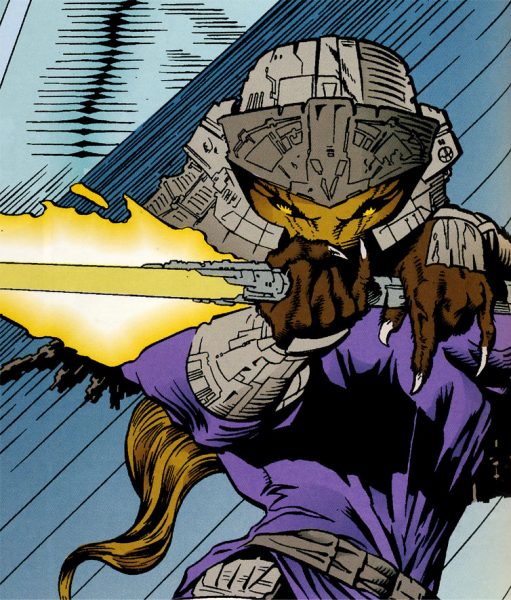
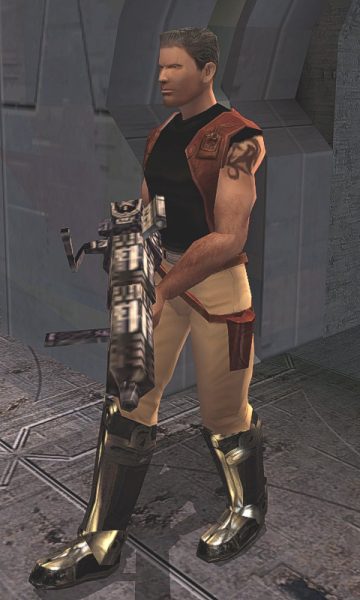
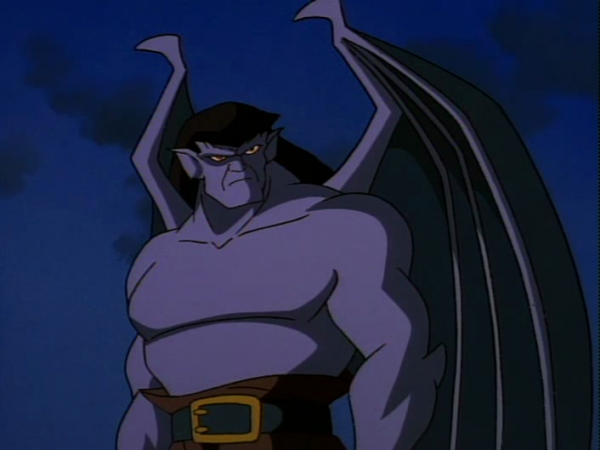
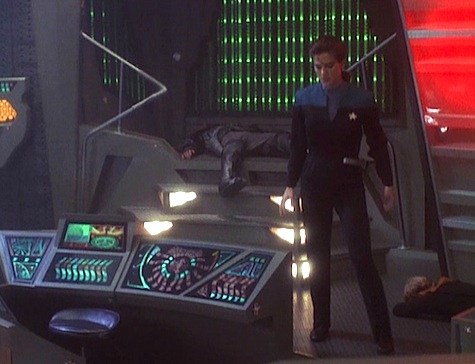
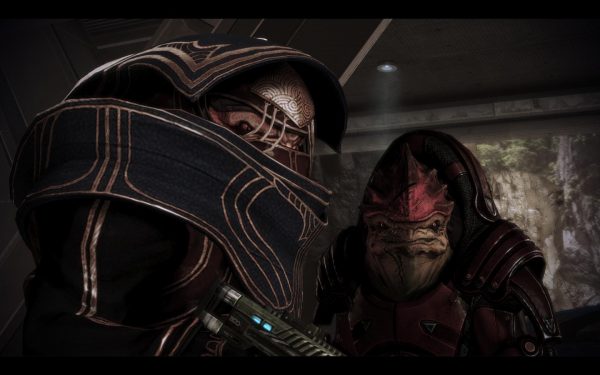
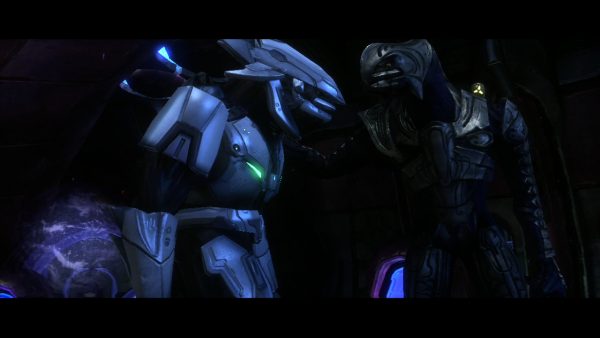
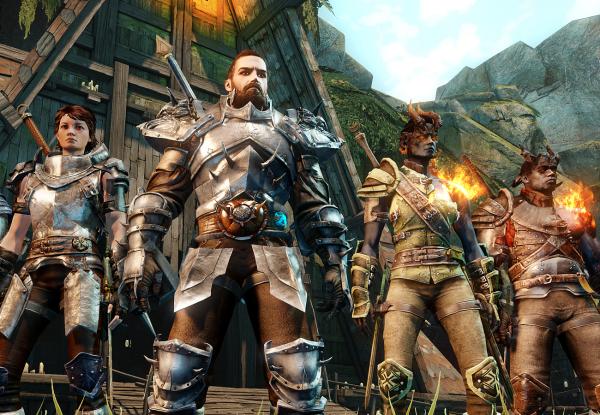
If you know only half of them, I think you should agree that these guys should be a blast to have in the party. One specific trait I have decided on for the kaas, which I think makes a great base to build their cultural identity on, is that violence is usually not their first choice of a solution to deal with a problem. But generally it’s their second choice if the first one didn’t work. They also need some more calming elements to balance them, but I think I am definitly on the right track with these guys now.