All the way back in September, I wrote about how once or twice a year, I keep taking a break from the Sorcerers & Dinosaurs fantasy stuff I spend most of my time with and go tinkering with ideas for space adventure campaigns. I outlined an idea I had which I had given the production title Hyperspace Opera, but didn’t develop it very much further. Well, it’s been eight month since then, and here we are again.

While I didn’t create anything presentable to share, I did keep thinking about my initial ideas and concepts over the months. Discovering new source material to use as references. Discarding elements that didn’t really quite fit with the new sharper image that was emerging. Considering options for rules systems and how the setting could build on and support their game mechanics diagetically. And just overall refining the general idea into something more concrete that you can actually start creating content for. The main underlying inspirations are still the same, but in many ways I think the concept has evolved quite a bit. The term space opera doesn’t even really make any sense anymore, but since it’s a working title anyway I’m sticking with it until this thing gets an actual name. So forget about whatever I might have mentioned about an idea for a setting once over half a year ago and consider all of this with new eyes.
Inspiration and Concept
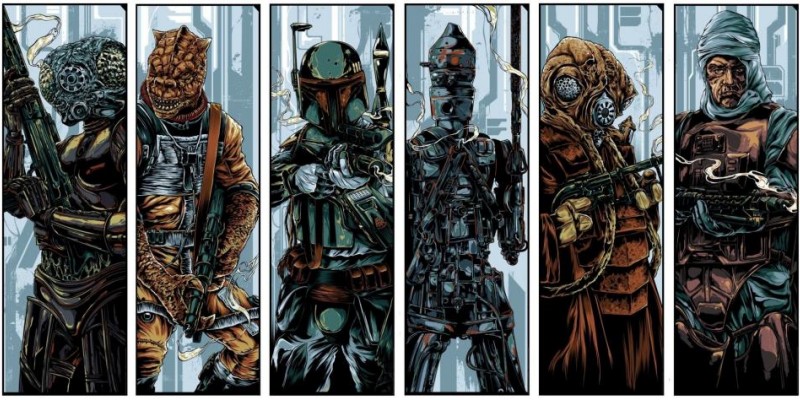
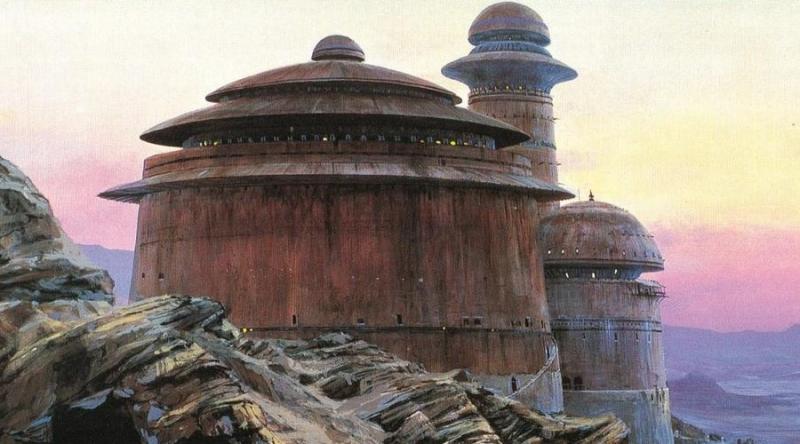
Everything started with the idea that I am a huge fan of classic Star Wars, but I think the original setting has been expanded in ways that are stylistically and thematically mismatched since 1999. It’s okay for me to just ignore all the Clone Wars stuff and everything made for Star Wars after 2003 as if it’s an alternative timeline, but you can’t really expect that from players you invite to play a Star Wars campaign. And there were plenty of terrible ideas being introduced even in the classic EU period. So my idea was to create a new setting that takes all my own favorite elements from Star Wars and expands them into something new, unconstrained by all the baggage of material I’m not particularly fond of. Of course, for me the ultimate gold standard for Star Wars is The Empire Strikes Back. Cloud City, Lando, Boba Fett, and the Millenium Falcon are the main touchstone for the overall style, tone, and atmosphere I am trying to pursue, followed by Jabba’s Palace and the forests of Endor from Return of the Jedi. As such, the overall campaign structure that the setting is going to be build around is “daring Scoundrels with a cool Ship”. No superiors ordering the characters what to do, and the law really is more like guidelines than actual rules.
I had also been thinking about both Cyberpunk 2077 and Dune at the time and somehow ended up with the image of 1920s industrialists as the new aristocracy of space. What’s really the difference between Leto Atreides and Saburo Arasaka? The terms magnate, mogul, and tycoon all originally meant nobles of outstanding influence and power, with baron being of more modest means but still referring to the same idea. The aesthetics of cyberpunk and many interpretations of Dune are rich with influences from Art Deco, which happens to be the mainstream design style going into the 1920s. And also influenced Cloud City in The Empire Strikes Back.
The time of the industrial barons was also the prime of the Labor Movement, and the cyberpunk of the 80s was all about economic inequality and the tyranny of the rich. So with these influences, it comes very easy to expand the concept for the setting in that direction as well. Season 1 of The Expanse and the movie Outland make for great sources for ideas in that regard, though their aesthetic is very different. It’s very easy to make stories about the people uniting to revolt against the evil industrialist that exploit and oppress them, but that’s banal because right and wrong are obvious and there’s no interesting conflicts. What I have long been very interested in is the repeated corruption of the labor movement, with communist leaders becoming the very tyrants they were meant to topple while still feeding the starving masses slogans about equality, unions being turned into pawns in political games, and left wing militias degenerating into drug cartels primarily fighting each other. Which isn’t a unique issue of the labor movement. The same thing happens all the time with vile hate preachers calling for violence and vengeance in the name of Jesus and his message of compassion, love, and forgiveness. (Seriously, have any of these people read the Sermon on the Mount?! He’s talking about you, my dearies. But I digress…) But touch your own nose, clean up your house first, and all of that. Infighting among the exploited and the rise of wannabe tyrants who relish their power over those even weaker than themselves is where I am looking for the main sources of conflicts that players can find themselves entangled with.
Scum and Villainy
And when your campaign concept can be summarized as “moral corruption and infighting among the 1920s labor movement, but in space”, you know that PtbA is really the only acceptable choice for a rules system. I’ve been fascinated with Apocalypse World ever since I first encountered it and the underlying system and approach to running and playing an RPG is really something remarkable. Blades in the Dark is widely regarded as the most sophisticated iteration of the system and Scum and Villainy is basically a repainted version of that, which takes the game from a Dark Fantasy Steampunk Crime Syndicate setting to Space Smugglers and Scoundrels. I’ve been notoriously fickle throughout the years about sticking to specific rules systems as I am developing new campaign ideas, but I don’t think there are really any other serious contenders in this case. Stars Without Number would certainly be a viable option, which I did originally tinker with when I started last year, but when there’s already a PtbA game tailored to this campaign style, I don’t see any real benefit in using a D&D retroclone based system instead.
Known Space
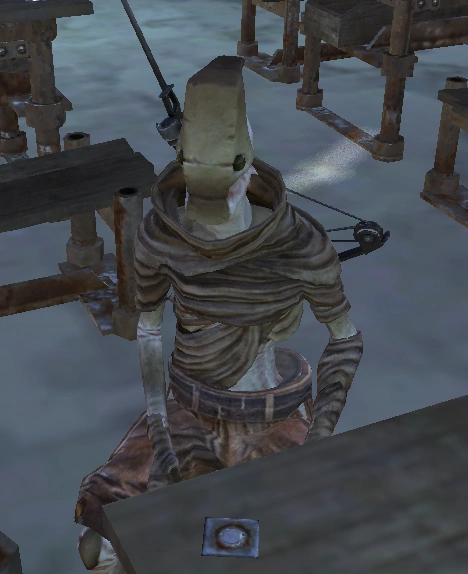
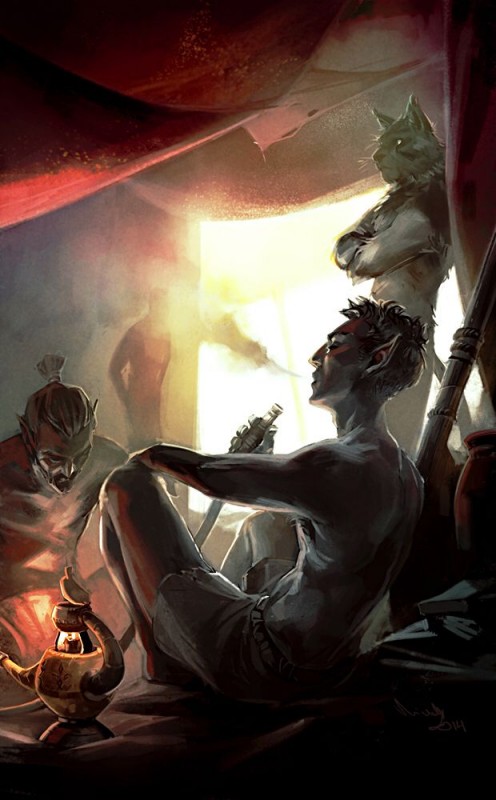
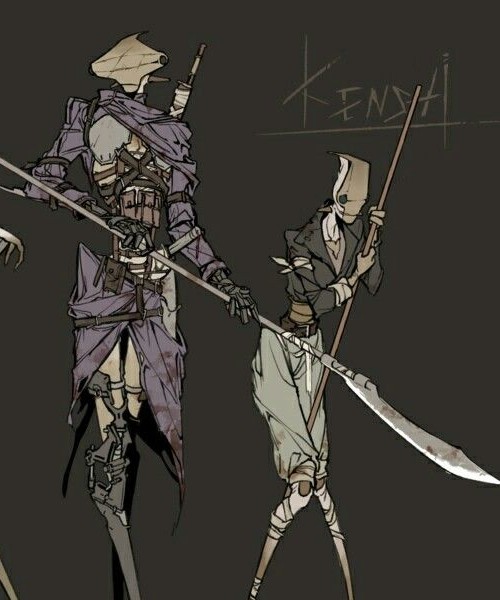
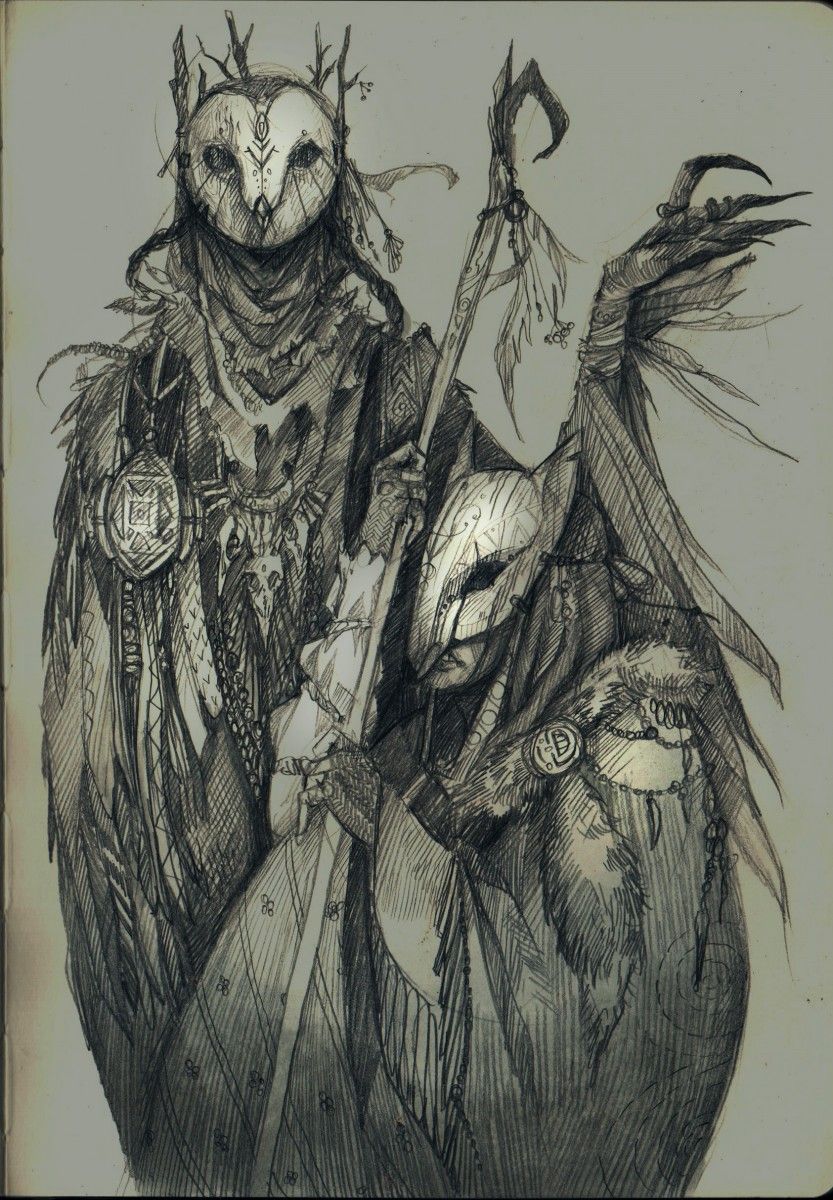
The setting of Hyperspace Opera is a region of a galaxy that is home to a dozen intelligent species that are engaged in interstellar travel and trade. As interstellar space settings go, the technological level in Known Space ranges from moderate to low. The greater civilizations all have extensive space industries and infrastructure that maintain large fleets of commercial space ships in the tens or hundreds of thousands, but a good number of planets do not have the technological capabilities to build hyperspace drives or artifical gravity systems of their own and rely on components or even entire ships purchased from other species.
The full population of Known Space is estimated to be around 100 billion people, the vast majority of which live on the homeworlds of their species or within the home systems. While there are large numbers of planets throughout Known Space where people can survive, they never quite match all the environmental factors that each species has evolved to for millions of years. While there are always people drawn to travel to the stars and live on alien planets, they are never more than a small majority, and since all civilizations that are capable of leaving their homeworlds and colonize other planets have fully industrialized many generations ago, there simply isn’t much population growth on newly settled worlds. Even though there are dozens of colonized planets with populations in the millions, they barely register in comparison to the eleven home systems with populations of billions.
The driving force behind space commerce and colonialization is the endless need for vast amounts of cheap metal in the home systems. While hyperspace jump drives are very complicated pieces of technology, the cost of manufacture and making hyperspace jumps is relatively modest. The costs for transporting huge amounts of material between star systems is so low that it is cheaper to mine easily accessible resources of high purity in distant star systems than trying to fully exploit hard to access resources of lower purity within the home systems. Huge industrial mining fleets are swarming throughout Known Space, harvesting the most easily accessible resources for a few years, and then moving on to greener pastures where profits are higher.
In their wakes they leave behind planets they considered depleted and of no further value to their high profit margin operations. They leave behind piles of broken and worn out equipment not considered worth repairing, but often also whole communities of miners and independent support workers running local businesses. Those who can afford to often pack up their things and follow soon after, leaving only those without the means to leave or nowhere else to go. Even though these planets are no lnger considered commercially viable by the great mining companies, they usually still contain large amounts of resources that simply require a greater amount of work to extract, reducing the amounts of profits that can be made by selling them. These resources are what is keeping the many small frontier outposts alive once the great fleets have moved on. They are also what attracts the vultures, companies much smaller than the mining giants, which have specialized in trading pretty much any kinds of goods and equipment imaginable in exchange for resources of any purity grade. They are usually organized in cartels that divide the frontier systems between them to avoid competition that would drive down the extortion level prices they offer to the independent mines. Far away from the home systems, there are no commercial regulations to stop them.
The settlers of small frontier worlds frequently attempt to pool their resources to form commercial cooperatives to increas their bargaining power with the trade companies or enable the manufacture of goods theh would no longer have to trade for exorbitant prices. Obviously the companies have no interest in seeing this happening and don’t shy away from bribery, sabotage, intimidation, and outright assassination to undermine any such efforts. This is where the Player Characters enter the picture. In this environment, people with fast small ships who aren’t afraid of company goons and mercenaries are exactly the kind of people the settlers need. Or which the companies could have use for when they don’t want their machinations to be too obvious.
Technologies
The most important technology for interstellar space travel are hyperspace drives. These engines allow ships to jump in and out of another dimension with very different laws of physics, including a much higher speed of light and vastly reduced energy requirements to rapidly accelerate. Jumping between systems usually takes only a few hours and all of known space can be crossed in a few days. Though unfortunately, ships in hyperspace are completely blind, and the gravity of stars and planets can severely send ships off course in unpredictable ways, which makes it necessary to travel to the outer reaches of a star system at sublight speed first, which for most ships takes several days. Predicting the exact arrivial point in the vicinity of the destination star is also impossible, leading to additional hours to possibly weeks of reaching the intended planet at sublight speed.
Communication through hyperspace is impossible. The only way to send messages between systems is to carry prerecorded messages one space ships. Highly populated systems have hundreds of mail barges traveling between them every hour, but in the frontier system, days or even weeks can pass between their arrivials.
Since communication within systems happens at lightspeed, all planets have their own independent and separate communications network. In the home systems, these networks are accessible from anywhere on the planet, but on colony worlds access is usually limited to only the vicinities of major settlements. Smaller frontier settlements often have only local radio communication and nothing else.
Two two main weapon systems are railguns and missiles. Railguns come in all kinds of sizes, from small pistols up to huge cruiser cannons. Most planets do not allow the carrying of guns in public and the energy cells of railguns are quite easily detected by security scanners. Railguns are also generally a bad thing to use inside space ships as they can cause catastrophic damage to survival critical equipment. For these reasons, large knives and short swords are very common weapons for people working and living in space.
And that’s the general baselines for the setting. Not drastically changed since the last time, but this is hopefully a more cleaned up version of how things are currently looking and what I intend to build upon in the comming months.