According to someone who claims to know know Judd Karlmann, (and why would he make that up?) there’s going to be a new print run of the Dictionary of Mu coming soon.
Direct quote from Judd Karlman, author of Dictionary of Mu:
“I’m talking to the printer. It’ll be back this year.”
I am very pleased to hear that. This book has a pretty outstanding reputation, but being unavailable for download it has been very difficult to get a copy for several years.
I think I found the perfect core concept for my new iteration of the Ancient Lands setting. And if you know me just a bit, it will be no surprise to you: “Star Wars as a Bronze Age Sword and Sorcery setting.” Specifically the two Knights of the Old Republic comic series.
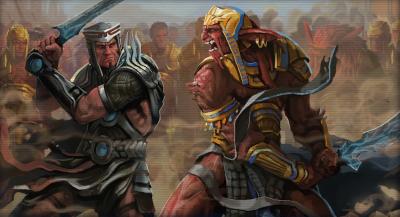
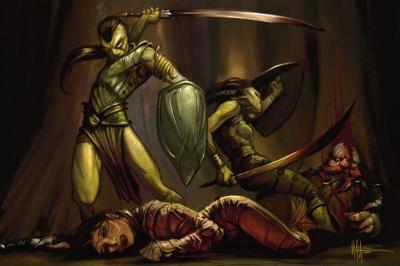
And now I also know what to do with the naga in the setting that isn’t simply making them Yuan-ti. These guys:
I am not going to copy the whole Sith War storyline, but I think the old Sith are a perfect inspiration for the overall mindset and culture of the naga.
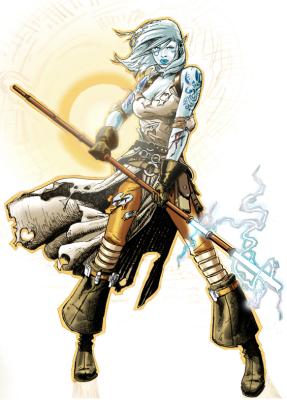
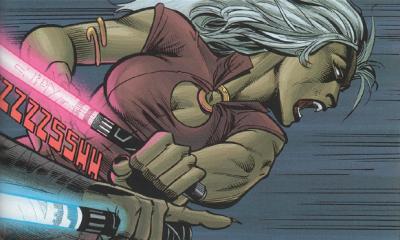
I’ve already been planning to do a group like the Mandalorians and the Qunari from Dragon Age for a long time. And two of the races are directly inspired by Jarael and Sylvar.
Air GenasiKaas
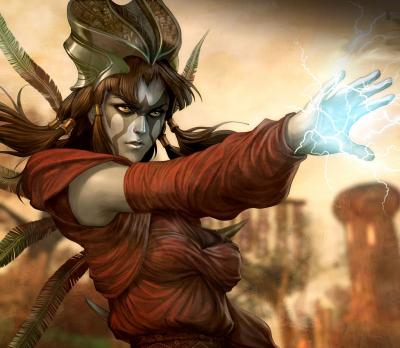
The Dathomir Nightsisters also have many great pictures I can use.
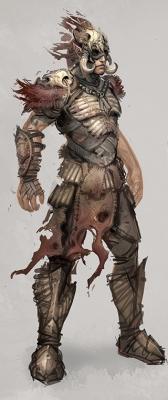
Kaska Witch
Of course, I am also taking liberally from Mass Effect (the second best thing after Star Wars), and the naga get a race of obedient servants inspired by the Geth.
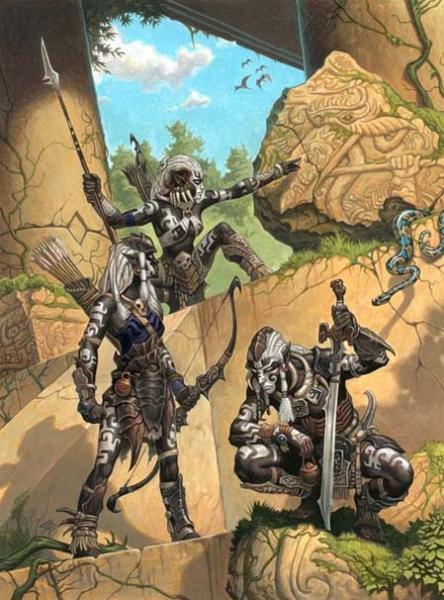
Serpentmen
And there will be both wood elves and dark elves as well.
How can I wear the harness of toil
And sweat at the daily round,
While in my soul forever
The drums of Pictdom sound?
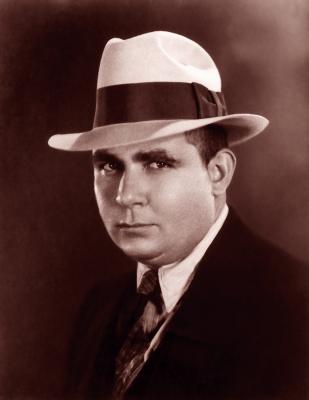
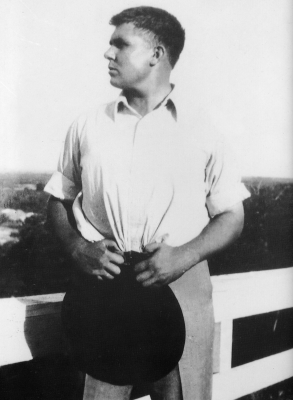
What is it with this picture of Robert Howard? It’s probably the most well known picture of him that gets used the most. Far be it from me to claim to really know a man who lived on the other side of the world and has been dead for 80 years, but I always feel that this isn’t really him. This is Robert Howard trying to pretend to be someone who he is not. As far as I know, this is the only picture of him with a tie and a hat (at least this hat). And it doesn’t match the way he described himself in his writings and correspondence at all. Maybe his agent demanded this picture for promotional material or it was him dressing up in costume (there’s a couple of pictures of him posing and showing off his collection of anachronistic stuff). This probably is purely subjective, but that look on his face never seems to me like a man looking cool. It looks like a man trying to look while feeling very akward. This just doesn’t seem to be him.
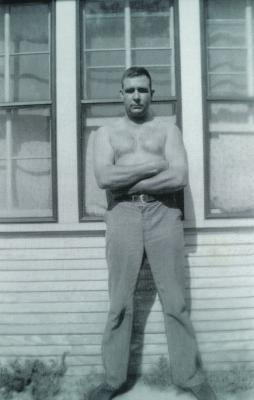
Especially when compared to other existing pictures of him.
This seems to be the real Robert Howard, how he actually was and how he wanted to be seen. He clearly had his problems and who knows what had been going on inside his head. But I think that picture with him in a suit really is doing the man a disservice. It doesn’t seem at all like the way he should be remembered.
I’ve been working on the Ancient Lands setting for a bit over four years now, and it seems a pretty regular ocurance that I feel like I went completely wrong somewhere and have to start all over. I think this is about the fifth time that I am sitting down to try to define the core concept of the world and pick the basic elements that are going to go into it. Though it’s not all in vain, as I am not completely starting all over again. It’s more like disassembling the whole thing and trying to put the pieces together in slightly different way, making some modifications at some parts while a few get discarded and perhaps replaced by something new. Or to use the poetic analogy I’ve heard somewhere, it’s like the waves on the beach, going back and forth, but each time getting a bit higher up the sand. Two steps forward, one step back. And I think I’ve come really pretty far by now. That I announced completion a few weeks ago does not have to concern us here now…
I think I primarily made two main errors, which resulted in the setting turning out as something somewhat different than I wanted it to. I think I also had a bit of a change of taste, as I’ve been reading a lot Sword & Sorcery and pulp over the last half year or so. I put the blame at Beyond the Black Gate and From the Sorcerer’s Skull, as well Planet Algol with all their pulpy goodness. Made me remember what my own work is missing and now I have to do it again to put it all back in.
The one mistake that I’ve made was with creating the concepts for my city states. They are city states and good ones, but they are more along the lines of Byzanthium, Carthage, and Babylon. And like Rome these are much more known as the capitals of big empires rather than the small Greek city states of the Trojan War I’ve really been thinking of when I had the idea. As a result, civilization got waaay too big. Much bigger than it really fits the concept of the Ancient Lands. In the stories they are called “kingdoms” and “cities”, but what I really need for the Ancient Lands are glorified fortified towns. The Golden Hall of King Theoden of Rohan is really the archetype for the kind of “palace” that is common in the Ancient Lands. This means I am probably going to scrap all the cities I have so far and start them all over again. Which given the amount of work I’ve put into them so far isn’t really much of a loss.
The other mistake was the backstory for the Vandren, a human tribe of horsemen inspired by the Scythians or Kozaks. What I’ve been working with almost from the very start was that the elves of the Ancient Lands encountered the Vandren when their explorers reached the Great Plains on the far side of the great forests and through them got access to exotic goods from the distant Western Lands. Pretty much all the recent history then build upon the elves and the Vandren making alliances, the Vandren migrating to settle in the Ancient Lands as their vasalls, and so on. But now I realized that this results in one very big problem. As it stands now, the great forests stop somewhere on the left side of the map where you see the edge of the Great Plains with a big arrow that says “To the Western Lands”. And that just doesn’t work for the kind of prehistoric setting I want to do. One of the very first concepts for the Ancient Lands was that of a Forest World, but what I ended up with is a world of plains and steppes with a few big forest which you can ride around. Now the forests are just big, but not stretching beyond the horizon into the unknown, beyond the borders of what mortal eyes have ever seen. I deliberately did not make a full continent or even a world map for the Ancient Land and had the sea only on one side with the other side being land all the way to the edge of the paper. But showing the far side of the giant forests and adding a (figurative) arrow that tells you what lies beyond completely defeated the purpose. I still love the Vandren and someone gave me a great idea how to salvage them. Instead of coming from the plains, the continent is now once again all forests and mountains, and the Vandren will be some kind of hill people. And instead of bringing spices and silks, they now simply trade in salt. Salt is the universal spice and more importantly food preservative. Everyone needs it in bulk quantities and really can’t do without it (or have a really terrible winter) and though I am mostly familiar with salt mines in coastal plains, there are actually many much older deposits in mountains like the Himalyas. So hill people could conceivably become major salt traders. Perhaps making them ride on horses doesn’t make as much sense in a forest and mountain world, but maybe I make them ride on oversized yaks. Or hadrosaurs. (Yes, in a fantasy setting riding hardrosaurs can make much more sense than horses.)
I already have a new vision for the setting in my mind. Not quite sure what I am doing with the naga and lizardmen yet, and I am not completely sure if there is a place for the dark elves without things getting too crowded. But I want to give a much bigger role to the kaas, which is inspired by the Lords of War trailers for World of Warcraft. (Only played Warcraft III, but they look cool.)
I’ll think some more about it before discarding what I’ve written so far, but I am actually feeling a lot more excited about the setting than I’ve been for quite some time.
I’ve watched this movie about a year or so ago, but my memory was a bit hazy so I watched it a second time before doing a review of it. Why did I even bother?
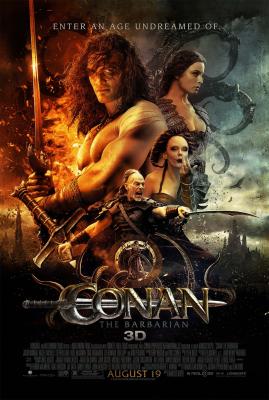
Conan the Barbarian 2011
The movie is called Conan the Barbarian, which is exactly the same name as the famous and highly regarded movie Conan the Barbarian. It’s neither a remake nor a reboot, nor anything like that, so why us the name of an already existing movie? There is an infinite number of possible titles, and so many options to name it that make it clear that it’s Conan. And now we always have to call it Conan the Barbarian 2011. Conan the Barbarian is not even the name of the series of stories, comics, and other stuff. Conan the Barbarian is just the name of a single movie. The Ahnold movie. This is a cheap attempt to cash in on someone elses good work. Despite not being a remake of Conan the Barbarian, and I think the director explicitly said it’s not a remake but a completely separate movie, Conan the Barbarian 2011 recycles the stupid subplot of Conan searching for the warlord who destroyed his village and killed his father. Which is a completely original invention of Conan the Barbarian and doesn’t exist anywhere else in the story of the character. Totally not a remake. Because they said so. Even Conan the Barbarian could barely be considered an adaptation of the Conan stories. Conan the Barbarian 2011 does a bit more name dropping so you know that it takes place in the Hyborian Age, but feels even less connected to the source material. Conan the Barbarian may not really have had much to do with the original stories, but I think it did a great job at visualizing the setting and bringing it to life. This movie doesn’t.
The movie is way too dark most of the time, so you can’t see anything. The music is also way too loud and the voices way too low, so you can’t hear anything either. Not that there would be anything to hear either. The plot is pretty much nonexistent. Any 20 minutes episode of Conan the Adventurer had more plot than this. And this is no joke. I actually mean that literally. While the indoor shots are always too dark, the outdoor shots of cities and fortresses all look terribly fake. They look like out of 300 or a Diablo III cutscene. Pretty, but completely inappropriate.
A while back I reviewd Death Angel’s Shadow by Karl Wagner, which I really quite liked. So I picked up Bloodstone, which was published two years later, but being a somewhat obscure series from the early 70s I have not the slightest clue in which order they were originally written. I have a feeling that Bloodstone might actually be a bit older, and perhaps even the first story of Kane.
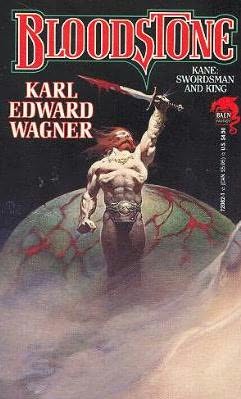
Bloodstone
Bloodstone is a single full-length novel which begins with Kane coming into possession of a strange old ring with a large green and red bloodstone. It awakens some long lost memories in his immortal mind and leads him to start another one of his enigmatic plans of conquest. In typical Kane fashion, even though he is the protagonist of the story, Wagner doesn’t tell us anything of what Kane is knowing or planning for most of the time. Usually witholding important information from the readers which the characters obviously know ranks at the very lowest level of cheap writing tricks for me. But with Kane Wagner is always consistent and we’re always kept in the dark of what is going on in his head. In fact, for large parts of the book Kane is completely absent and as in the other stories, the plot mostly follows other people who had the unfortunate fate to get caught up in his wake as he leaves a trail of destruction wherever he goes. Of those other characters we do learn a lot and their thoughts and plans are usually revealed very quickly. It’s a very daring and couragous method of telling a story, but one that Wagner manages to pull of successfully and it works really well.
In Death Angel’s Shadow and Undertow, I always had the impression that Wagner was not a man of great words who uses relatively simple language to talk about very complex and fascinating things. In Bloodstone, it seems more like he is trying too hard in channeling Lovecraft and Howard and pretty much every paragraph has at least one word which I don’t know. I always understand what he means out of the context of the sentence within the scene so it doesn’t hurt too much, but I think he clearly went overboard with it in Bloodstone. His other (and I presume later) works are much better in this regard. The other thing that I noticed negatively is that the story drags on for too long. Especially when it comes to describing the big fight scenes, but also when another mysterious location is visisted. I love well written description that go into a lot of detail to bring the sights and atmosphere to life, and the lack of such is something that often find frustrating in many fantasy stories I’ve read in recent years. But in this case Wagner is often not adding anything new and just repeats more of the same things he already said. With the big battle scenes I was sometimes tempted to flip ahead three or four pages, but I have to say that I generally get very easily bored by battle scene all the times. I usually skip the battle scenes when watching The Two Towers and I don’t even have Return of the King on DVD. So maybe it’s not actually that bad. Overall, this books seems not particularly strong when it comes to the degree of skill at the craft. Language a bit too cheesy, pacing could be a lot better, and the characters are not particularly deep or complex.
But all that doesn’t bother me at all, because it’s the plot where Bloodstone really show. Like the other stories I’ve read, Wagner once more showed that he had a really good instinct for creating plots that don’t tread down the old paths. At several points in the novel I got the feeling that everything seemed close to resolution, but when you’re only a quarter into the book, you know that it obviously can’t be the case. Part of this comes from the fact that we never really know what Kane is planning in the long term and we only follow his antagonist or allies as they are dealing with the issue currently at hand. But any time it seems like the adventure has been wrapped up, Kane plays his next card and reveals another step in his grand plan to the rest of the world. In a TV show or comic this could probably get pretty frustrating, but as Bloodstone is a single volume novel you know how much more you can expect to follow. There are plenty of nice twists, with probably the best one being the one at the end. It’s a rather unusual approach you’ve probably not seen before very often, but it doesn’t come out of nowhere and you probably see it coming two sentences before it happens.
Kane himself is mostly Kane as we know him. A brilliant schemer and utterly selfish bastard. But while his planning and manipulating in this book is very nicely done, his character is not quite as fascinating and disturbingly ambigous. In Death Angel’s Shadow, it is made very clear that everyone who know about Kane thinks that he is a terrible monster in the shape of a man, and everything we learn about his thoughts actually supports that assesment. Not that he’s eating babies and impaling people on big spikes, but it is very clear that his mind has absolutely no regard for anything that normal people would consider just or decent and that he walks on the corpses on innocents without any second guess. This element of his character, which combined with his compelling charisma makes him such an intriguing character, is mostly absent in this book. Here he is simply selfish. If you havn’t read any Kane stories before and then read Bloodstone, you’d probably not feel anywhere near as fascinated by him as I do. If this is indeed one of the first stories Wagner wrote about the character, he’s getting a lot stronger later on.
What I found very interesting about this book is that it finally reveals why Kane does anything that he does. In Death Angel’s Shadow that was always a great mystery. Why does he consider his immortality a curse and why does he live the kind of life he does if he could do pretty much anything he could ever want to? In Bloodstone, this part of his character is explored only briefly, but deep enough to get a pretty good understanding of how he ticks. It’s not really complicated at all and makes a lot of sense. If this is actually a good thing I am not sure. I really loved the walking mystery that was Kane in the stories I’d been reading before, and as of now I can not say if understanding his way of thinking makes his character more enjoyable or less. I probably have to read another collection of stories before I really know.
With all that being said, I still really loved reading this book. And I do recommend it, but with some considerations. If you havn’t read any Kane story before, I don’t think this is a good one to start with. It’s still a pretty good book, but it doesn’t really showcase how good Wagner could write this character. Even if the series of Kanes stories is something you’d love, Bloodstone might not be the book to win you over. If you know Kane and consider picking up this book, I fully recommend doing so. But if you are thinking of giving the series a try for the first time, better start with something else. Death Angel’s Shadow would be a good start, for example.
 I am very pleased to hear that. This book has a pretty outstanding reputation, but being unavailable for download it has been very difficult to get a copy for several years.