A Snake and a Rose

Totally random thought of the day:

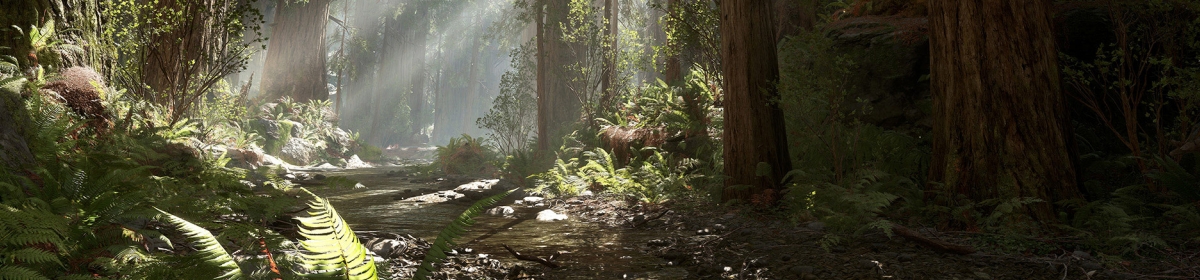
Could you run a D&D campaign set in fantasy wilderness inspired by the style and themes of Metal Gear Solid?

As absurd as it first seems, I think this might actually work really well. Snake is an extraordinary warrior and thief who ends up in remote desolate places where evil madmen with their quirky superhuman henchmen prepare their villain lairs for devastating attacks with mad superscience. Make the big bads sorcerers and the weird gadgets into magic artifacts and it all should work just as well in an Iron Age tech fantasy world.

I think the best thing about MGS that makes it such an amazing series are the characters, especially the villain’s henchmen.Every single one of them is completely fucked up in the head, but occasionally sympathetic and even reluctant to help the villain. I think that would make for excelent NPCs in an open ended adventure with a lot of potential for really unexpected turns. And what player wouldn’t love to deal with an antagonist like Ocelot? That’s a guy you just have to love to hate. And then there’s also the betrayal by friends who don’t want to see you harmed but have other greater loyalties. Not being able to tell friend from foe (even after they’ve shown their cards) and conflicting loyalties from NPCs who are carrying various personal burdens is just the stuff behind ideas like Against the Wicked City and Blue Rose.

Speaking of Blue Rose, the pdf of the new second edition has just been released. Didn’t get it yet but really looking forward to seeing what they did with it.

But back to Metal Gear Solid antagonists. Another great aspect of them is that every single one of them is a completely different type of opponent with unique abilities and powers. Not just unique within the respective game, but unique within the world of the series. In Dungeons & Dragons there’s always the common tendency to make opponents based on the rules for making PCs. They tend to have classes, levels, and spells that are all available to the players as well. And for a great number of NPCs that works perfectly well. But I am a fan of mythic fantasy and the otherworldly and in such a campaign there is no need to have the main NPCs be ordinary people who have trained their skills. Making a decent number of opponents completely unique entities with distinguishing powers might do a great deal to make the world seem more magical.

I just started my three weeks off from work and plan to really throw myself into working on the Forest of High Adventure sandbox. Thinking of the main dungeons as Metal Gear Solid lairs is already getting my imagination bubbling.
Life, the Universe, and Everything

When I start preparing a new campaign I like to first think about what kind of role “adventurers” are going to play within the fictional society and what motivates them to do all these suicidal things that PCs tend to do. The easiest way is of course to say “Duh, it’s a game. This is what PCs do.”, which get’s us the classic murderhobos. Looting for the sake of looting and because there’s not really anything else they could do instead. Which is too simplistic for my taste.
On the other end are the designated chosen ones who go on adventure because they are heroes and it’s the heroic thing to do. Which also doesn’t feel terribly interesting because it makes everything in the campaign predictable by everyone following an unwritten but implicit script.

Then you can also have the whole party be members of an organization who believe in the organization’s goals and ideals. Which I find to usually work quite well, but it’s the GM deciding what the campaign will be about and also requires some preparation of specifc antagonists to oppose the goals of the party. I don’t find it ideal for a campaign that is more open world and about exploring strange underground environments.

One idea I had for my last campaign was to tell the players that their characters have been send out into the world to search for magic and knowledge that would benefit the people back home, with completely free rein on where to go and what to do. I quite liked that approach as a servicable compromise between player choice and giving guidance through motivation, but I think it can still be improved upon.

So I’ve been looking at some of my favorite fantasy protagonists who go on dangerous adventures and they are not risking their lives over and over for either gold or the desire to rescue people in danger. They do it because they are driven by restlessness and an obsession to learn about things that normal people don’t want anything to do with. They are compelled to keep searching for whatever holds the world together in its innermost folds.

A great example would be good old Conan. He is not after wealth and doesn’t do anything to keep the gold he gets his hands on. Usually it’s also not out of compassion for people in need of help but because the challenge intrigues him. And most of the time there is nothing to stop him from just turning around and leave with his life, but he always has to keep pushing forward to see how things will turn out. With Fafhrd and Gray Mouser (who I don’t like, but anyway) it’s usually a combination of being curious and not bright enough to understand the danger. And while Kane usually goes on adventures because he can’t take the boredom anymore, he keeps going ahead in the face of danger because he’s obsessed with overcoming any worthy challenge of his great power. Even Elric, who is playing out his destiny as a chosen one, keeps on fighting because he has to know if there’s a meaning to all of it.

As a character motivation I find this search for answers marvelous. It’s very open ended, does not pigeonhole PCs into any stereotypes, and has plenty of precedents in fiction. And it’s also exactly the same thing that drives most players to return to the table for every new session. Particularly when you’re running an oldschool game, player’s aren’t playing for the mental exercise of tactical combat and they are not playing to unlock new extras for their characters. They are playing because they are fascinated for what they might find lying ahead, either in a dungeon or an unfolding story.

I think as a GM, particularly with new players, I think it should really help to tell the player that they are going on a hunt to uncover the mysteries of the world when they are creating their characters. It provides some kind of purpose and very open objective in an open world campaign, instead of leaving the players floundering around trying to figure out what they are supposed to do.

Now how a GM can actually present a world that makes a quest to know the unknowable worthwhile is a different question to which I don’t have any good answers yet, but I think it’s one that is very much worth pursuing further.

Forest of High Adventure sandbox campaign

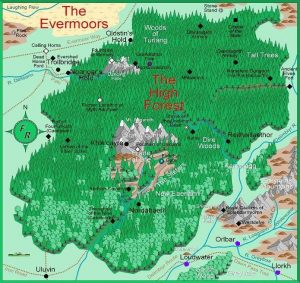
The Forgotten Realms were my first campaign setting back when I first got into RPGs and while I eventually got put off by its kitchen sink approach I still have some fondness for The North. The North is maybe 5% of the area of Faerûn but can stand as a complete setting on its own. The Sword Coast has become the default region for Forgotten Realms material and I believe the de facto officially supported region in 5th Edition for good reasons. While I don’t have a strong yearning to revisit this setting, I am still very fond of the High Forest in particular. I really got into RPGs when I played on a Neverwinter Nights server set on the eastern edge of the High Forest and eventually became one of the GMs and senior level designers. And my first steps into worldbuilding began with an attempt to take the hinted at past of this region and expand it into a proper playable setting. Eventually I dropped the connection to the Forgotten Realms entirely and now over a decade later it led to the Ancient Lands in its current state. But I always was a bit disappointed that I never got to run a campaign that goes really deep inside the forest and has the players explore its ancient mysteries.

I had planned to start a new Ancient Lands campaign next winter, but by now “next winter” has become “this winter” and its going to be delayed until next spring. And with still a good amount of time ahead, I still have not entirely commited to what I am going to run. Earlier this week I read a great recent post by the Angry GM about making wilderness travel more fun. And though I had last planned to do something simple and episodic, it put the sandbox bug back into my ear. I had written about a workable travel system for pointcrawling in the wilderness a while back which is quite similar, but as usual Angry made a great improvement over it by making it work without prepared precise maps. A pointmap was to be a compromise over a hexmap, but being able to track travel times and random encounters without a highly detailed map is even better. And unlike with a pointmap it’s really easy to handle a party getting lost.

In previous attempts to make a sandbox I found it very efficient to simply grab a bunch of old modules that fit the theme and put them all together on a map. One that came to mind was Hellgate Keep, which is set on the edge of the High Forest. And that got me the idea to use the whole High Forest chapter from The Savage Frontier as the base for my sandbox. It’s the original inspiration for my Ancient Lands setting and as such pretty much everything from it fits perfectly into it. While the North in later publications is a nice place, I think the original version from The Savage Frontier is by far the coolest. It’s classic 80s Jaquays goodness that still has a nice lingering Judges Guild smell. I am not exactly sure why, but the next time the region was described all the best places where destroyed and the most interesting characters dead. And a lot of it is great sandbox material:

    • Hellgate Keep: An old elven fortress city overrun by demons and their half-demon and undead minions. It’s not just a dungeon but a city, and one way too powerful to assault head on. Not really suited for a dungeon crawl but in a sandbox it can get a lot more interesting to visit.
    • Nameless Dungeon: This ruin of an underground stronghold has been closed off and put under heavy guard by elves after adventurers found some magic weapons and armor there. Later books provided an explanation for this odd behavior by making it the long forgotten prison of elven sorcerers who had consorted with demons to usurp the throne of an ancient realm. And now they are waking up and some have already escaped into the forest. I really quite like this one.
    • Blue Bear Tribe: This barbarian tribe has fallen under the control of their evil shaman who is a disguised hag in league with the demons of Hellgate Keep. They were banished from their ancestral shrine by its spirits for their evil ways and are unable to find it again.
    • Tree Ghost Tribe and Grandfather Tree: Some of the Blue Bear tribesmen have split of from their kin and renounced their evil ways. They hope to become worthy again in the eyes of the spirits and rediscover the location of the giant magical tree that they worship.
    • Star Mounts, Endless Caverns, and Stronghold of the Nine: The Star Mounts are a mountain range of incredible hight and somewhere below them are the Endless Caverns that lead into the Underdark and hold the bones of a huge dragon whose treasures have never been found. Not far away is the Stronghold of the Nine, the base of a group of famous heroe who have been turned mad by an evil artifact they discovered and begun to turn the castle into a battlefield fighting each other.
    • Citadel of the Mist: A magic castle that is home to a powerful sorcerer who is one of the main opponents of Hellgate Keep and ally of the treants that live in the nearby forests.
    • Lost Peaks: Mountains that are said to hold the Fountains of Memory that show visions of the past.
    • Dire Woods: A strange part of the forest that is much larger on the inside than the outside and somewhere near its center lies the ancient city Karse, which holds the giant undead heart of a demigod sorcerer.
    • Ruins of Decanter: An old mine that is crawling with monsters created by sorcerers of old and left to their own devices, but recently an illithid known as the Beast Lord is bringing them under his control.

There are also some other places in the Savage Frontier that can easily be transported into the High Forest and fit very well into it.

  • Cave of the Great Worm: This huge cave is home to a tribe of barbarians who are led by an ancient benevolent giant reptile. Would fit well into the Star Mounts.
  • Gauntlgrym: An ancient dwarven city that was famous for its wealth but was lost for unknown reasons. It supposedly can be reached from the Cave of the Great Worm and would be well placed under the Star Mounts so it can be reached through the Endless Caverns as well. I say its mysterious fate is something inspired by the Dead Trenches from Dragon Age and Dead Space!
  • Lonely Tower: A tall tower with no visible doors and windows standing in a huge circular clearing in which no plants grow. It’s the home of a alchemist sorcerer from another world.

That’s a lot of great sandbox material, but to make my work easier I also want to add some classic modules that make for great additions.

  • Against the Cult of the Reptile God: I’ll make it Against the Cult of the Succubus Princess and it should provide a great introduction for the demonic forces of Hellgate Keep.
  • Hellgate Keep: This module describes the keep after its destruction but provides a lot of information on how it looked and what was going on when it was still there. It includes the half-demons Kaanyr Vhok, Aliisza, and Sarya Dlardrageth, who all could be interesting NPCs.
  • The Forgotten Temple of Tharizdun: I love this thing. I’ve wanted to run this for a long time and always felt that it would work best if the players have no idea what kind of crazy awaits them beyond the empty gate of this black ziggurat. It’s perfect as a random location that is spotted in the distance as the party is travelling through the wilderness on their way to somewhere.
  • Rahasia: This one lends itself very well to be adapted to tie in with the Nameless Dungeon. Instead of a chaotic priest randomly finding the spirits of three elven witches in a temple, it can be one escaped half-demon from the Nameless Dungeon trying to resurrect his daughters who were killed in the uprising and whose spirits he stored in the basement of his mansion before he was captured and imprisoned. Or he’s a loyal minion who is resurrecting his mistresses who had a somewhat flawed plan to avoid falling into the hands of the attacking elves.
  • Escape from Meenlock Prison: I had so much fun the first time I ran it and meenlocks make for great creepy fey monsters.
  • Sons of Gruumsh: A straightforward but interestingly build dungeon that is occupied by three warlords believed to be blessed by their god. Would make great opponents for the tanarruk of Hellgate Keep.

Additional ideas include making Gauntlgrym inhabited by derro who are descendants of the original inhabitants and making the local orc tribes enemies of Hellgate Keep who want to take revenge for their people being taken to create the demonic tanarruk. Good factions are the key to a great sandbox and there are already a good dozen of them with none of them necessarily attacking the party on sight but all of them having lots of enemies and potential allies.

So much material and I’ve not really lifted a finger yet. This is about four hours of thinking what existing material I can use to make my own sandbox. I am still going to make this an Ancient Lands campaign, but I think most changes will be primarily cosmetic. There are different gods and races aren’t exactly the same, but overall I think it will be still very recognizably the High Forest.

Quick and Dirty Fishtank

A fishtank is very much like a sandbox, but instead of large map with numerous dungeon at the center it’s all about a cast of interesting NPCs and competing factions for the players to clash with. In a way, this is more challenging for a GM as a dungeon with a vague origin and original purpose is muc easier done than a handful of NPCs with interesting goals and motivations. And you still have to build lairs and strongholds for them anyway.

While working on my own plans for a new fishtank campaign this winter, I noticed that I’ve actually taken a very convenient shortcut. Following the great advice of “Good artists borrow, great artists steal”, the entire main framework of my fishtank is simply the old D&D adventures Against the Cult of the Reptile God and The Elfwhisper and the excellent storyline of the Bloody Baron from The Witchet 3 all set in the same town.

All three adventures are pretty linear designs, but at the core they really are starting situations with a problem that the players are supposed to fix somehow. The D&D adventures expect the players to go to the lair and kill everything, but the videogame at least offers a good range of different linear paths to chose from. (Which only shows how bad even most better published adventures are. This is the one aspects in which videogames can not come close to the potential of RPGs.) There are really quite a lot of adventures for D&D and Pathfinder that have some really cool setups at the start. Even with a typical dull Pathfinder railroad, the initial setup is often very much salvageable and usually the best part of the adventure.

If you want to set up a small fishtank, simply grab three or two adventures that you think look cool and take the NPCs with their goals and motivations and the dungeon floorplans and put them all down on the same map. And all the heavy lifting i basically done with that. To make things a bit more interesting and complex, think a bit about how those important NPCs might know each other and how their plans might put them into conflict. Maybe add some embellishments here and there, create a handful of new NPCs and minor dungeons, and you get a decent fishtank pretty quickly.

War Cry of the Flame Princess: Hit Points and permanent injuries

Like many people, I am not a big fan of having PCs be perfectly fine with 1 hp remaining and instantly dead when they are at 0 hp.

My approach to hit points is to not regard them as wound points but as stamina points. A succesful hit means that the target suffers minor scratches and bruises that interfere with its ability to succesfully deflect or dodge attacks and avoid serious injury. When a character runs out of hit points the extortion becomes too high and he slips, suffering a serious wound. It’s an abstraction like any way you can think of hit points, but I think it’s the best approach to have the fiction of the adventure match the rules of the game.

But the bigger challenge is how to handle the situation of a PC being reduced to 0 hp. I have a big dislike of the complex dice rolling and multiple modifiers of third edition and AD&D and I certainly don’t want to go through anything like the trouble of multiple successive rolls to stabilize and recover while having negative hit points. A much simpler approach is this:

When an attack deals more damage to a character than he has hit points left, the remaining points of damage are compared to his Constitution score. If the points of damage in excess of the current hit points is greater than the Constitution score, the character is dead. If not, the character is only unconscious for 10 minutes and permanently loses 2 points of Constitution. This loss of Constitution represents a lasting injury that neither surgery nor magic will ever fully reverse. While unconscious at 0 hp, any further damage will automatically kill the character. A character who regains consciousness is unable to fight or do other tiring activities until brought to 1 hp or more through resting or magic.

There are no saving throws or Constitution checks. Death and permanent injury are always automatic. In my past campaigns characters running out of hit points was always very rare already. Adding a significant chance to negate the effects only makes it even more unlikely that something bad will happen to a character. (Though running Sword & Sorcery dungeon crawls will probably increase casualties in my next campaign a lot.) I had considered to randomly determine whether the ability loss affects Strength, Dexterity, Constitution, or Intelligence, but with hit points already representing the ability to continue fighting I don’t think it’s necessary.

I like this solution since it’s both somewhat realistic in regard to actual battle injuries, and it also matches the habit of many Sword & Sorcery heroes to be left for dead with grievous wounds. As in Yojimbo or A Fistful of Dollars, being almost dead is nothing that a week of rest can’t heal, even if it leaves a lasting mark. With a Constitution score of 2d6+6, this gives a character about three to seven opportunities to cheat death before being too crippled to continue, though it might be worth considering retirement much earlier than that. It’s a lot more forgiving than the standard rules for death, but it’s still something that players really will want to avoid.

War Cry of the Flame Princess: Ability Scores and Character Levels

1474423181OSR games, particularly in the Weird OSR scene that Joseph Manola lined out so well here, predominantly focus on low power, low magic adventures in whichopponents are either normal guys or extremely deadly eldritch horrors. While it’s a style that I find very appealing, my greatest love is still Sword & Sorcery. Particularly Conan and Kane, but also Hyperborea, The Witcher, and of course Star Wars. The uselessness of Stormtroopers aside, at least when they are deliberately letting the heroes escape or fight against ewoks, they are all works in which the protagonists are at the very top of what humans can be, but not outright superhuman. And while they have to be cautious, they are always on the offense.

Lamentations of the Flame Princess is my favorite RPG system by a good margin, but it does retain the inherent squishiness of the D&D Basic rules. Which is by design, but I think not fitting so well for Sword & Sorcery. Starting at higher levels is an option, but I always find that unsatisfying and it also means that new wizard players start the game with a considerably wider range of spells from the outset. (Which might sound appealing to some, but my spellpoint conversion already increased the number of spells.)

An in my opinion neater solution is to roll 2d6+6 for ability scores and also let the players assign the six numbers as they see fit for their chosen character class. 2d6+6 considerably shifts the average up and makes 8 the lowest score possible. But since modifiers in B/X are relatively small and don’t increase linearly, the result is that characters will on average have a combined total of +4. A +2 here and two +1s there isn’t hugely imbalancing, but with the ability to assign the scores to abilities freely (and getting maximum hit points at first level) this allows players to make considerably sturdier characters than rolling 3d6 in order. A fist level fighter with 10 hp or a +4 to hit is entirely doable.

The other method I am using is to firmly stick to the paradigm that any NPC who isn’t an outstanding combatant is a level 0 character, and to use a bestiary of entirely custom made creatures. The high end for regular monsters tapers off around 10 HD and I am using relatively smal numbers of special abilities each. In the fiction of the world this makes even 4th level characters already members of the top tier of people who roam the world and who are able to confront gods, demons, giants, and dragons. Maybe not one of those 13 HD behemoths, but certainly one of the smaller 7 HD ones.