Oh, no! I am writing about that thing nobody wants to hear anymore.

Yes, that thing. Or “thing”. OSR.

I was just peeking in again at Dragonsfoot, and unexpectedly, though it really shouldn’t have surprised me, I almost immediately came upon onother recent discussion of “What is OSR?” And my first reaction was “probably better not click at it, it’s almost certainly just more bickering and doom mongering about the state of western society”. This is the point where we are now. Where I think we’ve been for quite a while now. And I very much doubt that I am in a small minority of people having this reaction. I did end up looking into that thread and yes it was primarily about bitching about the collapse of western society. I didn’t read very far, but there were some intitial points raised that made me come to a conclusion about the various feelings I’ve had on the subject.

OSR has been over for a couple of years now. It’s not dead, it’s been concluded.

From how I experienced it, that thing that later became known as OSR began in the mid 2000s when the 3rd Edition of Dungeons & Dragons kept bloating and bloating until it was eventually discontinued and the plans for the new 4th Edition were increasingly looking like a drastic departure from all that had come before. And for a lot of people, that was the point where they said “I’m no longer wishing to keep up with current developments. I’m just going back to play the game the way I had enjoyed the most and stick with that.” OSRIC had actually been out since 2006, two years before 4th Edition. But I think the end of 3rd Edition really was the point where a lot of people paused to reflect about whether they wanted to hop onto this new thing or stick with their current thing, or perhaps even go back to an older thing.

And I think it is this reflection that really was this thing that went on to become known as OSR. Old School Reflections? It wasn’t just people thiking to themselves with which game edtion they had the most fun, but engaging in a wider conversation on why they feel they had more fun through the medium of blogspot sites. It was a period in which people dug into old rulebooks to critically analyze the mechanics and advice given in them, and exchange their experience with other GMs who were  doing the same. Many things that had been discarded and dismissed as silly where quite literally rediscovered, and with the great wealth of experiences that had been gathered over the decades could now actually be much better understood. Old School Research?

The thing with research of this kind is that you often make lots of easy big discoveries early on, some more difficult discoveries later, and after that only very rarely minor and obscure discoveries of little impact to the bigger  field. And I think this is exactly what we’ve been seeing here. All the really big and exciting stuff in OSR happened between about 2008 and 2010. Then the ocasional neat new idea up to maybe 2014, but since then I don’t think anyone has been making any new major contributions to the field. The Rennaisance had reached its end, it’s work been done.

It’s not like all of it went up in smoke and feded into the wind. I would argue the opposite. Of course, it seems quite ridiculous to say that the 5th Edition of Dungeons & Dragons is an OSR game. It really isn’t. But it is also very hard to deny that during the creation of this new game, the creators did draw significantly from this knowledge reintroduced into the sphere of fantasy adventure games by the old school revivalists. Not everything has been widely embraced, some things remain the domain of fringe enthusiasts. But the creative and intelectual space of roleplaying games today is fully suffused by ideas that came out of this period of reflections about what made early RPGs tick. If the term Old School Rennaisance makes any sense, then this is what it’s really about.

This does leave us with this somewhat strange position in which we are finding us today. Today, when something gets labled as OSR, it really is an “Old School Roleplaying Game”, which is “D&D Editions released by TSR”. It is a group of games, one among many other options that groups can chose from. But I think many people are fondly remembering the creative movement from a decade ago and are still somewhat under the impression that the two are still the same thing. And when there is nothing really left to discover or create, the only thing left to “the movement” is an endless cycle of self-reflection. Which is a conversation lots of people see little appeal in, which in turn provides much more space and attention for people who relish bickering. There probably has always been bickering, but with the intelectual and creative conversation having been concluded, that little bickering is now the only thing that is still going on.

Looking at my archive of posts, I stoppded using the OSR tag in mid 2017, almost two years ago now. It’s not that I no longer care about reaction rolls and morale checks, random encounters, encumbrance, noncombat-XP, and monsters that are safer to circumnavigate then to fight. I still love  them, and I discovered their value from the great ongoing conversation about older RPGs. But all the things I am doing and writing now don’t feel to me like contributions to this discussion. A discussion that has concluded.
More things that I made and no GM needs

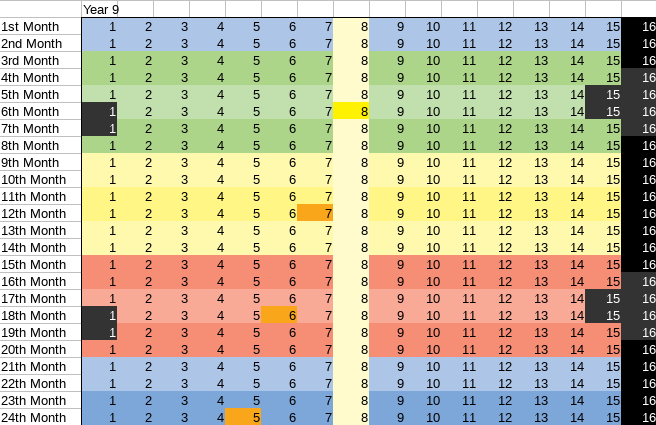
I’ve been spending most of yesterday turning my predetermined parameters for a calendar from two years back into actual calendar sheets showing moon phases, solstices, equinoxes, and potential eclipses. Turns out there’s actually three leap years for every 16 year cycle in which there are only 23 months instead of 24.

Since the moon is considerably larger in the sky than the sun, I decided that eclipses might not actually happen only on the 16th of a month, but ooccasionally also on a 15th or 1st. And there is a possibility that you get two eclipses two days in a row.

With all these things taken into consideration, the results look like this.

There are of course 16 of these. I plan on making these always available for players, though I don’t expect them to ever look on them. But they should. There could be rather important information on it. Eclipses are no time to be wandering around in the forest or be out on sea, and things might also get a bit more dicy on the equinoxes.

While I put together these charts, I noticed that there are 12 special days every cycle on which celestial events overlapp. There are the four days when the solstices and equinoxes fall  on a full moon, and four days on which eclipses might happen during regular equinoxes. Two days on which the solstices fall on a New Moon, and finally there are the two days on which an eclipse might happen on a new moon equinox. Those are really bad days. Somehow every ancient legend of heroes dying and cities being destroyed seems to date it to one of these days. Crazy shit will be going down on these days, no matter where the party will happen to be then.

As I said, this really isn’t something that any GM needs. But when you do have it, I think it might actually be quite fun.

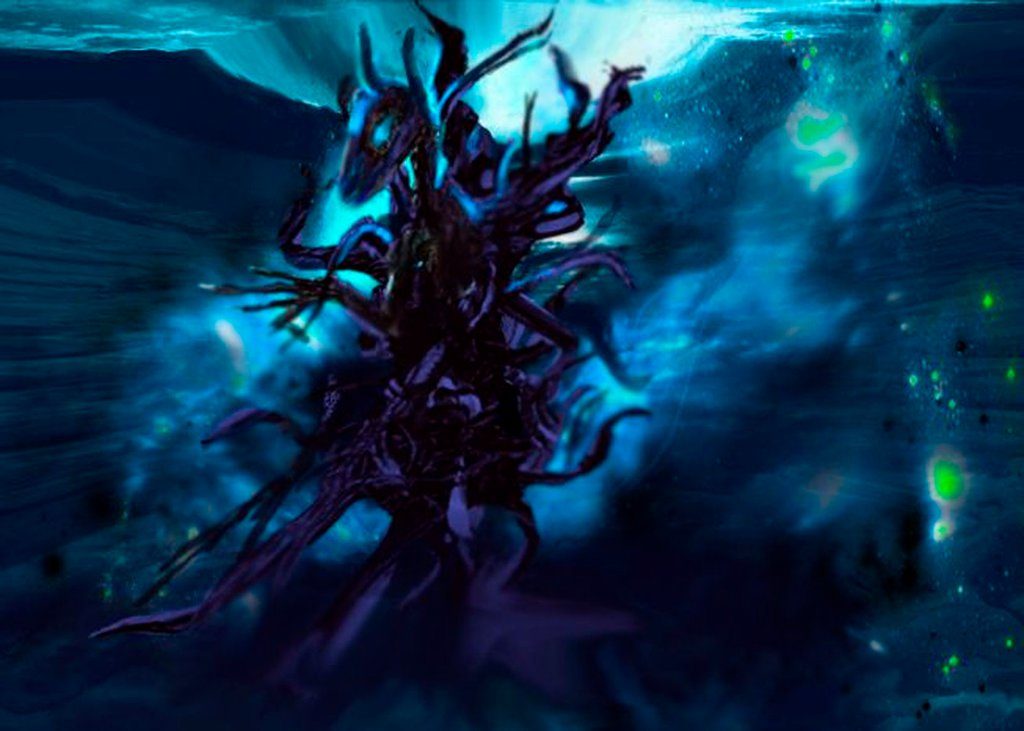
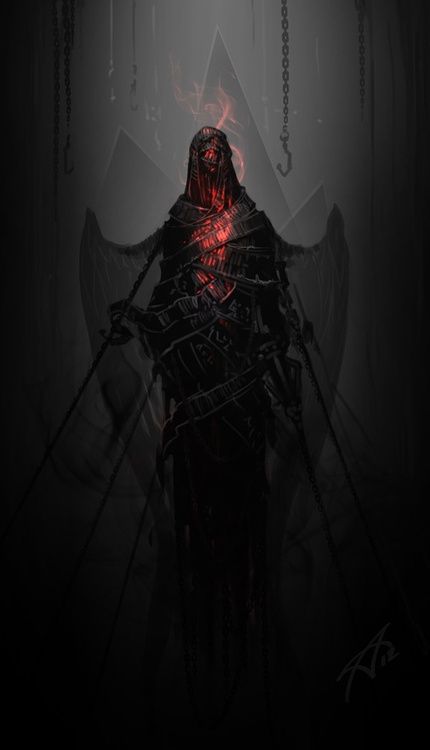
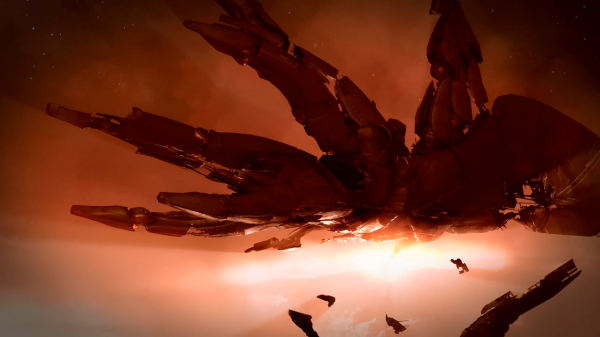
Demons

When you don’t have a really good name for it, call it what it is. And these are demons.

Yog-Sothoth
Shub-Niggurath
Tharizdun
Pale Night
Ghaunadaur
Reaper
Xel’lotath

Shadows
Darkweaver
Silent Hill
The Marker

The original idea for these dark and dangerous spirits goes back to when I first read about Daedra in Morrowind, without really knowing anything about them before. The description that the elves called the gods “our ancestors” and those other beings “not our ancestors” was really evocative and made a big impression on me. I only actually met any daedra many years later when giving Skyrim a shot, and it turned out that they are actually just very generic demons. They are described as strange immortal spirits with alien minds, but in practice they are really just lizardmen or humanoids who do evil for the lulz. That was really lame.

I was reminded of that image I had had when encountering demons in Dragon Age, which in that world are simply called demons. They are somewhat more abstract, but I found them still not nearly as weird and alien and horrific as they could have been.

The third source of inspiration for what I want demons to be like, comes from Mass Effect. In the first and second game they are woderfully strange and terrifying, and not being able to do something proper with that buildup is one of the many disappointing flaws of the third game. (I’m still disappointed.)

“A god – a real god – is a verb. Not some old man with magic powers. It’s a force. It warps reality just by being there. It doesn’t have to want to. It doesn’t have to think about it. It just does.”

When I decided that I want to run my Green Sun campaign in D&D, I entertained the idea of using yugoloths as the dangerous alien spirits of the underworld. But then, how do you make them actually weird? Ultroloths may have some potential, but the rest are just too much regular humanoid enemies. They really can’t stand up to this lineup, so I might actually discard them entirely.

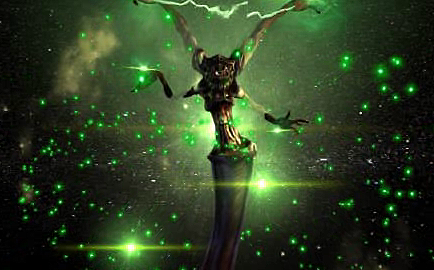
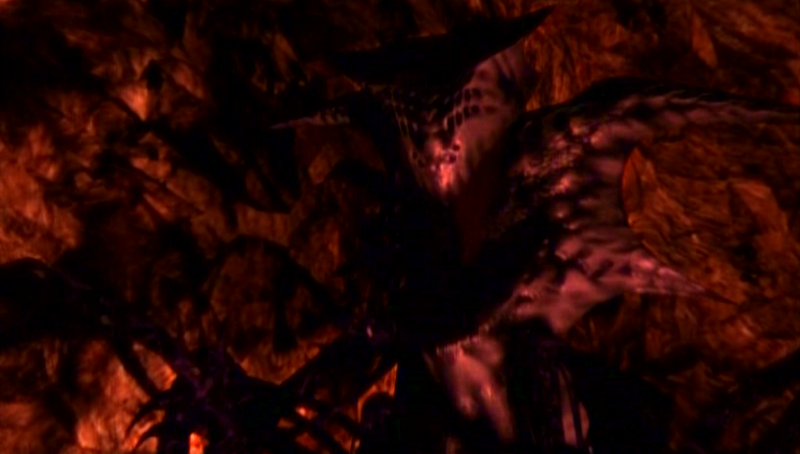
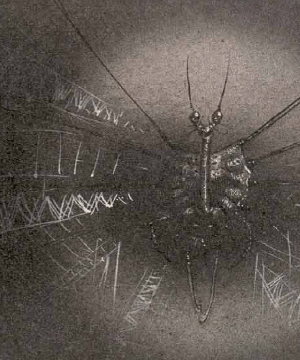
Working with images has always worked quite well for me. It makes it easy to notice the common elements between various different things you think have a somewhat general style. In this case, I think it’s quite obvious. The common characteristics of these beings are associations with darkness and shadows, to the point of not having any really discernable shape. They are more vague impressions of beings than truly physcial beings, combined with a lack of humanoid faces. I can work with that.

Silly Stuff with Statistics

Yesterday I did what I always tell people not to bother with. Work out the population numbers and distribution of classed and leveled NPCs for your setting. It’s almost always pointless and often leads to nonsensical results. But I did it anyway, not because the setting and campaign need it, but because I sometimes simply enjoy the fun of working with numbers.

I went into this  with the following premises:

  • The global population of Murya, Fenhail, Yao, Kuri, Kaska, and Sui is 1 million.
  • 1 out of every 100 people has classes and levels.
  • The highest level any mortal can reach is 10th.
  • For every two 1st level NPCs there is one 2nd level NPC, for every two 2nd level NPCs there is one third level NPC, and so on.
  • Half of all leveled NPCs are spellcasters (half of which are Priests).

I first planned on having a global population of 10 million and make 1 out of 1,000 NPCs have levels. But someone pointed out to me that that seems too high if all the population lives on the coast and given the size of my map sketch. There are about 4,000 miles of coast and I estimated civilization being within 10 miles of the sea (on average, there are also some major rivers and highland settlements), which results in a habitable area of only 100,000 km². That’s about the area of Hungary, Portugal, or Cuba. And three quarters of Greece, which is always my default reference point. That’s not a lot of land to live on, even if the continent itself is the size of Europe. With 1 million people, this leads to an average population density of 10 people per km². Which is roughly the estimate for Greece during Roman times, which does include all the uninhabited mountains. Perfect.

I was also curious what results these premises would give me for the amount of NPCs of each level. And those got really quite interesting. For simplicity, I didn’t calculate with 10,000 leveled NPCs but 8,190. When you’re a bit of a math nerd, you know the powers of 2 by heart, which makes continuous halving of numbers very easy. The distribution I got out was this:

  • 4,096 1st level characters
  • 2,048 2nd level characters
  • 1,024 3rd level characters
  • 512 4th level characters
  • 256 5th level characters
  • 128 6th level characters
  • 64 7th level characters
  • 32 8th level characters
  • 16 9th level characters
  • 8 10th level characters
  • (4 11th level immortal sorcerer kings)
  • (2 12th level immortal sorcerer kings)

That’s really not a lot. And actually gets really fascinating when you consider players wanting NPCs to casts spells for them. The number of those gets really low.

  • 4,098 people can cast 1st level spells
  • 1,026 people can cast 2nd level spells
  • 258 people can cast 3rd level spells
  • 66 characters can cast 4th level spells
  • 18 characters can cast 5th level spells
  • (6 characters who can cast 6th level spells)

Only half of those are Priests who have access to the cleric spell list. Getting one of those 9 priests alive who can cast raise dead to resurrect your friend could be quite challenging. However, if you are among the 100 most powerful people in the world, getting access to these guys might not be that far out of reach.

I’ve got no intentions to track the numbers and levels of NPCs that appear in my campaign. That’s too silly and impractical even for me. Instead, I came up with some rules of thumb, when it comes to creating NPCs for the campaign, that do reflect these population numbers of the setting:

  • If the character does not seem important enough to get a name, personality, and motivations, it’s going to be a generic acolyte, bandit, cultist, guard, tribal warrior, or commoner with 2d8 hit points.
  • Leveled NPCs who aren’t important regional individuals are 1st to 3rd level. (There are thousands of them in the world.)
  • NPCs  of 4th to 6th level are among the most powerful individuals of their region and regionally famous. (There are hundreds of them in the world.)
  • NPCs of 7th to 10th level are among the most powerful individuals in the world and famous throughout the continent. (There’s barely more than a hundred of them in the world.)

These numbers all seem amazingly low, but when I looked at them I really started to like the resulting implications. These are distributions for campaigns in which the players play individuals like Conan and Elric, or the various ancient Greek heroes.

And still this is a world where there are CR 7 yuan-ti and CR 10 aboleths around, and CR 6 wyverns and CR 7 stone giants. A 1st level PC is not yet standing out, but when you get to 3rd or 4th level, you’ve already made it big. You are playing in the top league of heroes.

I am really looking forward to this campaign more and more every day.

What is in the box?!

Things are getting real. My apprenticeship as a gardener is coming to an end in barely more than a week and then it’s off to university for me again. And that means hypothetical ponderings for a future campaign are now turning into actual preparations for the next campaign. Probably not in february, and perhaps not in march either. But then it’s time to get butts on chairs and dice rolling.

I must confess that even as a GM with two decades of experience, I don’t think I’ve ever been a great GM. Judging from players’ reactions in the past, not a terrible GM, but really not a great one either. To me, all the campaigns I’ve ran where pretty meh. This time I am vowing to do better. I have spend a lot of time and effort into learning what makes great games in theory, and why I didn’t manage to pull it off in practice yet since my last campaign.

I think there are two things that have changed in how I approach a campaign now, both very much influenced by learning how Apocalypse World works and is meant to be run, even though I am now preparing for a Dungeons & Dragons 5th Ed. campaign. The first one is that a campaign is about the player characters. The PCs are the protagonists who are driving the story and who are its heroes. We all play the game to see the PCs doing exciting things. Any NPCs that I have are supporting cast to enable the PCs to do exciting things. The second thing is that the world that I made also exists to enable the players experiencing exciting things. Every place that I create, every faction that I make, and also all the NPCs that I prepare exist for the explicit purpose of creating excitement for the players. If it burns, let it burn. If if dies, let it die. This world doesn’t exist to be the setting for a metaplot that gets constantly updated by some company. If the world looks completely different once the players have been through it, that’s totally fine. If everything gets fucked up by the players’ antics, then it was probably very exciting for the players to experience it. And that’s the whole purpose of playing the game.

As such, I decided to take another shot at a sandbox. Of the non-hexcrawl, non-megadungeon type. An environment that is full of strange sights and interesting people that will react based on what the players do. I have heard many great things about such campaigns, but one of the challenges is that for the world to react, the players first have to do something. And for the players to do anything, their curiosity first has to be caught by something. That’s the big problem with “Yo all start in a tavern. You can do anything you want.” If the whole world so far just consists of a nondescript tavern, there isn’t anything for the players to want yet. While there is a lot of information and advice around for preparing a sandbox campaign and for running a sandbox campaign, there appears to be very litle about starting one. Lots of people can tell you how to run session 0 and session 2, but what about session 1?

A good while ago I did come across one promising looking option someone wrote about years ago. At the start of a sandbox campaign, don’t let the players do whatever they want, but tell them what they should do. Start the campaign on a train, but then drop them off at the train station. If you do it right, you will have introduced them to enough things about the starting area during that initial train ride that they have sufficient information and incentives to take off on their own from there. Thinking about it, I remembered one of my favorite scenes from the Fellowship of the Ring movie. The hobbits have been on a quite wild adventure, that is much larger and wilder in The Lord of the Rings, and finally reach their destination where Gandalf told them he would take over as their leader and guide again. And they also expect him to take care of the threat that is following them. But he’s not there, and hasn’t been seen in the area for months. “What are going to do now?”

The hobbits of course still have their bigger goal of having to get the Ring to Rivendell, but I think this moment in the story is precisely that train station. The initial instructions are completed and the heroes find themselves in a place that is new and full of possibilities for them, but simply going back home and waiting for a new call to adventure isn’t a practical option either. Based on that, I have come up with an early concept for a campaign start that I currently very much consider using.

“In a wrecked ship that was washed up on the shore, you discovered a sturdy chest bound with iron. It resisted your attempts to open it, but a sage was able to detect an enchantment on the chest and  identify the lead seal on the hinge as that of a wizard who lives in a town a week’s travel up the coast to the North.

At the end of the first day of your journey to the wizard, you reach the local trade post where you can complete your preparations for the rest of the journey north.

The trade post is kind of a tavern, but the players start there as an existing party and with a destination where to head for when they leave. After they have bought whatever supplies they want and can afford, they have the option to take the coastal road north, or to get passage on a boat to their destination. If they take the road, they get two opportunities to chose between staying close to the shore or take a shortcut through the forested hills. Perhaps have any ship they take make a stop halfway along the road, between the shortcuts, so the players have another opportunity to switch from boat to one of the land routes on the second leg of the journey. This serves to teach the players that they have to chose between different aproaches themselves, without any guidance. Even at this point when their destination has been set for them.

Along each path there will be several encounters that introduce the players to various aspects of this world they are not yet familiar with. Some of which I want to include clues to something more interesting nearby. The players can chose to come back and check them out later once they have delivered the chest, or they can decide that the chest can wait and they go checking it out now. This also puts the players into situations where they can chose without any guidance. They have an objective, that isn’t really that interesting, but there also isn’t an hurry to complete it. If they run into something that seems to be more interesting to them, they are free to chase after that instead. Now one could argue that this has the major drawback of having to create three adventures while knowing that you will only be using one, which is super inefficient. However, this is meant to be a sandbox campaign. The players traveling along this coastal road again is quite possible. But even if they don’t, all of this content can easily be used on any other costal road in the future. It’s not wasted work, but rather some pregenerated content to use whenever it might come handy.

The chest is, obviously, a bit of a Macguffin. The players will recognize it as a plot cupon that they need to follow to find the main adventure. But it’s not like they actually have to take it to the wizard. What keeps them from opening it is a simple arcane lock spell. The chest can be opened by the wizard who it belongs to, but also by most 3rd level wizards with a knock spell and pretty much every 5th level spellcaster with a dispel magic spell. Or the players could chose to just chop the whole chest to pieces with enough persistence. In fact, it is going to turn out that the wizard isn’t going to take the chest off them for a reward.

And that’s the train station moment I am aiming for. The players find themselves in a town, that I hopefully can make appear as interesting to explore, with a chest they can’t deliver and would need to find help to open, some things they could go back to and explore further on the coastal road, and what I feel as being quite important, no place or quest giver to return to. If an NPC gives the players a mission and they can’t complete it, I would very much expect them to go back and ask what they should do now. If the wizard had hired them to get back his Macguffin and he isn’t there when they return, they most likely would assume that they are supposed to go searching for him because that’s what the GM has planned for the story. Making the starting adventure have no quest giver seems like something quite important to me to get that transition from preset goal to player drive  play.

Creatures under Leaf and Moon

I went into the creation of the Green Sun setting (which I think could get a proper name by now) deliberately avoiding any elements that are specific original creations of Dungeons & Dragons. And I still think that this was a really good idea. Dark Sun and Planscape are both my favorite D&D settings, and I am far from alone in that opinion. And they both have their own setting specific casts of monsters, many of which became quite iconic, that aren’t part of the regular D&D economy. Especially with Dark Sun, which has only unique creatures other than elves, dwarves, and halflings, but even with Planescape most of the famous monsters first appeared in that setting and where added to the regular monster manuals later.

Setting out to make a non-D&D world first and only later starting to think of how it would translate to D&D rules (which wasn’t even a given when I started the work) led to a very different outcome than if I had just sat down with a Player’s Handbook and Monster Manual and browsed for the classes and creatures that I want to use. But now that I decided to start the first campaign using the setting in D&D 5th Edition and a lot of my creatures can be done perfectly with reskins of existing creature stats, I don’t feel bad about picking other creatures that I find fitting for the setting from the Monster Manual and Volo’s Guide to Monsters as well.

Monsters

These are dangerous creatures of the wilderness that are not magical in nature but clearly more than normal animals.

  • Hydra (CR 8)
  • Giant Ape (CR 7)
  • Wyvern (CR 6)
  • Phase Spider (CR 5)
  • Umber Hulk (CR 5)
  • Girallon (CR 4)
  • Manticore (CR 3)
  • Carrion Crawler (CR 2)
  • Ettercap (CR 2)
  • Ogre (CR 2)
  • Yuan-ti Pureblood (CR 1)
  • Aaracockra (1/4)
  • Kuo-toa (CR 1/4)

Spirits of Forest, Mountains, and Sea

This category consists of fey, as well as all plant creatures and most elementals. They are all detected by a detect good or evil spell and affected by similar magic.

  • Treant (CR 9)
  • Genie (CR 8)
  • Stone Giant (CR 7)
  • Air Elemental (CR 5)
  • Earth Elemental (CR 5)
  • Water Elemental (CR 5)
  • Night Hag  (CR 5)
  • Unicorn (CR 5)
  • Yuan-ti Abomination (CR 5)
  • Wood Woad (CR 4)
  • Succubus (CR 3)
  • Merrow (CR 2)
  • Will-o-wisp (CR 1)
  • Deep Gnome (CR 1/2)
  • Myconids (CR 1/2)
  • Blights (CR 1/8 – 1/2)

Spirits of Beneath and Beyond

This category covers spirits that are native to the Realm Beneath, the subterranean wilderness that is inspired by Pandemonium and Gehenna, and also beings from the stars, though there aren’t any of those at this point. They are all either aberrations or fiends.

  • Aboleth (CR 10)
  • Efreeti (CR 8)
  • Mind Flayer (CR 7)
  • Fire Elemental (CR 5)
  • Helmed Horror (CR 4)
  • Grell (CR 3)
  • Choldrith (CR 3)
  • Howler (CR 3)
  • Dark Stalker (CR 2)
  • Grick (CR 2)
  • Meenlock (CR 2)
  • Chitine (CR 1/2)
  • Dark Creeper (CR 1/2)

Undead

Undead are limited to the very basics. Undead in the world are always the result of warlocks using powers gained from Spirits from Below and Beyond and never rise naturally.

  • Wraith (CR 5)
  • Wight (CR 3)
  • Ghoul (CR 1)
  • Specter (CR 1)
  • Shadow (CR 1/2)
  • Skeleton (CR 1/4)

Beasts

This category covers all the natural animals that are enough of a threat to deserve getting stats.

  • Axe Beak
  • Brontosaurus
  • Crocodiles
  • Giant Badger
  • Giant Beetle
  • Giant Boar
  • Giant Centipede
  • Giant Crab
  • Giant Hyena
  • Giant Octopus
  • Giant Rat
  • Giant Wasp
  • Hadrosaurus
  • Plesiosaur
  • Pteranodon
  • Sharks
  • Snakes
  • Tiger
  • Triceratops

There are a handful of additional creatures that I want to incorporate, but for those I have to write stats first. When I have them, I will share them here with descriptions.

I didn’t plan that eight of the Top 10 biggest critters are all underworld monsters, but that’s actually a pretty cool outcome.