Out of Space, out of Time

This post has been in the working for over a week now, having been interrupted by computer troubles and then growing into a huge monster of semi-coherent rambling which got me to decide to cut it all down to essential parts and get to the point. I hope this will at least somewhat get the main points across in an understandable way. It’s still a monster of a post, but it seems mostly tamed now.

When it comes to fantasy world, bigger is usually considered better these days. People are often more interested in the settings than the plots, but back in the 90s and before you really only got your books that you might read a second or third time to discover another neat little detail or two that you missed before. Today it’s very easy to set up big archives and databases and make them publically accessible, which I think is one of the main driving forces behind the current popularity of and love for getting deeply invested into the background lore of various works of fantasy and science-fiction. When you find something neat, you can share it with all the other fans in the world and discuss it. What was once an occupation for a few hardcore fans is now very much a mainstream activity. I don’t think it’s a new phenomenon. I remember back in the 90s when people gushed about the scale of the worldbuilding in Forgotten Realms and the Dark Eye setting Aventurien, and let’s not forget that “Tolkien-Scholar” is a word that is actually being used without any irony. People always loved fantasy lore, it’s just now become much more accessible.

The Problem with Loredumps

But I see a tendency of people creating huge piles of lore and backstory simply for the sake of having lore and backstory, not so much because it really adds anything to the stories that use the world as a setting. When it comes to literature, this is mostly a matter of taste. Infodumps are only bad when it’s done in a boring way. If all the backstory is presented in an entertaining way it’s called exposition. When you open a book you already signed up to being told a story. Whether it’s story happening now or a story being told within the story doesn’t make a huge difference. But with roleplaying games the situation is different. When you sit down to play, you have come to do things. You’re not really interested in listening to a story.

Getting players to become invested in setting lore is often like herding cats. When you write a three page introduction to get the players familiar with the bare basics of the setting, you generally can not expect that this stuff is known by most of them when the game starts and they create characters. When you have an NPC tell the players the backstory for a quest or an item, almost all of it will go in one ear and out the other. If some of the players might remember next session that they did talk to “a guy” who told them “something”. But often even that is a risky bet. I believe a great part of this problem is presentation. The human brain has an automated mechanism that filters data for pieces of information that are considered relevant and immediately discards everything else. When you have a questgiver make his speech, the players are concentrating on picking out the “what” and “where”, as these are relevant to their next action. Everything else is irrelevant in that moment and means nothing to them.

Mythic Worlds

But that’s really a topic for another time. The reason I am mentining all this is that you have only a very limited amount of information you can get the players to remember, so make it count. When running a campaign, having a compact and lightweight setting can be quite a considerable advantage. But that’s also not without its problems. If your setting has few distinctive features it can easily become generic, forgetable, and feel rather artificial instead of like a believable world. And people really love big and expansive worlds. What ways do you have to recncile these conflicting priorities?

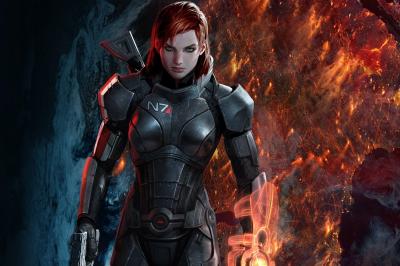
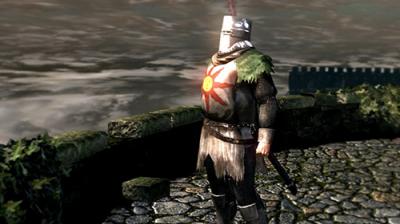
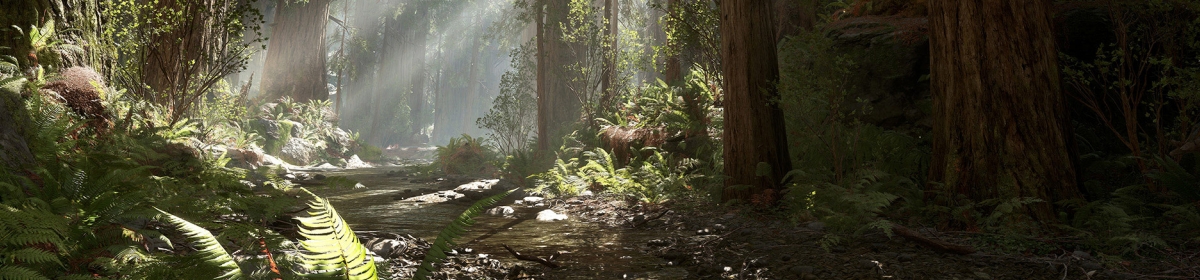
One type of fantasy stories that have always fascinated me greatly in both literature, movies, and videogames are those set in worlds that seem to float disconnected from both space and time. Stories where you don’t have any idea what might lie beyond the horizon and know nothing about what happened in the past or is currently going on in other places. Perhaps the most succesful fictional universe was first introduced to audience with the words “A long time ago in a galaxy far, far away…” There is also the D&D setting Dark Sun, which is just a small stretch of rocky hills with a handful of heavily fortified cities surrounded by sand dunes in all directions, possibly covering the entire world, and (at least in the first release) we’re only being told that the world was once green and alive, but this was a very long time ago. Now there’s just the desert and the sorcerer kings ruling the cities, and nobody knows how long it has been that way and what came before. Then there’s the adaptations of Dune (never read the book) and the stories of Kane by Karl Wagner. There’s Shadow of the Colossus, the Legacy of Kain series, Dark Souls, and also the Halo games (excluding the expanded universe). Or the continent Xen’drik from the Eberron setting. These are all fascinating settings even though – taken by themselves in their original form – they are really very sparse on lore.

This is a type of fantastic storytelling that has a lot in common with how we today perceive mythology. 2,500 years ago the Greeks knew exactly where their myths were taking place. Those where the places where they lived or where they might have been visiting relatives (if they were rich). But to us, Mythic Greece is like a completely different world from the actual Aegean Sea. A Greek merchant could have gone on a ship and sailed to England. But could a Greek hero descend from Mount Olympus and take a ship to travel to Avalon? Could he continue to sail north and reach Niflheim? That doesn’t feel right to modern audiences; it would be like a crossover between different fictional universes. It becomes even clearer when looking at time. Myths don’t happen as part of history. They just happen with no particular order at no particular time. You can’t assign a date to mythological stories. (Mythologized accounts of real historic events are obviously a different matter.) At least to modern audiences, myths are mostly stand alone stories that happen pretty much outside of a greater context. They happen in a mythic place in mythic time. And as I see it, mythic time doesn’t actually flow. Events just float freely and independently, unconnected and in no order.

But all these universes are still really interesting and entertaining settings, even with their scarcity of lore. Which makes them great examples and precedents for the creation of compact campaign settings.

Participatory Worldbuilding

While researching for this post I found a very interesting post on Hill Cantons from a few years back. The idea it presents is that all fiction is partly created by the audience themselves. The author only creates the events of the plot and some basic rules for the world, all the details are actually filled in by the audience. (It might even be true for all art.) Even in a movie the camera only shows a small part of the world but the viewers automatically create the space that lies beyond the edges of the screen. Inception is all about this. It looks like a trippy heist movie to entertain a wide audience, but it really is a movie about filmmaking and storytelling in general. The whole part of Ariadne’s training after the introduction is about worldbuilding in particular. (A lot of basic but good lessons in that movie. The deal with the dream people attacking intruders who mess with the reality is all about the suspension of disbelieve. If you break the rules of the fictional world too much, the audience will butcher the author.) As an author you really only present ideas, the audience will then add their own thoughts and emotional responses to those idea and turn them into a full world that exists in their heads. This happens with all fiction, but when your goal is to make a world that has only a small amount of actual hard facts but feels much larger and full of wonder and magic, it’s a great tool to use. Continue reading “Out of Space, out of Time”
Heroes of Hope

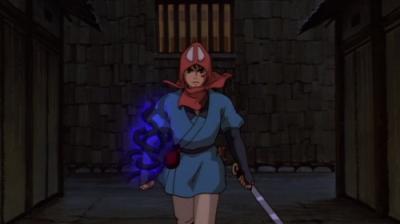
Joseph Manola has made a good case for approaching the style of Romantic Fantasy as something broader than only the settings of “Pladins & Princesses” that takes a central part in the Blue Rose RPG. I only learned a month ago that he’s been working on his Against the Wicked City setting for over a year, which like my own work on the Old World has been greatly inspired by the ideas and concepts of Romantic Fantasy. And apparently it seems that we both idepently decided on very similar tones and priorities. But the term is highly problematic. For a game like Blue Rose the association with love stories works in their favor, but the 20th century use of “romance” has replaced it’s previous use so thoroughly that you can’t really untangle it anymore. (Previously romance meant pretty much the same thing we call fantasy today.) It’s rare to find mention of Planetary Romance these days, but you might have a vague idea what to expect from Sword & Planet fiction. I think there has to be a better way to describe the broader concept that won’t make most fantasy fans “eww… is this kissing stories?”.

There is currently a thread going on on rpg.net, and while my favorite is High Valor, Hope & Heroism seems to be one of the more popular proposals. Which I think has a quite nice ring to it, is easily identified as a name for a style of fantasy, and I think it includes the essential qualities right in the title, just like Sword & Sorcery. If you never heard it (which you won’t, because we just made it up) you probably still get a good idea what it would stand for.

"I wish to see with eyes unclouded."
“I wish to see with eyes unclouded.”
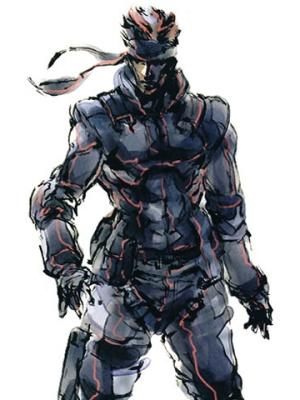
Metal-Gear-Solid-Snake
“I am no hero. Never was; never will be. I’m just an old killer hired to do some wetwork. All the heroes I know are either dead, or in prison.”
"Butt kicking for goodness!"
“Butt kicking for goodness!”
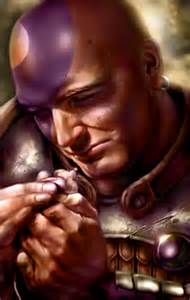
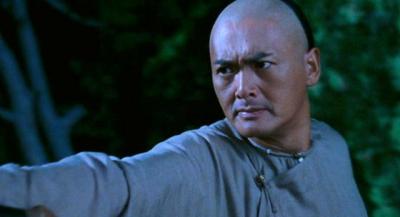
0590933_297_MC_Tx304
“Too many men have died at its edge. It may look pure… , but only because blood washes so easily from its blade. “
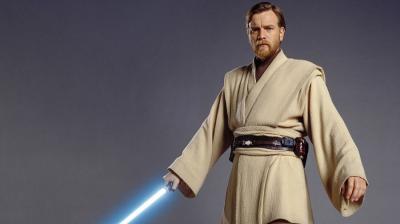
obi-wan-kenobi
“For over a thousand generations, the Jedi knights were the guardians of peace and justice in the old Republic… before the dark times… before the empire.”

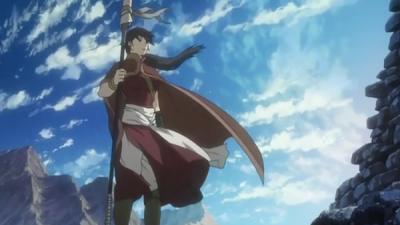
moribito01mass_effect_shepard_female_graphics_gun_16028_1920x1080saskia

"... and engage in jolly cooperation!"
“… and engage in jolly cooperation!”
"We were meant to be incorruptible, above reproach. How seldom does reality match the ideal."
“We were meant to be incorruptible, above reproach. How seldom does reality match the ideal.”

I hope this will dispel any notion that this is Wusses & Woobies. Badassery is not mandatory to personify the ideals of hope and heroism, but I think it certainly helps.

Blood Magic

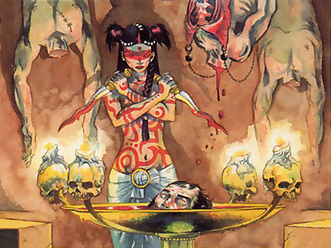
Blood Magic has very much fascinated me since I encountered it in Dragon Age six years or so ago. I wanted to have something like that in my own setting since all the way back when I started planning it. Since then I learned a lot more about how magic works in the Thedas setting and it actually is mostly demonic mind control. Not really much blood involved. But I most liked the idea of blood magic not being fundamentally evil and one of the first blood mages you encounter in the series is actually a pretty nice and also average guy. That had always had me want to have blood magic in my setting and the idea of using blood as a power source instead of some ethereal mana or mental energy is also really cool. It’s much more savage and primitive than arcanists in their libraries playing with astrology. Perfect for a Bronze Age barbarian setting.

But the whole time I never developed the idea further than that, always keeping it off for later. Because I just didn’t have any good idea how blood magic could be different from regular magic and my magic system kept changing all the time anyway. Now I do have a magic system that I really like (but still got not around to write out in full) and with the rest of the setting being already very far along it’s really getting time to finally tackle it.

How it works

latestMagic in the Old World is based aroud the idea that the being of any creature is a single entity of spirit and body, but that it extends beyond the boundaries of the physical form that is seen with eyes or felt through touch. The physical forms of creatures and things have clear boundaries, but the immaterial aspects do not. They just weaken with distance and eventually blur together with the essence of everything else. (Similar to gravity or magnetic fields.) Most beings only have mental control over their own bodies and minds, but since everything is connected and the spirit has no clear boundaries, it’s possible to take control over things outside the physical body and even over other beings’ bodies and thoughts through a contest of wills. This control over other creatures or things is magic, as it is used by all witches, shamans, and spirits. One important limitation of magic is that it only works when the caster is actively taking control. When the control ceases, the magic ends. It’s also not possible to use magic against creatures who are not nearby, unless a spirit is send to visit people and use it’s magic on them. It is also the reason why magic objects can not be created; they can only come into existance naturally.

Blood magic is one way to get around this limitation. Instead of maintaining control over an enspelled target, a blood mage weaves the spell into the target’s blood, whose life force will then power the magic instead of the mages mental energy. Blood magic keeps working regardless of how far the target moves from the blood mage and the spell can continue potentially for as long as the target lives. Masters of blood magic can even weave spells into the blood of their target that will remain dormant until certain conditions are met and they perform their true enchantment. Having some of its life force consumed by a blood magic spell causes the target to be slightly weakened, depending on the power of the spell. But usually the effect is too small to be a clear sign of blood magic, with the target only being slightly more tired or faster out of breath during strenuous activities.

A more well known use of blood in the casting of magic is as an alternative power source to the mental energies of a blood mage. Wrestling control over another person’s body or thoughts is one thing, but actually draining life force from living creatures is much more difficult. Usually this is done by complex rituals and the use of various potions that allow apprentices and acolytes to give their masters access to their mental energies. A simple shortcut to this is to simply tear the blood out of a living creature’s body and use the life force it still carries. This gives a blood mage a great boost to his power when casting a spell. It’s still a difficult thing to do, especially in the middle of a battle, so often blood mages draw on the life energy within their own blood.

Since the corrupted energies that animate undead are very different from the life force of living beings, they are neither affected by it, nor can they use it.

What it does

Aside from giving a blood mage a boost in power from draining life force from a living creature, blood magic can be used to put long lasting enchantments on living creatures. One common use is to make the target creature a permanent slave that has to obey the blood mage’s orders. It’s similar to a powerful charm spell but the ideas planted into the targets mind do not fade away as it remembers its own thoughts and memories.

Alternatively a blood mage can give a creature specific orders to be performed under specific circumstances without it even knowing that such an enchantment is in place. Unlike a spirit following around a victim, such enchantments are very difficult to detect by other witches or shamans. Blood magic can also be used to permanently alter memories. Such enchantments are very difficult to break and require a shaman who knows exactly what he’s looking for. Blood mages familiar with the process can break it just like any other spell.

Instead of manipulating a creature’s mind, blood magic can also make changes to the body. Blood mages can give their servants and henchmen great strength and resilience which they retain even without the spell being actively maintained. Since the magic power to maintain these spells is entirely drawn from the creature’s own life force and not the mental energy of the caster, such enchantments tend to take a significant toll on its health. Giving greater strength to heroes for an important battle can often be more than a worthy trade, but guardians who are kept permanently enchanted often live for only a few years. The enchantments keep them strong until the very end but eventually they just fall over dead as desiccated corpses.

How it is treated

Blood magic is not an inherently corrupting or more harmful form of magic but usually seen as one of the darkest forms, similar to sorcery. Tearing the blood of a creature from open wounds is an incredibly violent process compared to the casting of other spells and it’s easy to see why it is especially feared. The effect it has on the bodies and minds of creatures that have been heavily enchanted with blood magic also gives people plenty of reason to regard blood mages as nothing more than savage sorcerers. Blood magic is more common among the more wilder and isolated clans of the Old World and often associated with the witches of the Witchfens, which gives it a reputation of being primitive and brutish though it’s actually a very advanced magical art.

Blood magic also has a much greater potential for manipulating people’s thoughts and controlling their minds than ordinary witchcraft, wich makes known blood mages even much more mistrusted. Even those powerful ancient witches and high shamans who know the secrets of the red art rarely trust their students with such powers and the lack of teachers makes it a very rare skill outside of clans who practice it openly.

RPG implementation

Except for the blood draining ability there are no specific rules for implementing blood magic as a game mechanic. It simply allows blood mages to make their enchantments permanent without any special costs or mechanics.

Old World Inspirations

When it comes to worldbuilding, it’s always good to have a distinctive style in mind and working towards staying true to this vision. In my experience there’s always a tendency to go down established paths and before you know it you find yourself with a generic world with two or three gimicks. For the Old World I have a very clear image of what the setting is supposed to look and feel like and what it seems and internal logic should be. The following is what I believe to be a pretty complete list of the books, movies, videogames, and RPGs that inspired the setting:

  • A Princess of Mars by Edgar Burroughs (1912)
  • Alien (1979)
  • Aliens (1986)
  • Apocalypse Now (1979)
  • Bound by Flame (2014)
  • Conan by Robert Howard 1932-1936)
  • Conan the Barbarian (1982)
  • Crouching Tiger, Hidden Dragon (2000)
  • Dark Sun (1991)
  • God of War II (2007)
  • Halo 2 (2004)
  • Heavenly Sword (2007)
  • Heir to the Empire by Timothy Zahn (1992-1994)
  • Hellboy (1993 and ongoing)
  • Ghost in the Shell (1995)
  • Kane by Karl Wagner (1970-1985)
  • Knights of the Old Republic (2003)
  • Mass Effect 2 (2010)
  • Metal Gear Solid 3 (2004)
  • Morrowind (2002)
  • Planescape (1994)
  • Predator (1987)
  • Princess Mononoke (1997)
  • Raiders of the Lost Ark (1981)
  • Seirei no Moribito (2007)
  • Shadow of the Colossus (2005)
  • Soul Reaver (1999) and Soul Reaver 2 (2001)
  • Stargate (1994)
  • Super Metroid (1994)
  • The Empire Strikes Back (1980)
  • The Thing (1982)
  • Them! (1954)
  • Warcraft III (2002)
  • Yojimbo (1961)

There’s a couple of science-fiction movies and games on the list, but I think with almost all of them the technological elements are just window dressing. At their heart they are still about monsters and magical worlds.

Return of the Magical Creatures

One problem I’ve been struggling with since when I started working on the Old World setting is creating a clear concept of what spirits are and how they behave. Since shamans and animistic religion are a major focus of the setting, this issue is a pretty big deal. I’ve been doing a lot of shuffling around and recategorizing of my creatures over the years but never really got to a satisfying conclusion. The last set of categories I had been using was people, beasts, undead, and everything else was a spirit. They are all inhabitants of the Spiritworld after all.

But looking back, this only seems to have caused more confusion than clarity. And I now think this is because there are two fundamentally different types of beings that are all said to live in the lands of spirits, at least in the way we think about these beings today. The fey people of celtic myth, or at least their modern interpretation in the British-Irish tradition are not animistic beings. They are people. They are generally human in shape, talk in human languages, dress in human clothing, live in human dwellings, cook their food, and are apparently born and age. But they are the people of a parallel world that obeys diferent rules, which makes their behavior seem very strange and gives them powers that are for all intends and purposes magic. This is not unique to the British Isles, though. You find many similar creatures in India and Japan as well.

But the spirits of nature are fundamentally different beings. They can appear in human form, but that’s not their real form. They are not born and do not age, they do not need to eat and you can not kill them with a blade. They do not live in a river or in a tree. They are the river and the tree.

When you lool at original descriptions of supernatural mystical beings, I don’t think this distinction holds really up and doubt people actually saw them this way. But when creating stories for modern audiences, I  think it’s a quite important distinction that we take for granted, even if we never really think about that.

Taking these things into consideration, I don’t think my shie, naga, raksha, and giants really qualify as spirits anymore. They have supernatural powers and they are native to the spiritworld, but they are all people who were once born and who can be killed with a blade. While I think the execution of creature types in the RPGs Dungeons & Dragons and Pathfinder is a total mess, I think it is the right idea. There needs to be a category of creatures that are magical instead of mundane mortal, but also clearly different from immortal spirits of the land, angels, and demons. So I will be expanding the categories in my creature document from four to five and add the Magical Creatures group. Hopefully this will help me get a better grip on the supernatural in the Old World.

The Fishtank Sandbox

Sandbox campaigns are always and endlessly fascinating subject when it comes to roleplaying games. They are widely regarded as the type of campaigns that uses the unique abilities and potentials of the RPG to the fullest. No matter how well designed, written, and scripted a videogame is, having a gamemaster who can take direct input from the players and completely reshape the game world in response in a matter of seconds is somethings computers can not even approach to replicate. You can have very fun and entertaining adventures following a general chain of events and visiting locations according to a script, but to many this has a somewhat unsatisfying taste of wasted potential.

A sandbox campaign is the ultimate form of interactivity. The players can attempt any action they can think of and change any aspect in the world as long as the GM deems their attempts a success. You will never see the notification “you can not use this here”. The only way to really push the boundaries of a sandbox is to travel off the edges of the map. But even that could be fixed by giving the GM a few week to create more map. (Your GM will hate you for this, though. Have a heart and don’t do this.)

One challenge when talking about sandbox campaigns is the unclear terminology. There’s no kind of even informal authority among OSR gamemasters and designers. It’s true anarchy where terms become accepted because the majority uses them in the same way. But even then, you usually won’t find any clear definition. And to make things worse, people are using terms in the way they think they should be used, even if they are in a minority. Very often sandbox is used seemingly synonymous with hexcrawls. And after having been interested in this wider subject for years, I am only now starting to get an idea what hexcrawling actually means to the people who actually run succesful hexcrawl campaigns. (Those who complain that their hexcrawls sucked are usually told that they had a wrong impression of the concept.)

A week back I had started a thread about sandboxes at rpg.net, and wanting to make it clear that I wasn’t interested about either hexcrawls, domain building, or diplomacy sandboxes, I came up with the description of “dynamic sandbox”. One of the early replies was from someone who immediately got what I was getting at, who also mentioned that in Sweden they call them the equivalent of “fishtank”.

And I think fishtank is a brilliant term that really should get widespread use in our English RPG terminology as well. It just hits the nail square on the head. A fishtank is a kind of sandbox campaign (that is: no script, players set their goals), but one that is focused on and build around various factions and important people. The big fishes and the little fishes. And these are all swimming around in the fishtank, doing whatever fish business they have. The players are introduced into this environment – usually as the smallest of fishes – and mingle with the various other big and small fishes that already inhabit it. It’s the relationships between these important parties and players that the campaign is really about.

A fishtank campaign can have a hex map. Just like a hexcrawl or a domain building campaign. But it can also just as well be run using a point map, or a city street map. Since my Old World setting is a wilderness setting and I am more of a Sword & Sorcery than a survival or expedition guy, my personal choice is a point map that lets me easily track travel times with just a few lines and squares and without the need to create a sophisticated geography. (I think I’ll have to do a full post about this later this week.)

I’ve never seen the term fishtank used for this type of campaign, but I think it’s almost self-explaining to people who know the basic idea of sandboxes. It’s a sandbox of various actors doing their various things and fighting out their conflicts, and the players are joining them. As this is just the kind of sandbox campaign I have always been envisoning since I became familar with the concept, I am really hoping that it might gain a widespread acceptance. And maybe help more people become aware that a sandbox does not have to be a (poorly run) hexcrawl. I will certainly be using it to describe my campaign in the future.

Looking a bit around, I found the term fishtank referenced before in two posts at Gnome Stew. By a Finish author. Figures.