Yora's site for Sword & Sorcery RPGs
Things are rather busy at work these days with our main season having started (we sell garden plants so everything needs to be fully grown before the actual planting season starts) and even on the days when I don’t get back home late and tired I mostly spend my time doing other things than working on the Ancient Lands. While admittedly I’ve been writing more here recently than I have for quite a while, most of it is spur of the moment stuff that just pops into my mind minutes before I write it. And even most of that is more theory than specific content.
But I am always more creative in spring and summer (it’s adventuring season after all) and I got quite a number of ideas in my head that are almost finished content that is only in need of being nailed down and locked. Which I always do best when spelling it out in writing. So expect more stuff that is ready to take and use in games in the comming weeks. For now I am hopping on to an idea that someone suggested over two years ago and share ten randomly selected interesting details about the <em;”>Ancient Lands that make it a unique and distinctive setting:
*I really like this one from a mechanical perspective. It’s a simple replacement of the common silver weapons and makes the imprisonment of spellcasters very easy without convoluted magical prison setups. All while reviving the old image of iron having power over spirits.
** This is partly “historical accuracy” but primarily a desire to see these weapons of ancient mythological figures back in their deserved spots. The reach advantage of spears can simply be represented as a +1 bonus to Armor Class, as in practice it makes it harder for an opponent to get close enough to attempt a strike at the body.
But let’s forget about the profit for now.
Noism started an interesting debate with two posts about a seemingly overarching theme of bleakness in modern oldschool RPG releases and discussion. And I think it’s an accurate observation. The majority of content that is getting major exposure these days is pretty dark. But I think the main reason for this lies in the popularity of the works of James Raggi and Zak S., whose personal styles simply are bleak and grotesque. You could easily count Patrick Stuart as also having ascended into this exclusive group. Together they and their works easily tower over everyone else combined. This of course creates the perception that oldschool gaming is dominated by dark and bleak content. And when it comes to commercially produced publications this is actually the case. But I believe these great adventures are popular primarily because they are really good, not because they have bleak tones and dark themes. It probably is mostly a coincidence that the most successful creators are sharing such similar artistic styles.
That being said, it’s still a valid question to ask how we all could produce content that is just as good but taking a more positive outlook on things? Having bleak adventures dominate is indeed kind of a problem, in that it is quite easy to get caught up in the enthusiasm that is surrounding their reception. Deep Carbon Observatory is awesome and makes me excited to make something just as awesome with my own ideas. But at least for me it’s always very easy to fall into the trap of falsely assuming that something similarly great would also be similarly structured. It takes me conscious effort to say “This is not what you wanted to do. You had a different idea that is also awesome and your own.” So I find it very worthwhile to encourage a discussion about what other shapes great oldschool adventures can take and to get people to put more of those out there so that we have a broader perspective on what we can be doing that builds on our own passions and develops into our own personal style.
The original question that started this was “can RPGs be cheery?” I am not a native speaker but this doesn’t seem like a word that I could align with fantasy adventure RPGs. Cheerfulness seems to be in conflict with …well, conflict. As I see it, every adventure needs conflict. Without conflcit there’s no treat and therefore no tension. Maybe you can have RPGs that are cheery, but I don’t see it working for games of the fantasy adventure type. However, what these games do have the capability of is FUN!
To me, the absolute holy grail of a perfectly executed adventure is Raiders of the Lost Arc. It has violence and pain, a terrible threat, and the most evil of evil villains: Nazis! Is it in any way cheery? No, I really wouldn’t say so. But is it a bleak movie or a pessimistic one? I’d say far from it. It’s exciting and wondrous and Indiana Jones is a hero who has no pretentions of glory but is good without a trace of doubt. And it really is fun.
I do enjoy a certain gloominess in my favorite games and movies, but I would say that those are all cases in which the mood isn’t bleak but rather somber. To me the big difference lies in the outlook forward. In bleak settings there is a universal certainty that the actions of the protagonists won’t be making and difference for the better. Things might even end up being worse despite their best efforts. Things are bad and are only going to be worse. Adventures in such environments can be fascinating and entertaining, but unless everyone is set to go down in a blaze of glory, it’s not going to be fun. (Early Warhammer 40k always seems hilarious to me.)
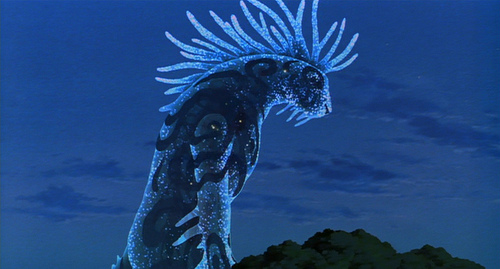
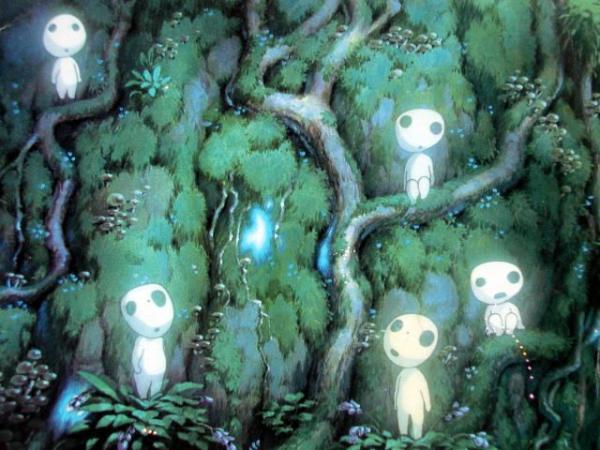
But dark elements or periods of gloom do not have to drag everything into bleakness. As with Indiana Jones you can still have an overall very positive outlook, simply by giving the players confidence that their efforts will make things better. Things will look up in the future because the heroes took great risks and paid great personal costs. if the players walk away with a confidence that it all had been worth it, then even an adventure full of darkness can have an overall positive outlook. A great example for such a tale would be Princess Mononoke. That movie gets outright terrifiying as shit goes to hell, but even then the hero keeps pushing forward because he knows that he can make the future much better than it’s currently looking to be.
I don’t think I’ve consciously been thinking about it this way, but I believe that my Ancient Lands setting is at its core a world meant to be about the struggle for making things better. The setting is build around the concept of treasure hunting, but not about gold fever and the suffering it brings to everyone involved, but again much more of the Indiana Jones type. The main motivation for PCs is the excitement of discovering magical wonders that people back home would never have dreamed of. To reach them, great threats have to be overcome and there is fierce competition from highly dangerous and unsavory people who might use such discoveries to harm. You can easily have the PCs encountering great dangers and dealing with serious threats, but overall I find it an approach that lends itself very much to having a lot of fun while doing so,
As I see it, the world is not so much “Points of Light surrounded by a vast sea of darkness”, but rather islands of the familiar surrounded by oceans of the unknown. When it comes to designing settings and adventures it’s really very much the same approach, but the dangerous unknown doesn’t have to be dark. Even if it’s just unfamiliar you can still have high tension adventures without any need for bleak darkness.
Certainly feels like I am done. Despite saying just a few weeks ago that I felt I barely had made any real progress over the last six years of working on the Ancient Lands, I think that I now have all the pieces togther. Not ready for a publication by any stretch, but you could say the setting has reached the beta stage, where it’s completely playable.
Some monsters still need proper names and a handful still needs their stats written down, but I got a 100 entries bestiary. The gods still need naming, but I have them all together and religion properly worked out. The four character classes are all ready to play and the magic system is complete. I got all the races and an outline for the culture, and good sounding names for almost all of them. The map is an ungly sketch but it has all the countries that I want to include.
 This thing can be played.
This week I was reading through the older posts I’ve written here about the Ancient Lands in more detail, and while it is true that almost all major elements of the setting where already in place in early 2011, the vast majority of them had a sometimes quite significantly different shape and appearance back then. Based on what I’ve been writing about the process, the setting really grew into the world I want it to be in the last 8 months. Many things I now consider crucial to the theme and style of the setting I wrote about only last summer. Looking back a full year before now, there’s still a lot of stuff that now seems completely out of place to me. Deserts, empires, trade networks, criminal organizations, humans! What was I thinking?!
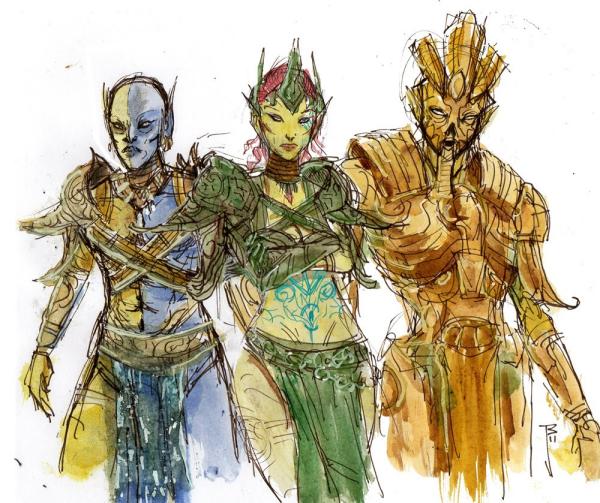
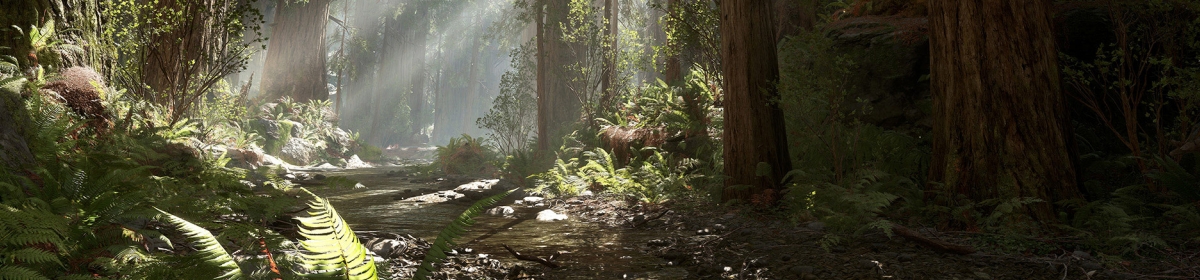
I think a big tipping point was writing the Project Forest Moon post. This was when all the ideas and things I liked really became one coherent concept. That’s when it clicked and I realized which of my many inpirations I really want to set the overall tone for the world. Endor, Morrowind, Kalimdor, and Planescape (Beastlands and Pandemonium). I want the Ancient Lands to feel like those, and everything that doesn’t have anything to do with bringing that style to life can go. No empire, even when it’s lizardmen. No deserts, no steppes, no tundra. Certainly no criminal organizations, multinational mining consortiums, or national borders. But as I now recently realized, also no stone age hunters. In my quest for making a more solid tribal society and animisitc religions in a largely unsettled world I regularly kept forgetting that it’s still supposed to be a Bronze Age level setting. But now it finally all looks right.
There’s still a good amount of things to be done. The first priority being the creation of a sandbox for my next campaign that I’ll hopefully be starting before the summer. The setting I have created now is a set of rules, monsters, cultures, and general geographic overview. Creating adventures for it is another step entirely. The other thing I want to do is to actually get all the ideas that mostly exist in my head and on some indecipherable notes into a coherent text that can be shared and used by others. I am still not putting any hope in any kind of commercial success with this setting, but I definitely want to release it to the public. Over the many years of working on the Ancient Lands I’ve been getting a considerable number of comments and also messages from people simply wanting to tell me that they really like my ideas and would love to play in such a campaign. And that’s really all the confirmation I need that this isn’t a completely pointless undertaking. Even if nobody else ever runs an Ancient Lands campaign, it can still be a useful sourcebook for material or at the very least a source of inspiration for GMs wanting to start making their own settings.
Not much of a big revelation, but it feels like a somewhat important step of my own worldbuilding work.
My favorite design paradigm is “Perfection is not reached when there’s nothing left to add, but when there’s nothing left to take away.” (My second favorite one is “Good artists borrow, great artists steal.”) While it has led me to very good results so far and the Ancient Lands are now much tighter and sleeker, I still frequently find my mind wandering off into wrong directions when making up new details. And what I realize now is that many times I end up following the same paths that didn’t lead to anything satisfying before. There are many fantasy ideas that I really like but which are not fitting for this particular setting.
Creativity isn’t something to just turn on and off as needed but more of a bubbling of ideas that for some reason feel right. But good design needs focus and direction. Knowing what you want is great, but knowing what you don’t want, even though it’s a great idea in general, also might help quite a bit.
While I’ve been thinking about Morrowind, Planescape, Glorantha, and Tekumel (and why Dark Sun doesn’t seem to feel fully right as being in the same category) I came to the conclusion that beyond Asian and pre-medieval stylistic influences they all share a considerable amount of metaphysics and religion and have some esoteric aspects that are a big part of their appeal. (Dark Sun doesn’t, which is what sets it apart.) It’s something that I frequently pondered and has always been in the back of my head since I first wrote about the subject two years back. And while thinking about what elements with philosophical and metaphysical aspects I already have, I came up with a pretty decent list.
Most of these things started with me wanting to hav certain aesthetic and narrative elements that turned out to be conflicting with each other. Attempting to solve these conflicts by making various small changes and adaptations led to the discovery of numerous new ideas that are all not entirely original but make everything come together in a distinctive way that gives the world a unique character and opens interesting venues for exploration.
This is an extension of Philotomy’s concept of the Mythic Underworld, which treats dungeons as places outside of the regular laws of nature and working by their own unfathomable supernatural rules. In the Mythic Otherworld this idea is extended to entire lands, or in case of the Ancient Lands the Spiritworld. The wilderness is a place of mostly mundane dangers that simply try to eat you. But the Spiritworld and its native creatures are not bound by the normal rules that make the civilized lands and wilderness make sense. Being inherently supernatural, the Spiritworld is a realm where things can seem illogical or outright impossible. There are castles and landscapes that defy gravity, fires that burn forever, underground labyrinths that never run out of breathable air, and creatures encountered in places they couldn’t have possibly reached. There are rules that govern the Spiritworld, but they are often quite different from those of the physical world and rarely make sense to mortal minds.
(This concept started as an attempt to make sense of the illogical layup and keying of many early dungeons, but actually turns out to be a really good paradigm for designing fantastic places with a mythical atmosphere and making spirits alien.)
Anything that exist is infused by energy. Energy allows living creatures to move and think, gives spirits their powers, and is also what makes fire burn and even seemingly unliving stones roll down cliffs and crush things underneath it. Energy is everywhere and while it appears in different looking forms it is ultimately all of the same essence. This life energy of nature has no boundaries and all things and everything that happens is part of the same whole. But within this universal energy is a vast multiplicity of wills, and each will has seemingly complete control over different bodies. But all the wills of each animal and plant within a landscape also make up the spirit of the land and this spirit can manifest a body of its own, even though it simultaneously exists in all the other beings within its realms.
To great spirits it comes naturally to share control over all the things in its domain with the individual wills of each being. People and animals are not normally aware of this touching and merging of wills. But it can be learned to extend the will beyond the own body into other things and other beings, which is then known as magic. Once control is released, things again follow their own natural behavior, which is why all mortal magic is impermanent.
(This originally started by thinking about the actual mechanics by which the Force makes things happen, but it ended as something that also very well explains spirits and divination.)
Time is always flowing and things constantly changing, so it is impossible to accurately foresee the future before it happens, even with the most powerful magic of ancient spirits. But things never happen without a reason and all beings behave according to their nature, which makes many things that happen predictable. As the life energies of nature and magic flow through everything, great spirits and powerful magical beings have the ability to see what is hidden to the eyes and sense the paths that all creatures are following. This infinite network of paths is the Wyrd, and it is always in motion as creatures make choices and accident happen. But while paths are constantly changing, they rarely change by much and can be highly predictable to those who are experienced in watching them and knowledgeable in the hearts of men and beasts. Divination is the art of reading the everchanging wyrd and recognizing where paths are about to cross. Since all beings tend to follow their nature, great spirits and old shamans can tell which future encounters are fated to happen. They also can make predictions what choices people will make, but these become more unreliable the more unusual their circumstances are, and no power in the world can foresee the great differences that can be made by a loose stone or a serpent in the grass.
(Divination magic is always limited to predicting encounters and obstacles that are likely to happen, but can make no accurate statement of how they will play out. Telling the future without negating player agency and dice results lets me eat my cake and have it too.)
Time is something that seems simple and straightforward in everyday life, with things changing and moving forward. But this is only because people are mortal and always only see short stretches of time and the physical world is followed by seemingly regular cycles of the seasons. But spirits have a much different perspective that allows them to see mountains rising and lands sink beneath the sea, yet at the same time nothing ever really changes and all the efforts of mortals are never getting them anywhere. On sufficient scales time is not a straight river that runs from the mountains to the sea but endlessly meandering without source or destination. Within the Spiritworld even the passing of seasons and years loses most of its meaning and both the weather as well as preservation and erosion are ultimately depending on the moods of the spirits of the land.
Whether days have passed or centuries makes very little difference in the Spiritworld. Ancient castles can be found in pristine states while solid castles may have crumbled to rubble after returning to them a month later. And while spirits may forgive, they rarely forget, and will honor both ancient agreements and avenge slights that happened generations past.
(The benefit here lies in having a good explanation of why there are so many ruins but little current civilization without having to rely on a Tolkienian decline of magic. It also justifies how magical creatures seem to be waiting fo centuries in inhospitable lairs for adventurers to find them. From their own perspective they and their lairs simply exist in a temporal limbo until outsiders interact with them.)
The magic used by spirits, shamans, and witches utilizes the natural life energies within the environment and all the things in it and as such is limited to doing things that are naturally possible. But there is a space beyond the borders of reality which is filled with the energies of raw Chaos. Chaos energy has the potential to change the fabric of reality and through this allows sorcerers to do things that are impossible. This makes sorcery an extremely potent force that can be used for both great works and terrible destruction. But Chaos can never be fully controlled by mortals and every use of sorcery or the mere presence of demons weakens reality around them. This Blight warps and poisons the natural world and all living things touched by it. First it causes weakness and feelings of supernatural dread, but long exposure leads to deteriorating health and eventually turns living things into twisted monstrosities. Sorcerers learn to adapt to the changes of the Blight and consider it a price worth the unlimited potential sorcery offers. But most people see them as madmen who are laying the world into ruin in their thirsting for power. Druids and Demon Hunters stop at nothing to destroy sorcerers and demons wherever they can and while their methods are often extreme most people welcome their continual battle against further spreading of the Blight.
(This one started with my fascination of the idea that heroes fighting dark magic accept that this effort is exposing them to its power and eventually changing them. The Dark Side from Star Wars and the Darkspawn Blight and demonic possession from Dragon Age were both big influences on this.)
The peoples of the Ancient Lands do not think in the concepts of Good and Evil, or even such dualities as Order and Chaos. When judging people’s character, they distinguish between those whose actions bring peace and those whose actions bring suffering. Those who bring peace are usually higher regarded than those who bring suffering and are regarded as better or worse people accordingly. But there is no such thing as a concept of cosmic divine law which people can live in accordance with or violate. Not everyone who brings suffering needs to be despised or be made to stand justice, but they are all dangerous and often feared.
Most people who spread suffering are regarded as having a Red Heart. They are prone to anger, rage, hatred, and violence. While courage and strength are greatly admired by most peoples, those who have no control over their fury and lash out against others without thinking or restraint are seen as very dangerous people. While many redhearted people are regarded as thugs, this quality is also often found in those who have many other admirable traits. Their rages are often seen with sadness by those close to them, but if they prove to be to violent and unpredictable they need to be taken care of, one way or another.
People with a Black Heart are quite different in character and are much more unpredictable. They are not driven by rage, nor do they seek any satisfaction in the suffering of other. Rather, blackhearted people do not concern themselves with the suffering of others at all. They simply worry about their own goals and needs with no considerations about the wellbeing of others. They don’t go out of their way to spite or harm others but don’t hesitate when their plans will made others to suffer. For those who are more foresighted consider the social consequences of harmful actions on their longterm goals, but when they think they can get away with it there’s little that keeps them from sacrificing anyone.
Some people are seen as having both a red and a black heart and most of them are quickly regarded as monsters in humanoid form or being possessed by demons. Many of them are madmen who soon find an end at the hands of vengeful pursuers, but some end up among the most feared warlords and bandit leaders.
(Calling something evil is an ancient shortcut in western culture to not having reflect on an opponents motivation and reasons and get an instant moral justification to destroy them without further questions asked. Anytime I come across fiction that avoids this lazy simplification (usually Japanese but often also European) I really enjoy it a lot, and it makes interactions with supernatural and inhuman beings much more fascinating. So eventually I found this solution to have people “who just need killing” without giving the players an instant excuse to enjoy it. This is also why there are no orcs, goblins, or gnolls in this setting.)
While honor is an endlessly complex field, it’s role in the Ancient Lands primarily manifests itself in the two concepts of hospitality and vengeance.
Hospitality is the idea common in most cultures that everyone is obligated to offer food and shelter to travelers within the means of the host and according to the station of the guest. In a world with few travelers there are no places where one could rent a room outside the handful of major trade cities and there are no other places to stay the night or winter indoors than in the homes of locals. While the forests and mountain valleys are not as deadly as the open sea, it has become accepted that offering hospitality to travelers is an adequate price for seeing the same kindness extended to oneself or your relatives when similarly in need of shelter. There are limits to hospitality though and the guest is expected to offer a gift of gratitude in exchange, which again is according to the means of the guest and the station of the host. Overstaying ones welcome or not presenting sufficient gifts, let alone abusing the kindness of the host, is as much a violation of hospitality as not offering travelers a place for the night and just as much damaging to ones honor and reputation.
In a world where visitors from outside are rare, hosting guests is often much more of an honor than a burden to the host. Hosting esteemed guests is a great boost to ones reputation and in most places it is understood that only the mosy powerful families will get this honor. While refusing hospitality when requested is highly dishonorable, offering it freely to travelers can make the lesser families of a village very powerful enemies. Since the most powerful families are usually also the richest who ca best afford hosting guests in considerable comfort for extended time, this is an arrangement that mostly suits everyone involved just fine. Traveling adventurers coming to a new village will usually stay at the hall of the chief or another of the great families.
When conflicts happen, Vengeance is the most common institution to maintain stability. While there often is a desire to see an offender punished, avenging an offense is primarily a means to ensure that nothing of that kind will happen to the offended family or clan again. By getting revenge, a familiy is showing its strength and the severe consequences to anyone who might want to try attacking them. The point is not to get even but to make everyone afraid to cross the familiy again and because of this it is often impossible to let an attack go unpunished, even if the family has no desire for blood. To let an offense pass shows that the family is weak and an easy target for further attacks. Most of the time vengeance can be satisfied by payments of reparations. Paying reparations is safer for both sides and allows the conflict to become forgotten much faster than if someone got killed or maimed. If the reparation is sufficiently high, it means a significant loss for the offending family and it has been established that the attack has cost them. If the offer of reparation is considered insufficient or the crime too grave, the offended family will be after blood. In any such feud both sides come out much worse than they were before and it’s not uncommon that the offended family ends up losing more people and wealth than they inflict in damage on their enemies. Killing is not always necessary and in some cases causing injury will be regarded as acceptable if both sides aren’t eager for a long and deadly feud. But deaths can always happen and sometimes an injured member dying from wounds weeks later can reignite a stalled or solved feud. Feuds can continue for week or months until both sides are too exhausted from the constant state of warfare to continue. If the offended family believes it has shown that anyone attacking them will pay dearly for it, a truce will usually be negotiated though neutral mediators.
Vengeance is almost never between individuals but between families or clans. In tribal societies nobody is ever acting alone and any offense that is being commited is usually done in the presence or at least with the knowledge of a relative. These relatives also share responsibility for the offense, but part of the blame also lies with the elder siblings and older relatives who are responsible for properly raising the children of the family. The responsibility for every offense lies with the whole family. Most people own little personal items and most wealth in the form of land and animals is shared by the whole family,so any reparations automatically affect the family as a whole. The same goes when crops and buildings are destroyed or animals stolen or killed. When an offense is avenged with blood, there are also other practical considerations to attack relatives of the original offender. It is often easy for a family to protect a single member inside their home indefinitely, making it impossible to get at him. In theory all members of a family are valid targets, but many families hesitate to attack children or old women unless the other sides starts doing it first. But when arrows and torches are flying accidents happen and this escalation is not uncommon. Also, even if an offender manages to survive a feud unharmed until a truce is agreed his family will have suffered greatly and they know exactly who was responsible for bringing this suffering upon them. Even if they feel obliged to protect the offender, they will often see that he sees punishment for his offense themselves.
(I’ve long been intrigued at how vengeance and hospitality really worked in practice as their portrayal in fiction always seemed just as dodgy as that of warfare (which is mostly sensationalist nonsense). I’ve spend years researching social organization and public order in pre-civilization societies as a cultural studies student and it’s a very fascinating alternative to the typical medieval fantasy approach. While it’s a highly complex subject I think breaking it down to these two key concepts lets the players gets the most out of it while being pretty easy to grasp.)
I think nothing here is really new and ha been seen in one way or another several times before. But I doubt that all these elements and ideas have been used in this particular configuration and I am feeling very happy with the setting getting my own unique stamp because of it.