Return to Kaendor

Y’all all don’t what real Gamer ADHD is!

Yesterday I mentioned on Mastodon that I regular keep getting new ideas every few months for what could be really cool campaigns and then losing interest in the work after a few days or weeks, but that it seems like I always keep coming back to the same Sword & Sorcery inspired setting of nature spirits and dinosaurs on an alien forest planet. People asked if there’s any place where they could read more on that world, and there really isn’t anything I could direct people to at this moment. So this post is going to be that.

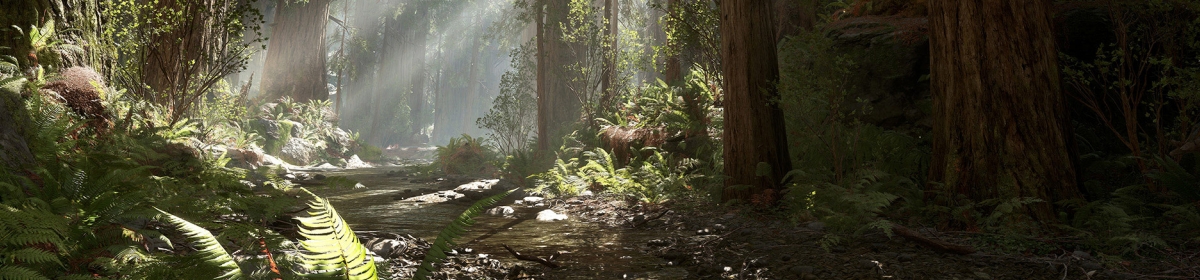
Kaendor is the current incarnation of a Sword & Sorcery style campaign setting heavily inspired by the worlds of Morrowind and Dark Sun, and the visuals of classic Star Wars and Conan the Barbarian, that I’ve been tinkering and experimenting with since at least back in 2009. I’ve run three separate campaigns in that world over the years, but there have been many drastic overhauls and changes to the geography, history, cultures, and monster populations that it’s become a completely different world from its original incarnation. But looking through my old material, the jumble of ideas and fragments seems to have gained the general shape of what is now the Kaendor setting in Summer 2016 when I wrote my Project Forest Moon concept. Reading it again now, it still feels like a perfect match for what I want to accomplish with the setting.

My previous campaigns were run playing Pathfinder, Astonishing Swordsmen & Sorcerers of Hyperborea, and while I wanted to run D&D Basic/Expert last time, there just wasn’t the audience for it and we ended up playing 5th edition. I had been very seriously considering Barbarians of Lemuria, Worlds Without Number, and Forbidden Lands as systems for future campaigns. But now with the considerable popularity gained by Old-School Essentials, which is reformated reprint of the B/X rules, I think it’s now much easier to get player for it. And it really is the system that Kaendor was always meant to be for.

Inspirations and References

  • A Princess of Mars
  • Albion (DOS game, 1995)
  • Bound by Flame
  • Conan the Barbarian
  • Dark Sun
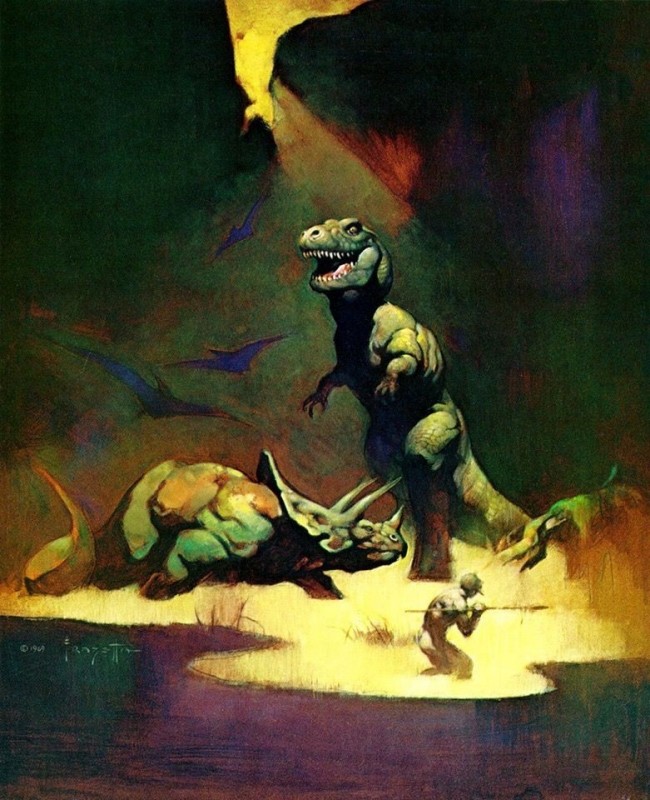
  • Fire and Ice (by Bakshi and Frazetta)
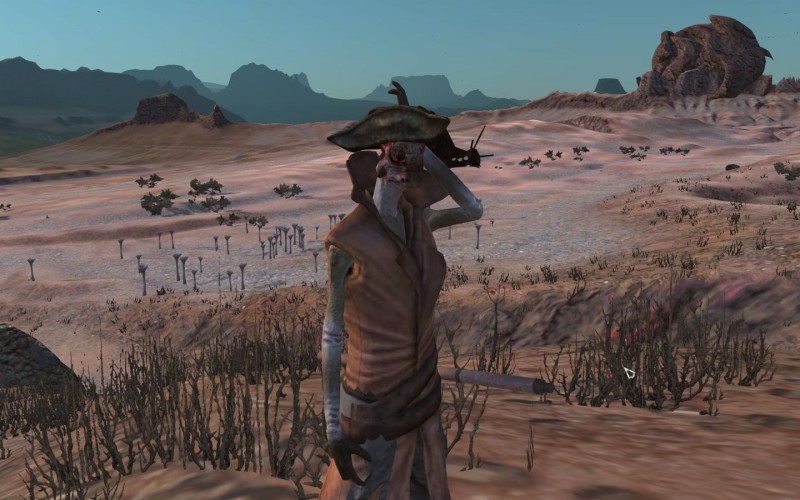
  • Kenshi (PC game, 2018)
  • Morrowind
  • Nausicaa
  • Princess Mononoke
  • Record of Lodoss War
  • Return of the Jedi
  • Severance: Blade of Darkness
  • The Empire Strikes Back
  • Warcraft III: The Frozen Throne
  • X1: The Isle of Dread
  • X6: Quagmire!

Yes, this is all very 80s/early 90s. That stuff is on fire! ;)

The Environment

Kaendor is the smaller of a pair of binary planets around an orange dwarf star, the other one being a a blue gas dwarf (a type of planet now known to be common in the universe, but with no example in our solar system). With the stars lower gravitational pull on the planets, a year is slightly longer at 381 days, but with another large planet in place of a moon, months are considerably shorter at only 16 days. (Leading to two 8-days weeks per months.) With the gas planet casting a much larger shadow than a smaller moon, solar eclipses are much more common on Kaendor, and many places see one or two every year, which are typical occasions for many magical rituals.
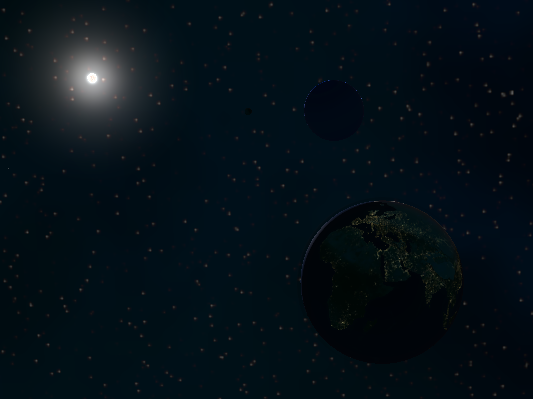
Kaendor with the gas dwarf and its orange dwarf sun in the background. (Simulated with true scales and perspective in Universe Sandbox 2.)

The surface of Kaendor is about half land and ocean, with almost all but the higher mountain ranges being covered in an endless expanse of trees, giant mushrooms, and swamps. The dominant animals on land are reptiles and insects, with many species growing to enormous sizes. Instead of birds, the skies are home to many kinds of feathered flying reptiles. Mammals are somewhat uncommon, mostly resembling rodents of many shapes and sizes, but there are also many types of deer and goats. (There are no dogs, cats, horses, or bears)

The Peoples

The common Kaendorians are very similar to humans in nature and appearance, but they don’t have any particular resemblance to any specific peoples from Earth. Giants, serpentmen, and fishmen exist, but their numbers are a far cry from what they were tens of thousands of years ago and most people never see even one of them in their entire lives. Insect-like goblins are more common, but they mostly keep to themselves and only occasionally make short visits to other settlements to trade.

Civilization on Kaendor is generally fairly small. While there are many large river valleys for civilizations to arise, there are few open plains, and clearing the ancient forests along the river banks is difficult and dangerous work with the massive scale of many old trees and the amounts of deadly animals and treacherous spirits. A few major cities exist near the coast, but mostly people live in small towns and surrounding villages scattered far and wide across the lands, in whatever small patches of farmable land can be found. The larger city states can establish some kind of centralized government over the surrounding towns and villages a few days’ ride out from their city walls, but most people are ruled over by local chiefs or tribal councils.

The technology level of Kaendor is mostly Bronze Age, with crudely made iron being only suitable for nails, cooking pots, arrowheads, and armor scales, but too fragile for weapons, tools, or chainmail. There are a few roads through the forests connecting the city states with nearby towns, but transportation of heavy goods is done almost entirely by boats over longer distances, or hauled by pack animals that can walk on narrow trails and step over roots or through mud. Wheels are only used for wheelbarrows or handcarts within towns and villages.

The Supernatural

This is an aspect of the setting that is still somewhat up in the air and I am currently undecided on how I want to nail down the specific rules for the future. In general term, all the natural forces in the environment are the actions of spirits. Most spirits of plants and stones are extremely simple beings that have no real consciousness, personality, or individual traits. They simply exist, maintaining the natural cycles of the environment through their passive influence. But the spirits of particularly ancient trees or large caves, and especially the spirits of whole forests, mountains, or island are very powerful entities that have a great awareness of everything that happens within their domains and the power to influence the environment directly to their will. However, the nature of these great spirits is completely different from that of mortals, and they perceive the world and understand events in drastically different terms. Their desires and choices lie well outside the comprehension of ordinary mortal minds and they generally have no concerns of any kind how their actions and changes to the environment affect individual people or even whole villages.

All settlements require a shaman who knows the local spirits and has at least a basic understanding of their goals and desires. The role of the shamans is to consult with the spirits to get permission to build new settlements or make any major changes to the environment and to plead with them for understanding about offenses or aid in times of hardship. They also perform the many rituals and sacrifices demanded by the spirits in return for their continued permission to settle, farm, hunt, and mine in their domains. The exact purpose of many rituals and what the spirits actually gain from them is a mystery even to many shamans, but they are not questioned as subservience to the spirits is an everyday part of life everywhere on Kaendor.

Magic that falls outside the domain of interactions with the spirits exists in the realm of sorcery and is closely tied to demons. Being part of the environment and regulating its natural processes, the power of the spirits is limited to guiding the many forces of nature, but it can not break its laws. It can control plants and the weather, accelerate healing or cause disease, or increase strength or cloud the minds of mortal creatures. Existing outside of nature and coming directly from the primordial chaos, demons are not bound to such limitations. Sorcery can do the impossible by rewriting the laws of nature and overturn the natural order, making it potentially extremely powerful. However, the natural world is extremely complex with everything influencing and affecting everything else, and seemingly minor changes that disrupt the natural order can have impossible to predict consequences with wide reaching scale. Sorcery is inherently corrupting, spreading decay and sickness in everything it touches. The effects of a single spell are typically very subtle, and over time the natural order will restore itself and the damage disappear. But the continuous use of demonic chaos magic has devastating effects on both sorcerers and the lairs in which they perform their spells and rituals. The transformation into ghouls is the first stage of the effects of continuous exposure to sorcerous spells or corrupted environment. At that point there is rarely any hope for victims of returning to their former selves, and the only paths ahead if the effects of sorcery persists are numerous forms of true undeath.
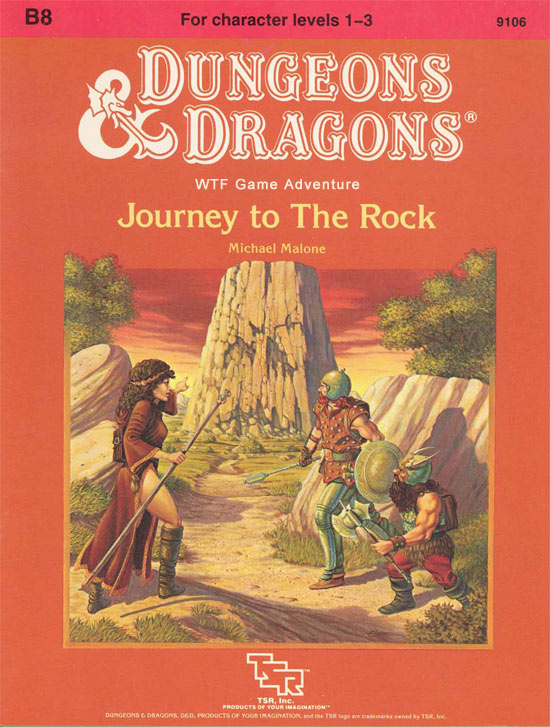
This has to be the most ridiculous adventure premise I’ve ever seen

The D&D adventure Journey to the Rock has a reputation of being really bad. It’s not as infamous as The Forest Oracle or Castle Greyhawk, since it’s just really bland and forgettable, but it’s really bad.

The party takes one of three different paths to get to the Rock. So they’ll only get to see one third of the adventure. Because when they reach the Rock itself, it only has a single room inside. Which is a giant empty room. 240 by 350 feet with a 350 feet dome. On one wall are seven chests and four statues. The statues will attack the party, but only if the party is strong, has most of its hit points, and most of their magic still available. Otherwise they are just normal statues. There is a stupid puzzle and if the players pick the wrong chest, they are teleported out the door and have to go back empty handed. If they pick the right chest with the MacGuffin, the quest giver will teleport them back to his house. That’s the whole adventure.

But it has backstory! Which is just ridiculous.

Many thousands of years ago, a great magical city was under attack by forces of Chaos, and when things started to look desperate, the rulers decided have two of their best escape the city and go into hiding until they could continue the fight. To make sure one of them could not reveal the identity of the other if captured, the two were given their mission secretly and not told who the other person was. But the two would be able to find each by being given two halves of an amulet that would make them both immortal and grant them great magical powers to fight Chaos, but whose magic could not be used by anyone else.

Eventually all the people of the city were banished to another dimension and the city itself was forgotten.

One half of the amulet was hidden away in a secret chamber in the Rock. The forces of Chaos learned that one half of the Amulet was hidden in the Rock but couldn’t get to it, so they laid a spell over the entrance that would prevent its owner from going inside.

Now this millennia old immortal wizard decides he needs to get his half of the amulet from the Rock to find the other immortal who escaped from the city so they could start finding a way to rescue their people from that other dimension. And to break the barrier that has been preventing him from going inside the Rock himself, he hires 6 to 8 adventurers of 1st to 3rd level.

Actually, his servant hires them. The wizard himself never comes out of his laboratory and does not reveal anything about who he is, what the amulet is, and what he needs it for to anyone. The players will never know any of that and it has no relevance to the adventure at all. Which is a good thing, because it makes no fucking sense!

As in the opening credits of Monty Python and the Holy Grail, the person producing this should have immediately been sacked. And the person responsible for sacking him should also have been sacked.

I do like the cover, though…

Six Days on Kenshi

(Kenshi has become my gold standard for what a sandbox campaign should be like. I am constantly mining this game for ideas to set up a West Marches campaign.)

Severed from the Hive mind, nobody would speak with Klik anymore, and so he had no choice but to walk out into the desert. A single worker drone with nobody else and no supplied. Looking around him, he saw a pack of Beak Things to the south of the village, and so he headed north with no knowledge of what to expect.

After wandering through the sands for several hours, a gang of Hungry Bandits came running over a dune, charging at Klik swinging their sticks. Running for his life, he spotted what looked like the stone walls of a human hive on a hill nearby, since the human hives hated the Hungry Bandits and always chase them away from their gates. But as he came closer, there was not a single human soldier to be seen. Looking for a place to lose the pursuers or someone to save him, Klik headed for the largest building in the village, but as he reached its gate he spotted the symbol of the Holy Nation. While the soldiers of the Holy Nation hated the Hungry Bandits, they hated Hive drones even more, and Klik immediately headed out through the gate on the other side of the village. With the bandits were still in pursuit, Klik’s path crossed that of a group of human mercenaries, and a big fight broke out between the two groups immediately. Only a single hungry bandit was still chasing after Klik, and even though he didn’t have a stick of his own, he made a courageous attempt to take the stick from the bandit. But the bandit was much stronger than Klik and beat him up, badly injuring his knee. Klik had no food for the hungry bandit to steal. He didn’t even have any pockets or bags where he could have carried any, but the bandit must have been too hungry to think of that.

Once the bandit had left, Klik crawled back to where the bandits had fought with the mercenaries and discovered a pack of bone dogs feeding on the dead. As night fell, he hid in the broken frame of a ruined human hut while waiting for the bone dogs to move on. When it seemed that they had left the area, he crawled over to the bodies and managed to get a stick from one of the bandits and some human clothing from one of the mercenaries. The mercenaries also had bandages with them, with which Klik could finally treat his still bleeding wounds. He even got some raw meat from two bone dogs, as well as two pelts and some teeth that he knew human traders would trade for. Now that he had food and a stick, and his wounds were no longer bleeding, his chances to survive another day had greatly increased.

At the dawn of the second day, Klik continued his journey through the desert, though still with a badly injured leg. After some hours he spotted a few houses in the distance with some fenced in animals. No humans were to be seen, but the risk that they might be of the Holy Nation made Klik keep his distance and continue towards a mountain range in the distance.

As he reached the edge of the mountains, Klik spotted another large human hive nearby. But as soon as he could see the soldiers on the wall, they started shooting at him with arrows and he had to quickly run back towards the mountains. Were he was jumped again by a gang of hungry bandits who viciously beat him and took all his bone dog meat.

Continue reading “Six Days on Kenshi”

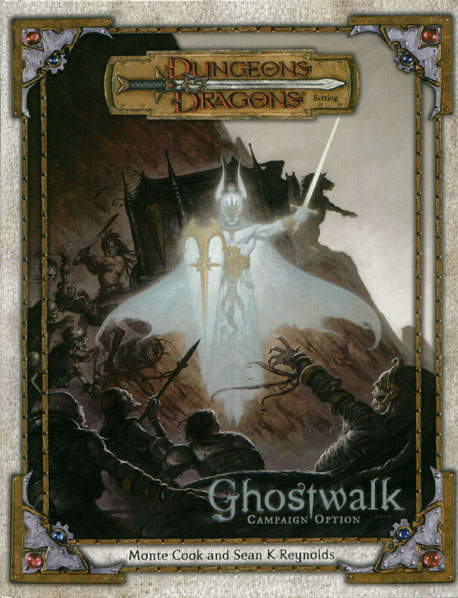
Flipping again through Ghostwalk

Ghostwalk came out in 2003, three years after the release of Dungeons & Dragons 3rd edition and just before the new revised rulebooks came out. It’s a book that I see getting mentioned every other year or so and that always seems to be fondly remembered by a few people. However, in the almost 20 years since its release now, I have never heard of even a single person mentioning a campaign or even just a one-shot adventure that was actually played in this setting. Looking through some other early 3rd edition stuff these last days, and thinking about games with this system that I always wanted to run but never actually did, had me of course reminded of Ghostwalk.

The whole idea behind Ghostwalk is that characters who die on their adventures aren’t simply gone from the campaign unless the party can arrange for the characters to be resurrected with a raise dead spell, but instead continue their adventures as a ghost. That alone was a big draw for me when this book was announced, and I was actually surprised when it turned out to be a campaign setting. It’s centered around a city of the dead outside the gateway to the afterlife, with some brief additional information about the surrounding lands. That sounds quite cool, but it never managed to get me even starting on a preliminary concept for an actual campaign, and from everything I’ve seen about the setting since then, very few other people did either.

So I sat down again with the book, and after literally decades since I first read it, tried to find my footing again with the basics of the world and what kinds of adventures it is setting up. And as it turns out, for a 220 page book, there is stunningly little in the way of material that would inspire adventure. When you first hear the idea of a land where the dead don’t actually die, it might sound really cool and make you want to know more. But there really doesn’t seen to be much more.

The central nexus of the setting is the gateway to the afterlife, though which all the souls of dead people have to cross. As these souls are getting close to the gateway, they start to gain the traits of ghost, gaining the ability to be seen and heard, manipulate physical objects, and eventually take on a semi-solid form. Most souls simply pass through the gateway right away, but some hesitate out of a fear of the unknown beyond, or because there is something in the world of the living that they can’t make themselves leave unfinished. And so, over the ages, a whole city has risen up around, and now high above the gateway. Populated by the ghosts who are struggling with the fear of what awaits them in true death or hoping that someone from their past life will try to meet them in the city of Manifest to settle the things that keep them. Because the existence of the city is well known in the surrounding lands and people frequently make the journey in the hope of being able to talk with the dead one more time before they are truly gone.

Where things get a bit muddled is that there is also the practice of taking the bodies of the dead to the gateway to reunite them with their souls in the afterlife. This is where the whole thing starts to feel implausible to me. Is the gateway in Manifest the only one in the world? From how far away are the spirits of the dead coming to pass through it and perhaps linger outside of it for some months or years? Does all the world know about its existence, or is this something known only in the neighboring countries? Is it a local custom to try sending the bodies into the afterlife as well or a global thing? Is it something for the super rich and powerful, or is it a common practice for everyone but the poorest? What about the people who just get buried in this world? Are they condemned to an eternal afterlife in an incomplete state? The idea of having these funeral processions from distant lands coming through the streets of the city every day is very evocative, but it feels really not thought through.

And what about conflicts? The main antagonists that the setting describes are the Yuan-ti. Yuan-ti abominations are not humanoids and as such don’t have spirits that travel to the gateway and manifest as ghosts. And because of that the yuan-ti want to destroy the city. That’s not enough of a motivation for villains outside of superhero comics and it doesn’t really give you anything to work with then coming up with adventures. Necromancers are hated but also really interested in the city, but I wasn’t really able to find out why. What about the ghosts? They populate the city and mingle with the living, but what kind of things would they be up to that could set up an adventures for PCs?

And beneath the city is a giant maze of old ruins called the Catacombs. But if the city is build around a gateway to the afterlife and people bring bodies to the city to move then through it, why does the city have catacombs? Maybe it’s just a name, but a city of the dead with giant catacombs that don’t actually have any dead bodies in them would be kind of lame. Also, what do the living people who build the city around the gateway actually do there? The dead don’t need any of the things that a normal economy provides for the living. Is it all about catering to the living travelers coming to drop of a body or hope to catch a ghost before it departs?

What really amazes me is how this book manages to reach 220 pages. There is so much text that goes on an on about things without actually saying anything interesting. The rules for ghost characters also seem way too complicated. This book has over 80 new feats. Nobody needs that.

In hindsight, I can fully understand why you never hear about anyone ever having played a campaign in Ghostwalk or used the rules for semi-dead PCs.

The elevator pitch sounds like something that could be made into something really interesting. When I picked the book up again, I was thinking that this could be a great opportunity to make a campaign that draws heavily on the Dark Souls and Legacy of Kain series. And while that still seems like it could be a cool campaign, I think all the work needed to make that interesting would leave very little of the setting material that is actually present in the book.

Migratory Stasis

Some people quite regularly complain about Medieval Stasis in fantasy worlds, with swords, armor, and castles that are thousands of years old looking just the same as those made in the present day. Which I guess is fair to some point, but on the other hand, we actually get to see these ancient things only very rarely. Who is actually saying that things thousands of years in the past looked exactly as medieval as in the present?

Something that has been bothering me much more recently is how lots of fantasy worlds seem to portray countries and governments in a very static way. The same peoples living in the same places for many centuries or thousands of years, with borders rarely changing in any meaningful way. Which is not at all how kingdoms and empires progressed historically. As historians like to frequently repeat, the idea of a nation state is a very recent concept. But there is also the old story of “medieval people rarely went more than 30 km from their home in their entire life”. Which again might be fair to some point, since most people were farmers and as such wouldn’t commonly move to a different city for a new job. But when local circumstances made it necessary or desirable to give up the old farm and set up a new one somewhere else, then on many occasions they really would move astonishing distances.

Even though I’m quite a fan of Bronze Age history, the periods that really have been fascinating me the most in recent years are the conquest of the Persian Empires by Greeks in the 4th century BCE and the Migration Period of late Antiquity and the early Middle Ages from the 4th to 6th century CE. Well over 2000 years ago, you had Greek aristocrats being the ruling class in Afghanistan. 600 years later, a group of Scandinavians who were living on the Black Sea went on a campaign that made their sons and grandsons kings in Tunesia after conquering Spain. In 5th century France, warlords from Denmark and Kazakhstan were trying to carve out pieces of the Roman Empire for themselves.

Now it seems unlikely that the entire populations of whole countries suddenly packed up everything and started walking for several thousand miles. With the Greek conquest of the Persian Empire, it was explicitly an army on campaign that was recruiting new additional forces from the local rulers who switched to their side. In the migration period of Europe, migrating groups are estimated to consist of only 10 to 20,000 people each, with the total number of people on the move over several centuries probably being well under a million. The German term of “Peoples Marches” for the period is somewhat misleading in that way. You didn’t have entire populations exchanging the places where they lived. Most of the peasant population would likely have remained the same while it was the warrior elites who claimed rulership over the land which in some cases would change every few decades. But when you want to ask “Where did the Visigoths live?”, you have to include the specific year. And I am pretty sure that over in the East, there were some warlords who did major conquests in both China and Europe during different times of their lives. Which then didn’t hold very long after, but that only shows even more how extremely fluid things were in regards to who rules what places.

Yes, in many ways, the world is much smaller now than it was even just one or two centuries ago. But it was never actually that big to begin with. When creating a history for fantasy worlds, consider that not just kings come and go, but the peoples who inhabit the various countries do as well.